

-
About UsZHONGTAI HENGBANG Engineering Technology Co., Ltd. is located in the Academician Entrepreneurship Base of Tai'an National High-Tech Industrial Development Zone, Shandong Province. The company is a comprehensive service provider specializing in engineering consulting and design, materials R&D and manufacturing, as well as operations and maintenance. With strong technical expertise and robust R&D capabilities, its products are primarily applied in critical areas such as water conservancy infrastructure projects, transportation infrastructure initiatives, and environmental protection solutions for isolating and preventing leakage from urban waste and highly hazardous industrial solid waste.

-
ProductsZHONGTAI HENGBANG Engineering Technology Co., Ltd. boasts production lines sourced from countries including Germany, Italy, Denmark, Belgium, and Switzerland, adhering to rigorous quality management systems and testing standards. We are equipped with advanced testing equipment capable of evaluating tensile strength, creep resistance, UV protection, water permeability, flame retardancy, antistatic properties, chemical corrosion resistance, and oxidation performance.
-
Application CasesThe product is primarily used in hydraulic infrastructure projects, transportation infrastructure projects, and environmental protection applications—including the isolation and impermeability of municipal waste and highly hazardous industrial solid waste.
-
BlogPrioritizing technological advancement and innovation, our company is committed to fulfilling user needs to the fullest extent possible.
What specific considerations should be taken into account during the construction of Zhejiang short-filament geotextiles to enhance their utilization?
Release date:
2020-12-29
Adding an asphalt overlay on existing cement concrete pavement is a commonly used pavement rehabilitation technique. It offers several advantages, including short construction time, low cost, minimal disruption to traffic, and excellent restoration of the pavement's service performance. However, a major issue with this method is the frequent occurrence of reflective cracks in the asphalt overlay, which can undermine the long-term durability of the repaired surface. Zhejiang Shaoxing Short-Fiber Geotextile It is one of the primary measures to delay reflective cracking.

During the construction of the overlay layer, special attention was paid to the following aspects:
1. Construction Preparation: Choose a hot weather period, and before laying the geotextile, thoroughly clean the existing cement concrete pavement. For areas where the original slabs are damaged, first remove the broken concrete, then use a 6% cement-stabilized gravel mixture to level and compact the surface—ensuring that the final surface meets the required smoothness standards.
2. Asphalt Application: Use ordinary hot asphalt as the tack coat, with the asphalt application rate determined through testing—typically controlled between 0.9 and 1.1 kg/m². The asphalt will be applied using an asphalt distributor, and the application rate must be pre-tested to ensure compliance. Additionally, the width of the asphalt layer should be set slightly wider than required. Zhejiang Shaoxing Short-Fiber Geotextile 20 cm; the spreading rate depends on the actual speed of geotechnical material placement and compaction. For areas where asphalt is applied in excess, remove it promptly.
3. Laying out Zhejiang Shaoxing Short-Fiber Geotextile : Zhejiang Shaoxing Short-Fiber Geotextile The paving is scheduled to take place before the asphalt loses its adhesion. Zhejiang Shaoxing Short-Fiber Geotextile Laying requirements include being smooth, free of folds and wrinkles; after installation, use a tire roller to compact the surface thoroughly for tight bonding. Zhejiang Shaoxing Short-Fiber Geotextile The overlap length is 15 cm; in areas where the short-fiber geotextile from Shaoxing, Zhejiang, shows poor bonding and adhesion, it should be removed and re-laid. Zhejiang Shaoxing Short-Fiber Geotextile In areas with wrinkles, manually flatten them or apply asphalt by brushing, then carefully reattach the folded sections so that, after rolling, the top and bottom layers align properly. Zhejiang Shaoxing Short-Fiber Geotextile Stuck together.
4. Asphalt Mixture Paving: At Zhejiang Shaoxing Short-Fiber Geotextile After paving, hot asphalt mixture should be spread immediately, with its temperature kept below 160°C. Since the road remains open to traffic, and to ensure smooth passage for other vehicles, Zhejiang Shaoxing Short-Fiber Geotextile Sprinkle some sand or hot stone chips on top; immediately after the asphalt mixture is spread, begin rolling until it meets the requirements of the construction technical specifications.
For Zhejiang Shaoxing Short-Fiber Geotextile The connection work must not be carried out arbitrarily—there are many issues that require careful attention. Only after performing a proper and accurate connection can we achieve the desired results. Under normal circumstances, there should be no horizontal connections on the slope surface (connections must follow the slope’s contour without intersecting it), except in areas designated for repairs. If this is not addressed… Zhejiang Shaoxing Short-Fiber Geotextile The connection is made using stitching, and the sewing thread must be made of the same material as or a superior grade to the short-fiber geotextile from Shaoxing, Zhejiang. Additionally, the stitching thread must be resistant to chemicals and UV radiation.
Surgical sutures and Zhejiang Shaoxing Short-Fiber Geotextile There should be a noticeable color difference for easy inspection. During installation, pay special attention to the seams to ensure that no soil or gravel from the surrounding layers makes its way into the middle of the Zhejiang Shaoxing short-fiber geotextile. Zhejiang Shaoxing Short-Fiber Geotextile Damage and repairs at the stitching joints require resewing and patching, ensuring that the ends of any skipped stitches are properly reattached. Once you become familiar with these processes, it will greatly enhance the efficiency of our work.
ZHONGTAI HENGBANG Engineering Technology Co., Ltd. is a comprehensive service provider integrating engineering consulting and design, material R&D and manufacturing, as well as operations and maintenance. With robust technical expertise and strong R&D capabilities, our products are specifically tailored for critical applications in areas such as water conservancy infrastructure projects, transportation infrastructure initiatives, and environmental protection fields like urban waste management and the safe isolation and impermeability of hazardous industrial solid wastes. The company boasts advanced production lines sourced from Germany, Italy, Denmark, Belgium, Switzerland, and other countries, all operating under stringent quality management systems and rigorous testing standards. We are equipped with state-of-the-art equipment capable of evaluating key properties—including tensile strength, creep resistance, UV resistance, permeability, flame retardancy, anti-static performance, chemical corrosion resistance, and oxidation stability—ensuring that every product meets the highest industry benchmarks. Furthermore, ZHONGTAI HENGBANG has earned prestigious certifications such as CRCC, ISO 9001, ISO 14001, OHSAS 18000, and MA approvals, along with favorable test reports issued by China’s Ministry of Railways and Ministry of Water Resources, as well as the EU CE certification. Our products have also been validated through independent laboratory tests conducted in Russia, Australia, the United States, and other specialized facilities. We are dedicated to delivering top-quality geosynthetic materials and unparalleled services for a wide range of projects, including reinforced soil retaining walls, soft ground stabilization, land reclamation and dike construction/maintenance, hydraulic engineering, slope remediation and ecological restoration, road construction, and mining projects.
Latest Updates
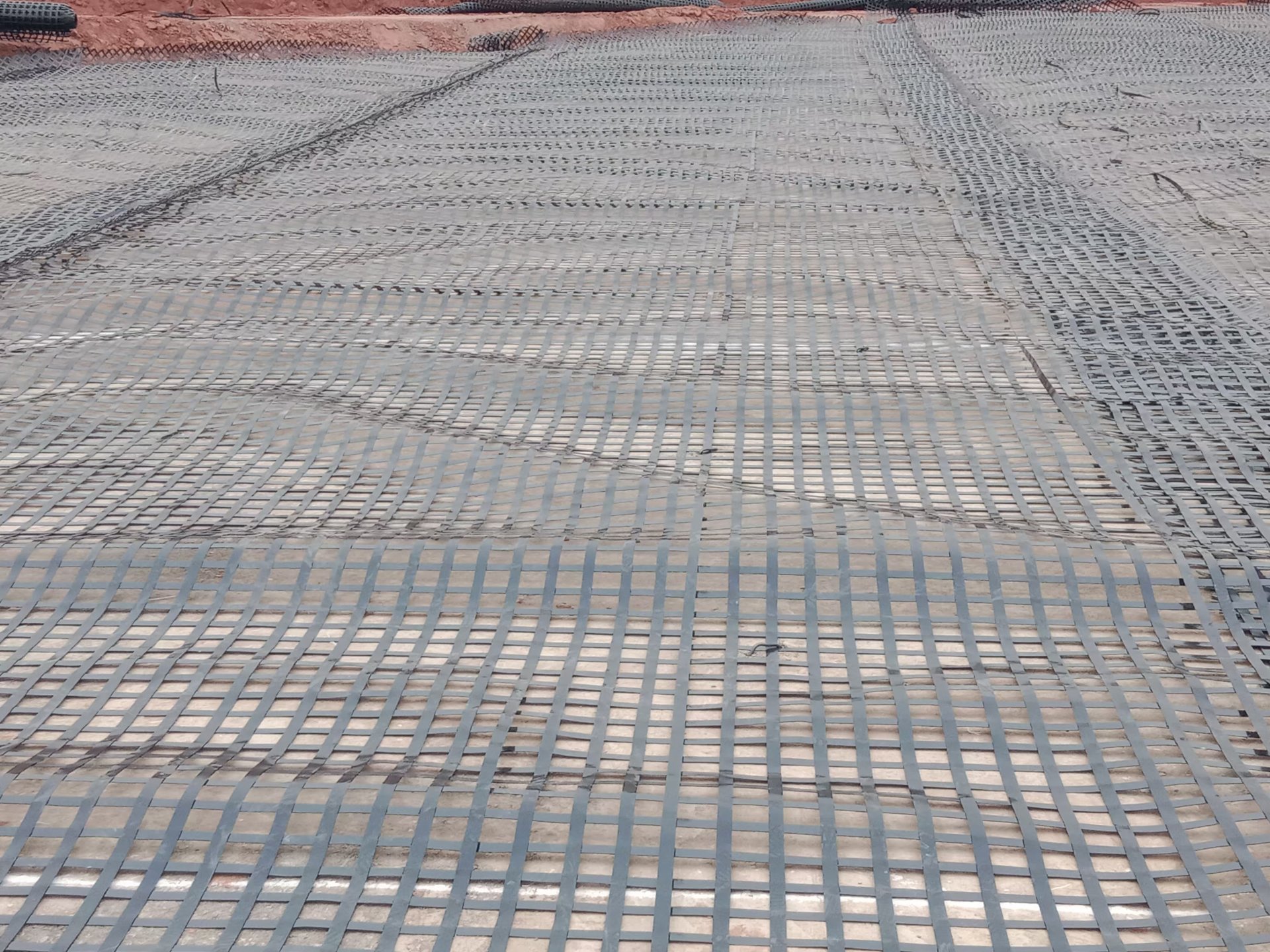
ZHONGTAI HENGBANGPET Polyester Welded Geogrid Advantages
Relying on independent innovation and technological expertise, Taihengbang Engineering Technology Co., Ltd. has achieved groundbreaking progress in the geosynthetics field. The company’s newly developed and produced PET polyester-welded geogrids, backed by multiple core patented technologies, have set a high-standard industry benchmark. Built on high-strength polyester materials and crafted through advanced precision welding techniques, these geogrids feature a robust, stable mesh structure, delivering exceptional performance in terms of tensile strength, durability, and environmental adaptability.
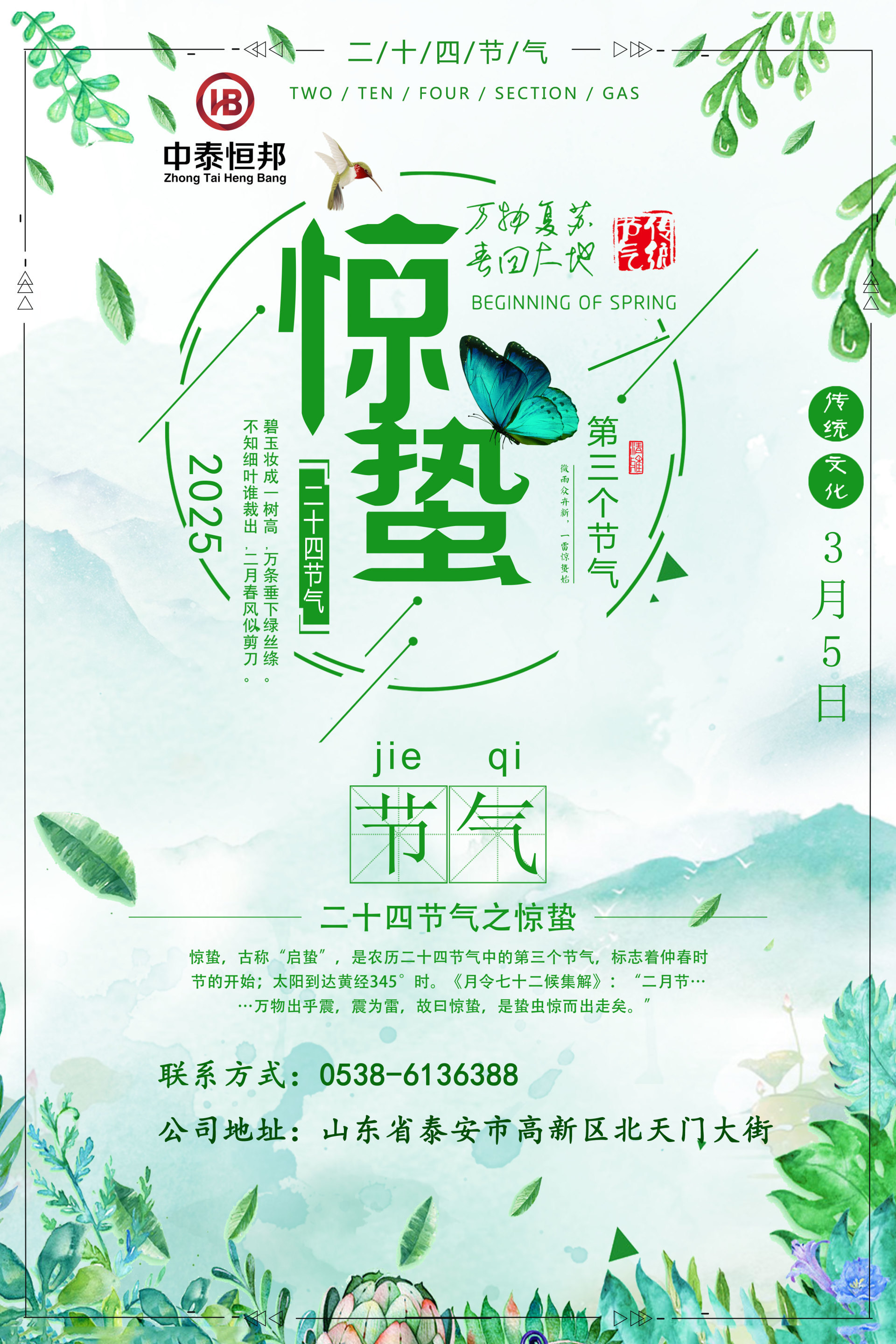
Jingzhe | Spring thunder rumbles, and all things grow.
Around March 5, the first spring thunder begins to rumble, rousing hibernating insects and snakes from their winter slumber. Peach blossoms start to peek out on the branches, and the earth softens as new buds emerge.
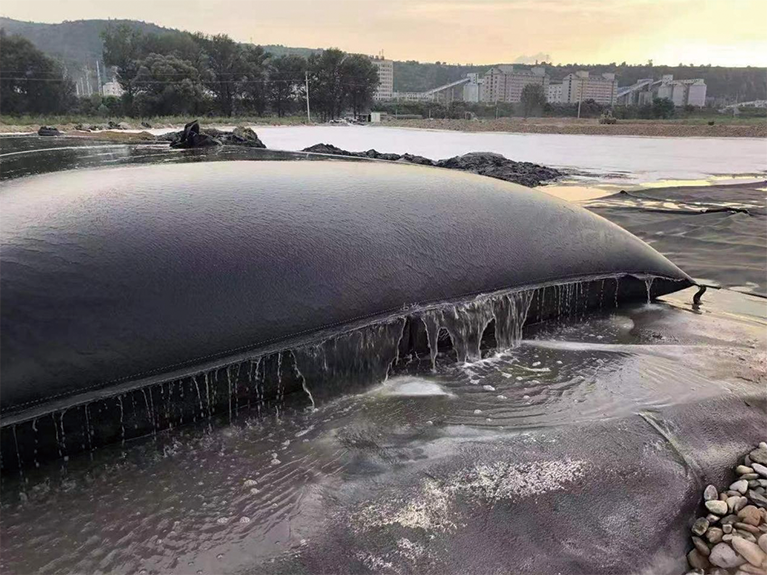
Geotube: A sludge dewatering tool—your eco-friendly engineering ally
A geotube is a tubular bag made by sewing together high-strength geotextile fabric. Utilizing the natural principle of gravity filtration, it removes water from sludge, effectively separating mud from water.

February 2, Dragon Raises Head: A Forgotten Spring Festival Celebration
On the second day of the second lunar month, spring returns to the earth, and all things awaken from their winter slumber. On this day—gradually fading from modern memory—lies one of the deepest cultural codes of the Chinese nation. The "Dragon Rises" is not just a seasonal marker; it’s also a spiritual totem for the Chinese people—a cherished legacy of our agricultural civilization.

Construction Plan for Laying and Welding of Composite Geomembranes
Construction Plan for Laying and Welding of Composite Geomembranes
Introduction to Drainage and Waterproofing Sheets
Introduction to Drainage and Waterproofing Sheets
ZHONGTAI HENGBANG Technology Co., Ltd.
Address: East Section of Zhongtianmen Avenue, Tai'an High-tech Zone, Shandong Province
Service Hotline