

-
About UsZHONGTAI HENGBANG Engineering Technology Co., Ltd. is located in the Academician Entrepreneurship Base of Tai'an National High-Tech Industrial Development Zone, Shandong Province. The company is a comprehensive service provider specializing in engineering consulting and design, materials R&D and manufacturing, as well as operations and maintenance. With strong technical expertise and robust R&D capabilities, its products are primarily applied in critical areas such as water conservancy infrastructure projects, transportation infrastructure initiatives, and environmental protection solutions for isolating and preventing leakage from urban waste and highly hazardous industrial solid waste.

-
ProductsZHONGTAI HENGBANG Engineering Technology Co., Ltd. boasts production lines sourced from countries including Germany, Italy, Denmark, Belgium, and Switzerland, adhering to rigorous quality management systems and testing standards. We are equipped with advanced testing equipment capable of evaluating tensile strength, creep resistance, UV protection, water permeability, flame retardancy, antistatic properties, chemical corrosion resistance, and oxidation performance.
-
Application CasesThe product is primarily used in hydraulic infrastructure projects, transportation infrastructure projects, and environmental protection applications—including the isolation and impermeability of municipal waste and highly hazardous industrial solid waste.
-
BlogPrioritizing technological advancement and innovation, our company is committed to fulfilling user needs to the fullest extent possible.
Sharing practical experience in the construction technology of Hunan steel-plastic geogrid-reinforced roadbeds
Release date:
2020-12-29
Hunan Hengyang Steel-Plastic Geogrid This content, rooted in construction practices, introduces the application of geogrids in railway embankment construction on soft soil foundations, along with a brief explanation of the reinforcement principles behind geogrid technology.

Hunan Hengyang Steel-Plastic Geogrid Uses: Hunan Hengyang Steel-Plastic Geogrid Suitable for reinforcing various types of embankments and roadbeds, protecting slopes, strengthening tunnel linings, and providing ground reinforcement for high-capacity applications such as large airports, parking lots, and port cargo terminals.
1. Hunan Hengyang Steel-Plastic Geogrid Used to enhance the load-bearing capacity of zengda road (or ground) foundations and extend the service life of road (or ground) foundations.
2. Hunan Hengyang Steel-Plastic Geogrid Used to prevent road (or ground) surface collapse or cracking, ensuring a neat and aesthetically pleasing appearance.
3. Hunan Hengyang Steel-Plastic Geogrid Designed for convenient construction, saving time and effort, shortening project timelines, and reducing maintenance costs.
4. Hunan Hengyang Steel-Plastic Geogrid Used to prevent cracks from forming in culverts.
5. Hunan Hengyang Steel-Plastic Geogrid Used to reinforce soil slopes and prevent water and soil erosion.
6. Hunan Hengyang Steel-Plastic Geogrid Used to reduce the thickness of the cushion layer, thereby saving costs.
7. Hunan Hengyang Steel-Plastic Geogrid Greening the environment to stabilize slope vegetation mats used for support.
Hunan Hengyang Steel-Plastic Geogrid Design applications:
When geogrids are used for soft ground treatment, it is essential to determine both the placement and number of grid layers based on the geological conditions, while also selecting the appropriate design strength of the geogrid according to the height of the embankment fill.
When the fill height exceeds 4 meters, geogrids only need to meet the industry standard's minimum requirements; however, their longitudinal and transverse ultimate tensile strengths must be at least 20 kN/m.
When the fill height is between 3 and 4 meters, the geogrid's longitudinal and transverse ultimate tensile strength must be at least 40 kN/m.
When the fill height is less than 3 meters, the geogrid should have a longitudinal and transverse tensile strength of at least 50 kN/m and an elongation rate of less than 4%. It is recommended to use the GSZ60-60 geogrid in such cases. Additionally, when the geogrid is applied at the interface between embankment and excavation sections, a bidirectional geogrid with a tensile strength of no less than 40 kN/m should be used—again, the GSZ60-60 model is preferred.
When applied to the widening of existing roads at the joint between old and new sections, the method used for expanding the Shen-Da Expressway—incorporating geogrids—is recommended: For any embankment taller than 3 meters, a steel-plastic composite geogrid should be laid 20 cm below the top of the embankment. Use steel-plastic composite geogrids with a longitudinal (perpendicular to the road direction) ultimate tensile strength of at least 60 kN/m and a transverse (parallel to the road direction) ultimate tensile strength of at least 20 kN/m, along with an elongation rate no greater than 4%.
So, Hunan Hengyang Steel-Plastic Geogrid What are the specific engineering applications?
1. High strength, minimal creep, and excellent adaptability to various soil conditions—making it fully capable of meeting the demanding requirements for tall retaining walls in high-grade highways.
2. Effectively enhances the interlocking and interlocking action of the reinforced bearing surface, significantly boosting the foundation's load-bearing capacity, efficiently restraining lateral soil movement, and improving the overall stability of the foundation.
3. Compared to traditional geogrids, the steel-plastic geogrids from Hengyang, Hunan, offer superior strength, enhanced load-bearing capacity, excellent corrosion resistance, outstanding anti-aging performance, a high coefficient of friction, uniformly sized openings, ease of installation, and an exceptionally long service life.
4. More suitable for deep-sea operations and embankment reinforcement, this solution fundamentally addresses the technical challenges—such as low strength, poor corrosion resistance, and short service life—that have traditionally plagued stone cages made from other materials due to prolonged exposure to seawater erosion.
5. Effectively prevents construction damage caused by machinery running over or otherwise damaging materials during the construction process.
ZHONGTAI HENGBANG Engineering Technology Co., Ltd. is a comprehensive service provider integrating engineering consulting and design, material R&D and manufacturing, as well as operations and maintenance. With robust technical expertise and strong R&D capabilities, our products are prominently applied in critical environmental protection fields such as hydraulic infrastructure projects, transportation infrastructure initiatives, and the isolation and impermeability solutions for urban waste and highly hazardous industrial solid wastes. The company boasts advanced production lines sourced from Germany, Italy, Denmark, Belgium, Switzerland, and other countries, adhering to stringent quality management systems and rigorous testing standards. We are equipped with state-of-the-art testing equipment capable of evaluating key properties including tensile strength, creep resistance, UV resistance, water permeability, flame retardancy, anti-static performance, chemical corrosion resistance, and oxidation stability. Furthermore, our enterprise has successfully obtained certifications such as CRCC, ISO 9001, ISO 14001, OHSAS 18000, and MA certificates, along with inspection reports from China’s Ministry of Railways and Ministry of Water Resources, the EU CE certification, and approvals from specialized laboratories in Russia, Australia, the United States, and other regions. We are dedicated to delivering top-quality geosynthetic materials and unparalleled services for projects ranging from reinforced soil retaining walls and soft ground stabilization to land reclamation cofferdams and their maintenance, hydraulic engineering, slope remediation and greening, road construction, and mining projects.
This content, originating from Hengyang, Hunan, combines construction practices with technical insights on reinforcing railway embankments built on soft soil foundations using steel-plastic geogrids. It also provides a concise explanation of the reinforcement principles underlying the use of geogrids in such projects.
Applications of steel-plastic geogrids from Hengyang, Hunan: Steel-plastic geogrids from Hengyang, Hunan are suitable for reinforcing various types of embankments and roadbeds, stabilizing slopes, strengthening tunnel linings, and enhancing the load-bearing capacity of foundations in large-scale facilities such as airports, parking lots, and port cargo terminals.
1. The steel-plastic geogrid from Hengyang, Hunan, is used to enhance the load-bearing capacity of road (or ground) foundations, thereby extending the service life of these foundations.
2. The steel-plastic geogrid from Hengyang, Hunan, is used to prevent road (or ground) surfaces from collapsing or cracking, helping to maintain a neat and aesthetically pleasing appearance.
3. The steel-plastic geogrid from Hengyang, Hunan, is designed for convenient construction, saving time and labor, shortening project timelines, and reducing maintenance costs.
4. The steel-plastic geogrid from Hengyang, Hunan, is used to prevent cracks from forming in culverts.
5. The steel-plastic geogrid from Hengyang, Hunan, is used to reinforce soil slopes and prevent water and soil erosion.
6. The steel-plastic geogrid from Hengyang, Hunan, is used to reduce the thickness of the subbase layer, thereby saving construction costs.
7. The steel-plastic geogrid from Hengyang, Hunan, is used to support the stability of slope vegetation mats, promoting environmental greening.
Design and Application of Steel-Plastic Geogrids in Hengyang, Hunan:
When geogrids are used for soft ground treatment, it is essential to determine both the placement and number of grid layers based on the geological conditions, while also selecting the appropriate design strength of the geogrid according to the height of the embankment fill.
When the fill height exceeds 4 meters, geogrids only need to meet the industry standard's minimum requirements; however, their longitudinal and transverse ultimate tensile strengths must be at least 20 kN/m.
When the fill height is between 3 and 4 meters, the geogrid's longitudinal and transverse ultimate tensile strength must be at least 40 kN/m.
When the fill height is less than 3 meters, the geogrid should have a longitudinal and transverse tensile strength of at least 50 kN/m and an elongation rate of less than 4%. It is recommended to use the GSZ60-60 geogrid in such cases. Additionally, when the geogrid is applied at the interface between embankment and excavation sections, a bidirectional geogrid with a tensile strength of no less than 40 kN/m should be used—again, the GSZ60-60 model is preferred.
When applied to the widening of existing roads at the joint between old and new sections, the method used for expanding the Shen-Da Expressway—incorporating geogrids—is recommended: For any embankment taller than 3 meters, a steel-plastic composite geogrid should be laid 20 cm below the top of the embankment. Use steel-plastic composite geogrids with a longitudinal (perpendicular to the road direction) ultimate tensile strength of at least 60 kN/m and a transverse (parallel to the road direction) ultimate tensile strength of at least 20 kN/m, along with an elongation rate no greater than 4%.
So, what exactly are the engineering applications of steel-plastic geogrids in Hengyang, Hunan?
1. High strength, minimal creep, and excellent adaptability to various soil conditions—making it fully capable of meeting the demanding requirements for tall retaining walls in high-grade highways.
2. Effectively enhances the interlocking and interlocking action of the reinforced bearing surface, significantly boosting the foundation's load-bearing capacity, efficiently restraining lateral soil movement, and improving the overall stability of the foundation.
3. Compared to traditional geogrids, the steel-plastic geogrids from Hengyang, Hunan, offer superior strength, enhanced load-bearing capacity, excellent corrosion resistance, outstanding anti-aging performance, a high coefficient of friction, uniformly sized openings, ease of installation, and an exceptionally long service life.
4. More suitable for deep-sea operations and embankment reinforcement, this solution fundamentally addresses the technical challenges—such as low strength, poor corrosion resistance, and short service life—that have traditionally plagued stone cages made from other materials due to prolonged exposure to seawater erosion.
5. Effectively prevents construction damage caused by machinery running over or otherwise damaging materials during the construction process.
ZHONGTAI HENGBANG Engineering Technology Co., Ltd. is a comprehensive service provider integrating engineering consulting and design, material R&D and manufacturing, as well as operations and maintenance. With robust technical expertise and strong R&D capabilities, our products are prominently applied in critical environmental protection fields such as hydraulic infrastructure projects, transportation infrastructure initiatives, and the isolation and impermeability solutions for urban waste and highly hazardous industrial solid wastes. The company boasts advanced production lines sourced from Germany, Italy, Denmark, Belgium, Switzerland, and other countries, adhering to stringent quality management systems and rigorous testing standards. We are equipped with state-of-the-art testing equipment capable of evaluating key properties including tensile strength, creep resistance, UV resistance, water permeability, flame retardancy, anti-static performance, chemical corrosion resistance, and oxidation stability. Furthermore, our enterprise has successfully obtained certifications such as CRCC, ISO 9001, ISO 14001, OHSAS 18000, and MA certificates, along with inspection reports from China’s Ministry of Railways and Ministry of Water Resources, the EU CE certification, and approvals from specialized laboratories in Russia, Australia, the United States, and other regions. We are dedicated to delivering top-quality geosynthetic materials and unparalleled services for projects ranging from reinforced soil retaining walls and soft ground stabilization to land reclamation cofferdams and their maintenance, hydraulic engineering, slope remediation and greening, road construction, and mining projects.
This content, originating from Hengyang, Hunan, combines construction practices with technical insights on reinforcing railway embankments built on soft soil foundations using steel-plastic geogrids. It also provides a concise explanation of the reinforcement principles underlying the use of geogrids in such projects.
Applications of steel-plastic geogrids from Hengyang, Hunan: Steel-plastic geogrids from Hengyang, Hunan are suitable for reinforcing various types of embankments and roadbeds, stabilizing slopes, strengthening tunnel linings, and enhancing the load-bearing capacity of foundations in large-scale facilities such as airports, parking lots, and port cargo terminals.
1. The steel-plastic geogrid from Hengyang, Hunan, is used to enhance the load-bearing capacity of road (or ground) foundations, thereby extending the service life of these foundations.
2. The steel-plastic geogrid from Hengyang, Hunan, is used to prevent road (or ground) surfaces from collapsing or cracking, helping to maintain a neat and aesthetically pleasing appearance.
3. The steel-plastic geogrid from Hengyang, Hunan, is designed for convenient construction, saving time and labor, shortening project timelines, and reducing maintenance costs.
4. The steel-plastic geogrid from Hengyang, Hunan, is used to prevent cracks from forming in culverts.
5. The steel-plastic geogrid from Hengyang, Hunan, is used to reinforce soil slopes and prevent water and soil erosion.
6. The steel-plastic geogrid from Hengyang, Hunan, is used to reduce the thickness of the subbase layer, thereby saving construction costs.
7. The steel-plastic geogrid from Hengyang, Hunan, is used to support the stability of slope vegetation mats, promoting environmental greening.
Design and Application of Steel-Plastic Geogrids in Hengyang, Hunan:
When geogrids are used for soft ground treatment, it is essential to determine both the placement and number of grid layers based on the geological conditions, while also selecting the appropriate design strength of the geogrid according to the height of the embankment fill.
When the fill height exceeds 4 meters, geogrids only need to meet the industry standard's minimum requirements; however, their longitudinal and transverse ultimate tensile strengths must be at least 20 kN/m.
When the fill height is between 3 and 4 meters, the geogrid's longitudinal and transverse ultimate tensile strength must be at least 40 kN/m.
When the fill height is less than 3 meters, the geogrid should have a longitudinal and transverse tensile strength of at least 50 kN/m and an elongation rate of less than 4%. It is recommended to use the GSZ60-60 geogrid in such cases. Additionally, when the geogrid is applied at the interface between embankment and excavation sections, a bidirectional geogrid with a tensile strength of no less than 40 kN/m should be used—again, the GSZ60-60 model is preferred.
When applied to the widening of existing roads at the joint between old and new sections, the method used for expanding the Shen-Da Expressway—incorporating geogrids—is recommended: For any embankment taller than 3 meters, a steel-plastic composite geogrid should be laid 20 cm below the top of the embankment. Use steel-plastic composite geogrids with a longitudinal (perpendicular to the road direction) ultimate tensile strength of at least 60 kN/m and a transverse (parallel to the road direction) ultimate tensile strength of at least 20 kN/m, along with an elongation rate no greater than 4%.
So, what exactly are the engineering applications of steel-plastic geogrids in Hengyang, Hunan?
1. High strength, minimal creep, and excellent adaptability to various soil conditions—making it fully capable of meeting the demanding requirements for tall retaining walls in high-grade highways.
2. Effectively enhances the interlocking and interlocking action of the reinforced bearing surface, significantly boosting the foundation's load-bearing capacity, efficiently restraining lateral soil movement, and improving the overall stability of the foundation.
3. Compared to traditional geogrids, the steel-plastic geogrids from Hengyang, Hunan, offer superior strength, enhanced load-bearing capacity, excellent corrosion resistance, outstanding anti-aging performance, a high coefficient of friction, uniformly sized openings, ease of installation, and an exceptionally long service life.
4. More suitable for deep-sea operations and embankment reinforcement, this solution fundamentally addresses the technical challenges—such as low strength, poor corrosion resistance, and short service life—that have traditionally plagued stone cages made from other materials due to prolonged exposure to seawater erosion.
5. Effectively prevents construction damage caused by machinery running over or otherwise damaging materials during the construction process.
ZHONGTAI HENGBANG Engineering Technology Co., Ltd. is a comprehensive service provider integrating engineering consulting and design, material R&D and manufacturing, as well as operations and maintenance. With robust technical expertise and strong R&D capabilities, our products are prominently applied in critical environmental protection fields such as hydraulic infrastructure projects, transportation infrastructure initiatives, and the isolation and impermeability solutions for urban waste and highly hazardous industrial solid wastes. The company boasts advanced production lines sourced from Germany, Italy, Denmark, Belgium, Switzerland, and other countries, adhering to stringent quality management systems and rigorous testing standards. We are equipped with state-of-the-art testing equipment capable of evaluating key properties including tensile strength, creep resistance, UV resistance, water permeability, flame retardancy, anti-static performance, chemical corrosion resistance, and oxidation stability. Furthermore, our enterprise has successfully obtained certifications such as CRCC, ISO 9001, ISO 14001, OHSAS 18000, and MA certificates, along with inspection reports from China’s Ministry of Railways and Ministry of Water Resources, the EU CE certification, and approvals from specialized laboratories in Russia, Australia, the United States, and other regions. We are dedicated to delivering top-quality geosynthetic materials and unparalleled services for projects ranging from reinforced soil retaining walls and soft ground stabilization to land reclamation cofferdams and their maintenance, hydraulic engineering, slope remediation and greening, road construction, and mining projects.
Latest Updates
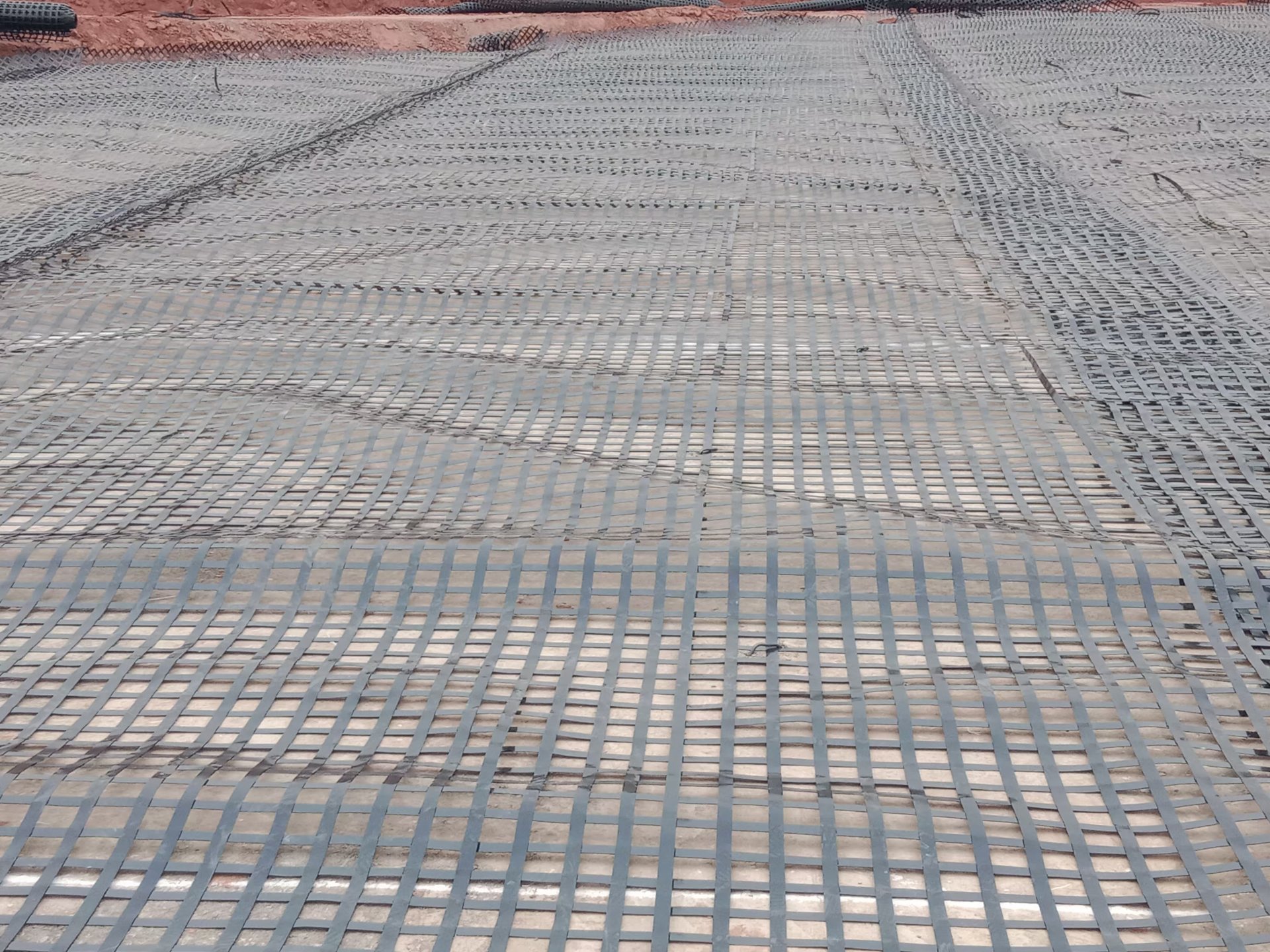
ZHONGTAI HENGBANGPET Polyester Welded Geogrid Advantages
Relying on independent innovation and technological expertise, Taihengbang Engineering Technology Co., Ltd. has achieved groundbreaking progress in the geosynthetics field. The company’s newly developed and produced PET polyester-welded geogrids, backed by multiple core patented technologies, have set a high-standard industry benchmark. Built on high-strength polyester materials and crafted through advanced precision welding techniques, these geogrids feature a robust, stable mesh structure, delivering exceptional performance in terms of tensile strength, durability, and environmental adaptability.
Jingzhe | Spring thunder rumbles, and all things grow.
Around March 5, the first spring thunder begins to rumble, rousing hibernating insects and snakes from their winter slumber. Peach blossoms start to peek out on the branches, and the earth softens as new buds emerge.
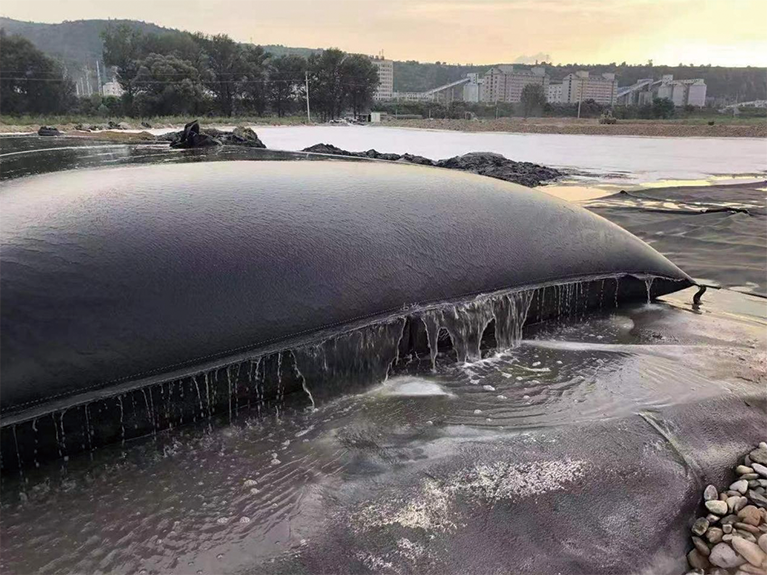
Geotube: A sludge dewatering tool—your eco-friendly engineering ally
A geotube is a tubular bag made by sewing together high-strength geotextile fabric. Utilizing the natural principle of gravity filtration, it removes water from sludge, effectively separating mud from water.
February 2, Dragon Raises Head: A Forgotten Spring Festival Celebration
On the second day of the second lunar month, spring returns to the earth, and all things awaken from their winter slumber. On this day—gradually fading from modern memory—lies one of the deepest cultural codes of the Chinese nation. The "Dragon Rises" is not just a seasonal marker; it’s also a spiritual totem for the Chinese people—a cherished legacy of our agricultural civilization.

Construction Plan for Laying and Welding of Composite Geomembranes
Construction Plan for Laying and Welding of Composite Geomembranes
Introduction to Drainage and Waterproofing Sheets
Introduction to Drainage and Waterproofing Sheets
ZHONGTAI HENGBANG Technology Co., Ltd.
Address: East Section of Zhongtianmen Avenue, Tai'an High-tech Zone, Shandong Province
Service Hotline