

-
About UsZHONGTAI HENGBANG Engineering Technology Co., Ltd. is located in the Academician Entrepreneurship Base of Tai'an National High-Tech Industrial Development Zone, Shandong Province. The company is a comprehensive service provider specializing in engineering consulting and design, materials R&D and manufacturing, as well as operations and maintenance. With strong technical expertise and robust R&D capabilities, its products are primarily applied in critical areas such as water conservancy infrastructure projects, transportation infrastructure initiatives, and environmental protection solutions for isolating and preventing leakage from urban waste and highly hazardous industrial solid waste.

-
ProductsZHONGTAI HENGBANG Engineering Technology Co., Ltd. boasts production lines sourced from countries including Germany, Italy, Denmark, Belgium, and Switzerland, adhering to rigorous quality management systems and testing standards. We are equipped with advanced testing equipment capable of evaluating tensile strength, creep resistance, UV protection, water permeability, flame retardancy, antistatic properties, chemical corrosion resistance, and oxidation performance.
-
Application CasesThe product is primarily used in hydraulic infrastructure projects, transportation infrastructure projects, and environmental protection applications—including the isolation and impermeability of municipal waste and highly hazardous industrial solid waste.
-
BlogPrioritizing technological advancement and innovation, our company is committed to fulfilling user needs to the fullest extent possible.
Product Categories
Contact us
Service hotline:
Phone: +86-5386136388
WhatsApp: +8618953886999
Fax: +86-5386136389
Website: http://www.cnzthb.com
Email: cnzthb@163.com
Address: East Section of Zhongtianmen Avenue, Tai'an High-tech Zone, Shandong Province
Geogrid
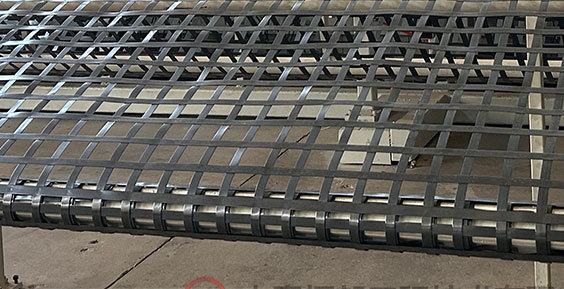
PET polyester welded geogrids are an advanced geosynthetic material manufactured from high-strength polyester fibers using state-of-the-art welding technology. They feature a regular, mesh-like structure, with longitudinal and transverse ribs interwoven to create a robust load-bearing system. The grid’s mesh sizes are highly customizable to meet specific project requirements, typically ranging from a few centimeters to over ten centimeters, ensuring optimal interlocking with various soil particle sizes.
The geogrid boasts exceptional toughness and remarkable flexibility, allowing it to adapt seamlessly to complex terrain variations while maintaining its integrity under tension—making it highly resistant to breakage. This unique combination of strength and resilience enables the geogrid to effectively distribute soil stresses, making it an ideal solution for reinforcing foundations, protecting slopes, and constructing reinforced earth structures in a wide range of civil engineering projects, including roads, railways, embankments, airports, and more. Ultimately, PET geogrids play a critical role in enhancing both the stability and durability of these infrastructure systems.
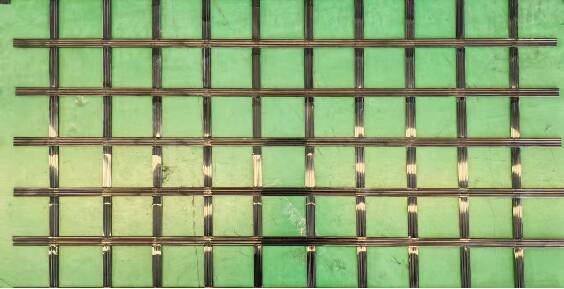
PET polyester welded geogrids are geosynthetic materials manufactured from high-strength polyester fibers using advanced welding technology. They feature a regular, mesh-like structure, with longitudinal and transverse ribs interwoven to create a robust load-bearing system. The grid’s mesh sizes can be customized to meet specific project requirements, typically ranging from a few centimeters to over ten centimeters, ensuring optimal interlocking with various soil particles. The geogrid boasts an exceptionally tough and durable texture, combined with excellent flexibility, allowing it to adapt seamlessly to complex terrain changes. Even under tension, it resists breakage, effectively distributing soil stresses across the surface. As a result, PET polyester welded geogrids are widely used in foundation reinforcement, slope protection, and reinforced soil structures for a variety of civil engineering projects—including roads, railways, embankments, and airports—providing critical support for enhanced stability and long-term durability.
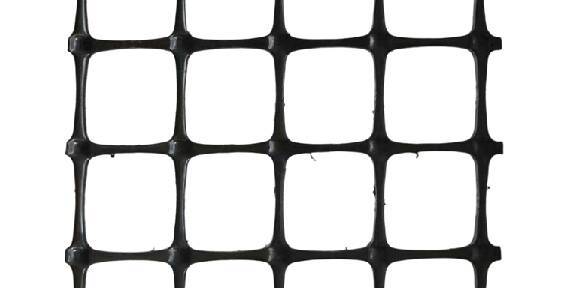
Plastic geogrids are mesh-like geosynthetic materials made from polypropylene (PP) or high-density polyethylene (HDPE), produced through an extrusion and stretching process. Featuring a uniform grid structure, they are lightweight, highly resistant to corrosion, and boast excellent tensile strength. Primarily used in applications such as subgrade reinforcement, slope protection, and soft ground treatment, these geogrids enhance the overall integrity of soil structures while effectively preventing deformation.
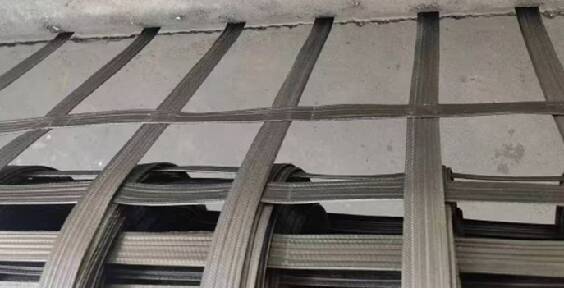
The bidirectional welded geogrid is a mesh-like geosynthetic material made from high-molecular polymers (such as polyethylene or polypropylene), processed through extrusion, stretching, and a bidirectional welding technique. Its unique "cross-and-longitudinal" grid design effectively distributes loads evenly while significantly enhancing the tensile strength of soil. As a result, it is widely used in reinforcement, isolation, drainage, and protection applications across various engineering projects, including highways, railways, embankments, and slope stabilization systems.
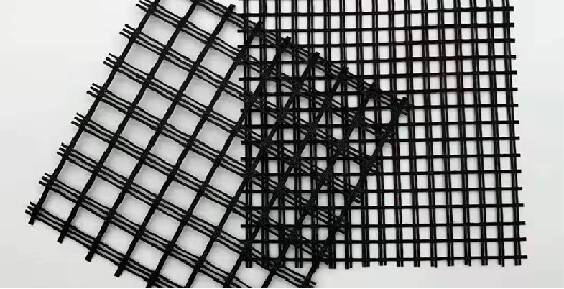
Economically woven geogrids are mesh-like geosynthetic materials manufactured using high-strength polyester (PET) or glass fibers as raw materials, processed through an edging technique (where warp and weft yarns are interwoven and subsequently coated with PVC or modified asphalt). Their unique structure provides exceptional tensile strength and minimal creep characteristics, making them widely used in applications such as soft ground reinforcement, pavement crack prevention, and slope protection—tasks that effectively enhance the overall integrity and deformation resistance of soil structures.
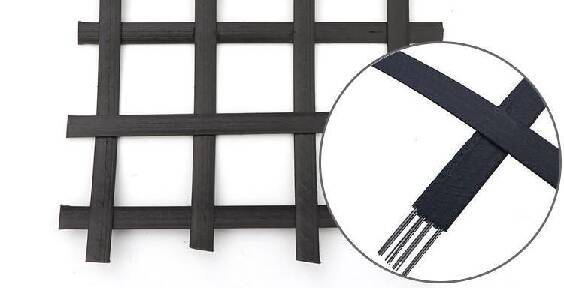
Steel-plastic geogrids are composite reinforcement materials made by combining high-strength steel wires (with a plastic coating for rust protection) and either polyethylene (PE) or polypropylene (PP), processed through extrusion coating, welding, or weaving techniques. Leveraging steel’s exceptional tensile strength and plastic’s outstanding corrosion resistance, these geogrids are specifically designed for heavy-duty applications such as soft ground treatment, roadbed reinforcement, and slope protection, significantly enhancing the overall integrity and load-bearing capacity of soil structures.
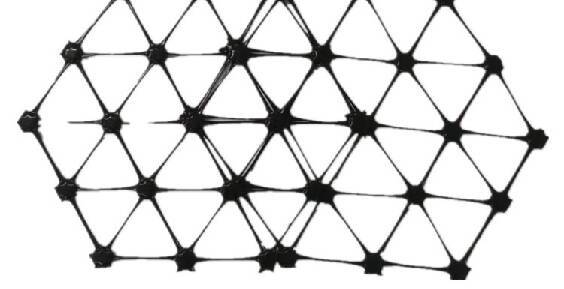
The three-way plastic geogrid is made from polypropylene (PP) or high-density polyethylene (HDPE), processed through bi-axial stretching combined with a unique three-dimensional structural design. Its surface features a regular, mesh-like pattern, providing multi-directional load-bearing capabilities. Widely used in highway and railway subgrades, airport runways, slope stabilization, and soft ground treatment, this geogrid efficiently distributes loads and effectively controls soil deformation.
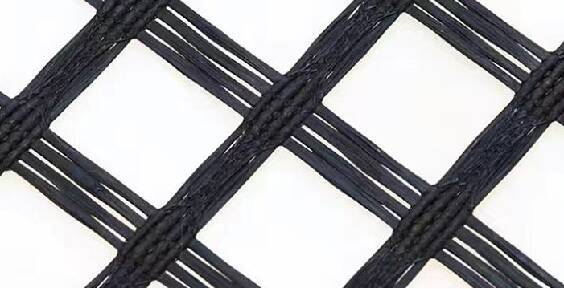
Fiberglass geogrids are mesh-reinforcement materials made by weaving and coating glass fibers, offering high strength and low elongation. They are primarily used in highway and railway subgrades, slope protection, and soft ground treatment projects, effectively distributing loads, minimizing settlement, and enhancing overall structural stability.
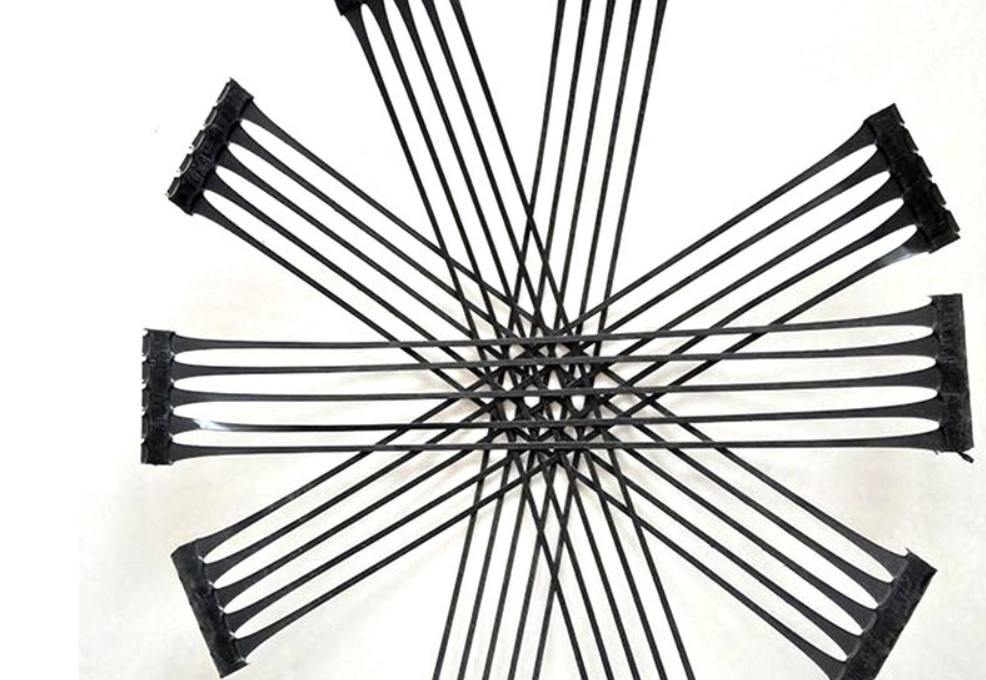
It is a mesh-like geosynthetic material made from polypropylene (PP) or high-density polyethylene (HDPE) using an extrusion and stretching process. Featuring a uniform grid structure, it boasts characteristics such as lightweight, corrosion resistance, and high tensile strength. Primarily used in applications like subgrade reinforcement, slope protection, and soft ground treatment, this material enhances the overall integrity of soil structures while effectively preventing deformation.
ZHONGTAI HENGBANG Technology Co., Ltd.
Address: East Section of Zhongtianmen Avenue, Tai'an High-tech Zone, Shandong Province
Service Hotline