

-
About UsZHONGTAI HENGBANG Engineering Technology Co., Ltd. is located in the Academician Entrepreneurship Base of Tai'an National High-Tech Industrial Development Zone, Shandong Province. The company is a comprehensive service provider specializing in engineering consulting and design, materials R&D and manufacturing, as well as operations and maintenance. With strong technical expertise and robust R&D capabilities, its products are primarily applied in critical areas such as water conservancy infrastructure projects, transportation infrastructure initiatives, and environmental protection solutions for isolating and preventing leakage from urban waste and highly hazardous industrial solid waste.

-
ProductsZHONGTAI HENGBANG Engineering Technology Co., Ltd. boasts production lines sourced from countries including Germany, Italy, Denmark, Belgium, and Switzerland, adhering to rigorous quality management systems and testing standards. We are equipped with advanced testing equipment capable of evaluating tensile strength, creep resistance, UV protection, water permeability, flame retardancy, antistatic properties, chemical corrosion resistance, and oxidation performance.
-
Application CasesThe product is primarily used in hydraulic infrastructure projects, transportation infrastructure projects, and environmental protection applications—including the isolation and impermeability of municipal waste and highly hazardous industrial solid waste.
-
BlogPrioritizing technological advancement and innovation, our company is committed to fulfilling user needs to the fullest extent possible.
Construction Plan for Laying and Welding of Composite Geomembranes
Release date:
2024-11-30
Construction Plan for Laying and Welding of Composite Geomembranes
The connection between the composite geomembrane and rigid structures such as covering concrete and bank slope rocks is achieved through anchored joints, ensuring tightness, durability, and adequate expansion allowances. The geomembrane is securely fastened to the concrete using bolts, with the membrane sandwiched between two layers of rubber waterstop strips. On the side adjacent to the concrete structure, one waterstop strip is bonded using PE or KS adhesive, while the opposite side features a flat steel plate fixed with bolts, followed by an external closure of toothed-concrete channels to create a fully sealed, impermeable barrier. Before embedding the composite geomembrane into the concrete, a 100-cm pleating allowance must be预留 to accommodate settlement and deformation of the dam structure. Additionally, at the overlaps between the geomembrane and the left and right banks, as well as along the boundaries of the seepage-proof reservoir area, excavation is performed to form toothed channels measuring 50 cm wide at the base, 1375–1500 cm wide at the top, and 50 cm deep. These channels are then filled and embedded with concrete for a secure, long-lasting seal.
1. Selection of Composite Geomembrane Specifications
The selection of composite geomembrane specifications depends on factors such as the flatness of the underlying layer, the material's allowable tensile stress, its elastic modulus, the maximum water head within the laying area, and the maximum particle size of the overlying cover layer. In addition to ensuring sufficient strength primarily dictated by water pressure requirements, the design of geomembrane thickness must also account for various application conditions, including exposure, burial depth, climate, and service life. Ultimately, the design and actual thickness should be determined in accordance with current national standards.
2. Composite Geomembrane Seepage Barrier Structural Layer Design
The upstream slope of the dam features a composite geomembrane seepage-control structure that, from top to bottom, consists of a 40-cm-thick grouted stone facing, an 180-cm-thick filter layer, a 30-cm-thick upper bedding layer made of sand and gravel, the composite geomembrane itself, and a 30-cm-thick lower bedding layer also composed of sand and gravel. The coarse aggregate in the filter layer has a maximum particle size of less than 350 mm, while the fine aggregates used for both the upper and lower bedding layers are limited to a maximum particle size of less than 10 mm—and the proportion of particles smaller than 0.075 mm in these materials does not exceed 5%. In the seepage-proof covering area of the reservoir basin, the composite geomembrane seepage-control structure is arranged sequentially from top to bottom as follows: an 80-cm-thick sand-gravel surface layer, a 30-cm-thick upper bedding layer of sand and gravel, the composite geomembrane, and a 30-cm-thick lower bedding layer of sand and gravel. The particle size requirements for the fill materials here are identical to those specified for the upstream slope of the dam.
3. Connection of the Composite Geomembrane to Concrete Guide Walls and Bank Slope Rock
The connection between the composite geomembrane and rigid structures such as covering concrete and bank slope rocks is achieved through anchored joints, ensuring tightness, durability, and adequate expansion allowances. The geomembrane is securely fastened to the concrete using bolts, with the membrane sandwiched between two layers of rubber waterstop strips. On the side adjacent to the concrete structure, one waterstop strip is bonded using PE or KS adhesive, while the opposite side features a flat steel plate fixed with bolts, followed by an external closure of toothed-concrete channels to create a fully sealed, impermeable barrier. Before embedding the composite geomembrane into the concrete, a 100-cm pleating allowance must be预留 to accommodate settlement and deformation of the dam structure. Additionally, at the overlaps between the geomembrane and the left and right banks, as well as along the boundaries of the seepage-proof reservoir area, excavation is performed to form toothed channels measuring 50 cm wide at the base, 1375–1500 cm wide at the top, and 50 cm deep. These channels are then filled and embedded with concrete for a secure, long-lasting seal.
The composite geomembrane can be connected to the retaining wall and gatehouse by laying it along the natural transition between the slope and the concrete structure. Subsequently, the geomembrane is overlapped with the exposed copper waterstop on the back of the retaining wall and with the bottom slab on the water-facing side of the gatehouse, before being secured using flat steel strips and expansion bolts.
II. Base Surface Preparation and Subbase Construction
1. Base Surface Preparation
The leveling layer surface must be smooth, with a solid foundation and compact soil—no unevenness, bumps, or cracks allowed. Sharp objects, rocks, wire, wooden sticks, or any similar materials are strictly prohibited. Additionally, all turf and tree roots within the seepage-proof area must be removed, and weeds should be treated with herbicide. Currently, the reservoir area’s seepage-proof covering zone has numerous seeping springs. During construction, trenches will be excavated along the perimeter of the covering area, and if necessary, several 7.5-kW clear-water pumps will be deployed to pump out and manage accumulated water.
2. Lower Cushion Layer
The leveling layer must be constructed simultaneously with the rest of the rockfill structure. The slope surface of the leveling layer must be smooth and densely compacted, with any deviation from the designed slope line not exceeding 3–5 cm at most. Use a 10-ton inclined roller to compact the material 4 to 8 times—rolling upward with vibration followed by downward static pressure. After compaction, the relative density of the leveling layer material should meet or exceed 0.80. The construction procedure is as follows: ① First, roll the slope surface several times without vibration, both up and down, ensuring that any protrusions or depressions are leveled out during this step. ② Next, use the vibratory roller to compact the slope from bottom to top, applying multiple passes while vibrating. Finally, recheck and further level any remaining irregularities. For the seepage-proof covering area in the reservoir zone, the existing 22-ton Longgong (LG522A) vibratory roller can be used for compaction. The number of compaction passes and overlap lengths will be determined based on site-specific testing. Once completed, the relative density of the compacted leveling layer material must also reach or surpass 0.8. The overall construction process mirrors that used for filling the main body of the dam with gravelly sand.
III. Composite Geomembrane Construction
The overall construction procedure for the composite geomembrane is as follows: subgrade acceptance → composite geomembrane installation → bottom geotextile seam stitching → geomembrane welding → geomembrane weld inspection → top geotextile seam stitching → geomembrane acceptance → covering with protective subgrade material → protective layer material acceptance → rubble masonry → rubble masonry acceptance.
1. Laying of Composite Geomembrane
To facilitate construction and ensure high-quality splicing, the composite geomembrane should be used in as wide a format as possible, minimizing the amount of on-site stitching required along the dam slope. Before installation, the geomembrane should be cut to the appropriate dimensions—based on its width and the site-specific length requirements—in a dedicated area, then joined into manageable, standardized-sized sections that can be manually carried to the working surface for laying. On the upstream face of the dam, the geomembrane is laid from top to bottom (with the longer width running parallel to the dam axis), extending outward horizontally from the toe of the slope toward the outer edge. During installation, wooden planks are placed on either side of the geomembrane to provide safe walking surfaces, while ensuring proper tension and alignment. It’s crucial that the geomembrane makes seamless contact with the underlying cushion layer, avoiding any damage caused by human activity or construction equipment. All construction personnel must wear flat-soled cloth shoes or soft rubber-soled footwear during installation. Studded shoes are strictly prohibited to prevent punctures or tears in the geomembrane. Additionally, the geomembrane installation should be carefully coordinated with the placement of the protective layer, ensuring that compaction occurs immediately after each section is laid. For areas within the reservoir’s seepage-proof covering system, where seepage springs may pose challenges, the installation process remains the same. However, prior to welding, temporary wooden planks can be laid directly onto the cushion material at the overlapping seams. Furthermore, additional elevated planks should be positioned between the geomembranes laid in opposite directions, allowing the welding process to take place under dry conditions. Once the welds have passed inspection, the reverse-facing geomembrane can be flipped 180 degrees counterclockwise, enabling the repetition of the entire installation, welding, and quality-checking sequence.
2. Technical Requirements for Laying Composite Geomembranes
The laying should be carried out in dry, warm weather. To ease the splicing process and prevent stress concentration, the composite geomembrane is laid using a wave-like, relaxed method, with a 2%–3% allowance for wrinkles to accommodate settlement and deformation of the dam structure. On slopes or vertical sections, an additional 100 cm of folding space should be预留 to allow for expansion and contraction. Once the geomembrane is laid, it should be promptly covered to avoid direct exposure to sunlight. During installation, ensure that the geomembrane is perfectly aligned and smoothly joined with the underlying cushion layer—there must be no upward or downward protrusions or wrinkles along the seam. ① The quality of the composite geomembrane's welds is critical to its overall anti-seepage performance. Therefore, proper welding techniques must be employed to guarantee high-quality seams. To achieve this, professional technicians from the manufacturer should be dispatched to the site for on-site operation, guidance, and training, utilizing specialized welding equipment designed specifically for geomembranes. ② The connection process for the composite geomembrane involves two distinct steps: first, sewing together the non-woven fabric layers (top and bottom), followed by welding the central PE membrane. For the non-woven fabric seams, use a handheld sewing machine with nylon thread to create double-stitched seams, ensuring an overlap width of 10 cm. As for the PE membrane, employ an automatic temperature- and speed-adjustable XC-type geomembrane welding machine for seamless connections. ③ The welding procedure begins after the first geomembrane sheet has been laid: carefully fold back the edge to be welded (approximately 60 cm wide), then position the second sheet in reverse alignment over the first one. Adjust both sheets so their edges overlap precisely by 10 cm before proceeding with the welding process. ④ All welding activities must take place under clear, sunny conditions. Construction is strictly prohibited during rainy days, extreme heat, or freezing temperatures. Before welding, the substrate surface must be completely dry. Use a hairdryer to remove any debris such as sand or dirt from the membrane surface, followed by wiping clean with a soft, dry cloth to ensure the area remains spotless. Additionally, place a long wooden board beneath the welding area to provide a stable, even base for the welding machine, ensuring optimal weld quality. Prior to starting formal welding, conduct a trial weld using identical PE material, adjusting the welding parameters based on ambient temperature and membrane thickness. Set the welding temperature between 250°C and 300°C, maintaining a welding speed of 2–3 meters per minute. Once the ideal settings are established, proceed with the actual construction. Weld seams must appear transparent, smooth, straight, and continuous. Each splice should consist of two parallel weld lines, each 10 mm wide, with a 10-mm gap left between them—a cavity used to visually inspect the integrity of the weld.
Inflation Method: The weld seam consists of two parallel lines, leaving an approximately 10mm cavity between them. Seal both ends of the section to be tested (ensure the double-seam inflation length is between 300 and 600 mm). Attach a No. 5 injection needle to the pressure gauge, then use a hand pump to inflate the system. Stop inflating once the pressure reaches 0.15 MPa to 0.20 MPa, and maintain this pressure for 15 minutes. If the pressure drop remains within 10%, the weld is considered合格 (qualified); however, if the pressure drops too quickly, it indicates that there are areas in the weld that were not properly sealed. To identify these spots, apply soapy water along the weld seam—where bubbles appear, re-weld those sections until no air leaks are detected.
After the self-inspection is passed, submit the work for a joint sampling inspection conducted by the supervisor and the owner. Implement segment-by-segment certification and visa approval. Any seams found with虚焊 (cold solder joints) or 漏焊 (missing welds) must be promptly re-welded, followed by an air-pressure test of the repaired areas. Only after these repairs pass inspection can the next construction phase proceed.
IV. Quality Control for Composite Geomembrane Construction
1. Raw Material Quality Control
The composite geomembranes entering the site must come with a certificate of conformity provided by the manufacturer, along with detailed performance and characteristic specifications, and an accompanying user manual. Visually, the composite geomembranes should show no pinholes, defects, or uneven thickness; likewise, the geotextile layers must be free from tears, holes, cracks, or signs of degradation or material deterioration. During transportation and upon arrival at the construction site, the materials should be stored properly to avoid direct sunlight and handled as few times as possible during loading and unloading. In accordance with construction technical standards, a mechanical property sampling inspection must be conducted every 10,000㎡ of composite geomembranes delivered to the site, ensuring that the material fully meets the specified technical requirements and preventing any substandard products from being used on the dam.
2. Geomembrane Welding Inspection
After the geomembrane welding is completed, the weld seams must be immediately inspected and accepted using visual inspection and an air-pressure test. Additionally, a sample of every 5,000㎡ of welded area will undergo tensile strength testing to ensure that the strength meets or exceeds 90% of the base material’s strength. Importantly, the fracture of the test specimen must not occur at the weld joint itself; if it does, the welding process needs to be re-evaluated through further trials until the design specifications are fully satisfied.
Visual Inspection Method: After the geomembrane welding is completed, immediately conduct a visual inspection to check for any missed connections. Ensure that the seams are free from scorching or wrinkling, and that the joints appear uniform. Verify that both weld lines are clear and transparent, with no signs of slag inclusion, air bubbles, uneven melting points, or weld misalignment. If any defects such as incomplete welding or improper melting points are detected, promptly use a hot-air gun to perform spot repairs.
Inflation Method: The weld seam consists of two parallel lines, with an approximately 10mm cavity left between them. Seal both ends of the section to be tested (ensure the double-seam inflation length is between 300 and 600 mm). Attach a No. 5 injection needle to the pressure gauge, then use a hand pump to inflate the system. Stop inflating once the pressure reaches 0.15 MPa to 0.20 MPa, and maintain this pressure for 15 minutes. If the pressure drop remains within 10%, the weld is considered合格 (qualified); however, if the pressure drops too quickly, it indicates that there are areas in the weld that were not properly sealed. To identify these spots, apply soapy water along the weld seam—where bubbles appear, re-weld those sections until no air leaks are detected.
After self-inspection passes, submit the work for a joint sampling inspection by the supervisor and the owner. Implement segment-by-segment certification and visa approval. Any seams found with虚焊 (cold solder joints) or 漏焊 (missing welds) must be promptly re-welded, followed by an air-pressure test of the repaired areas. Only after these repairs pass inspection can the next construction phase proceed.
3. Geomembrane Damage Repair
Worn-out geomembranes must be repaired by laying and thermally bonding small patch sections of geomembrane. The patches should extend at least 30 cm beyond the edges of the damaged area. If the length of a tear exceeds 10% of the roll width, the damaged section must be cut out entirely, and the two remaining ends of the geomembrane then joined together.
V. Conclusion
Geomembrane construction is a meticulous process that requires extensive, long-term experience. Construction personnel must not only understand the engineering principles behind geomembranes but also be adept at handling various complex situations based on site-specific conditions. For critical stages such as anchoring and laying the geomembrane, comprehensive engineering surveys should be conducted, complemented by laboratory tests and analytical calculations, to develop reliable and fully integrated construction methods. Depending on the project requirements, natural gravel and sand should be prioritized for use as cushion and protection layers, helping to prevent geomembrane damage caused by sharp stone edges or corners. Based on the test results, the base material always fails before the composite geomembrane weld seam during tensile testing. This indicates that the weld seam of the composite geomembrane is unlikely to be compromised by tensile forces or deformations, thus preventing leakage.
The previous one
Latest Updates
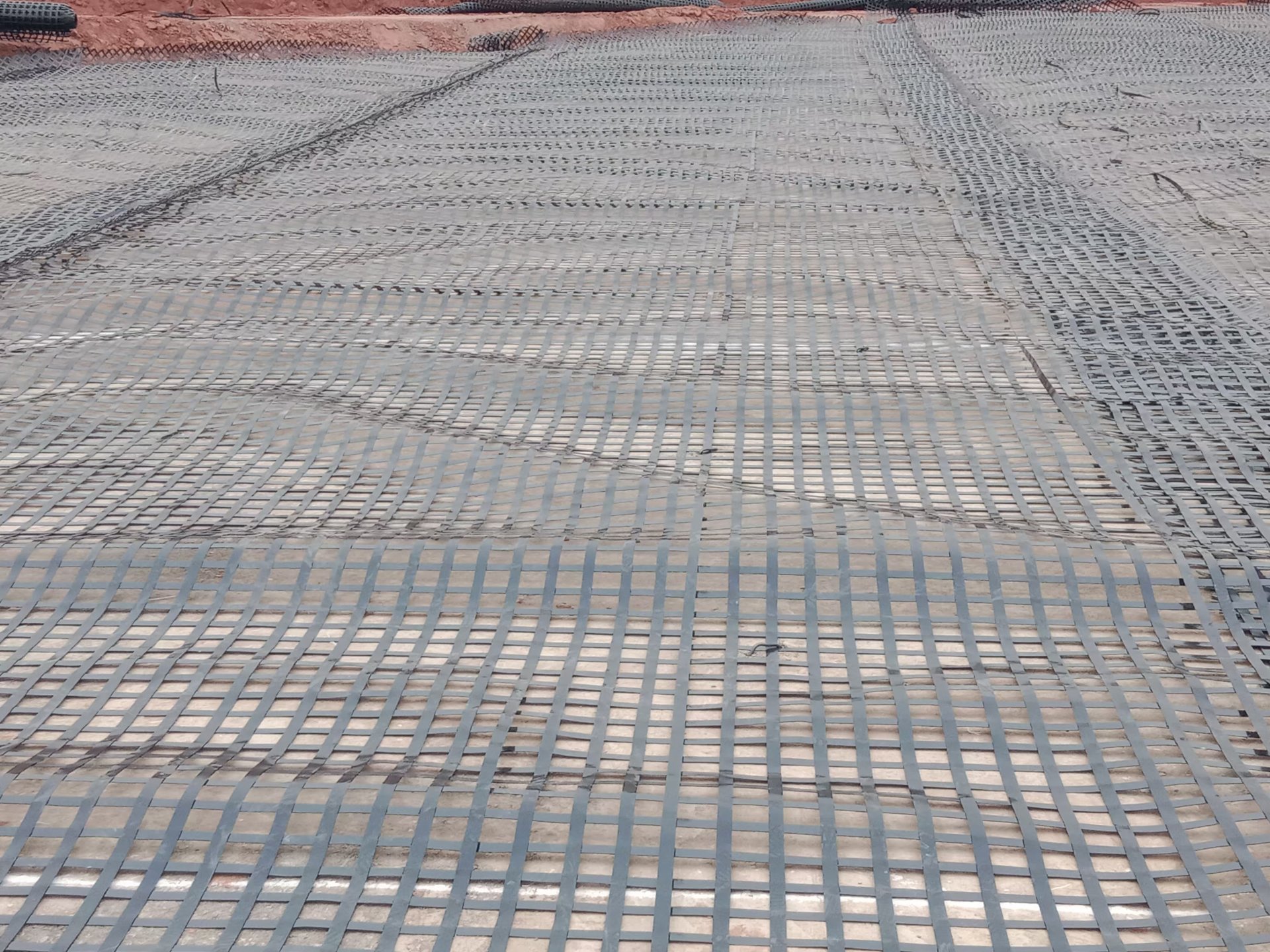
ZHONGTAI HENGBANGPET Polyester Welded Geogrid Advantages
Relying on independent innovation and technological expertise, Taihengbang Engineering Technology Co., Ltd. has achieved groundbreaking progress in the geosynthetics field. The company’s newly developed and produced PET polyester-welded geogrids, backed by multiple core patented technologies, have set a high-standard industry benchmark. Built on high-strength polyester materials and crafted through advanced precision welding techniques, these geogrids feature a robust, stable mesh structure, delivering exceptional performance in terms of tensile strength, durability, and environmental adaptability.
Jingzhe | Spring thunder rumbles, and all things grow.
Around March 5, the first spring thunder begins to rumble, rousing hibernating insects and snakes from their winter slumber. Peach blossoms start to peek out on the branches, and the earth softens as new buds emerge.
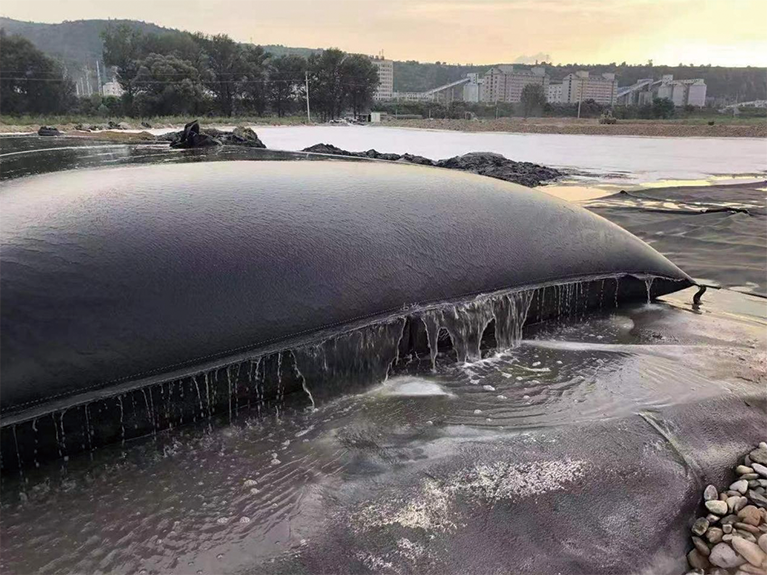
Geotube: A sludge dewatering tool—your eco-friendly engineering ally
A geotube is a tubular bag made by sewing together high-strength geotextile fabric. Utilizing the natural principle of gravity filtration, it removes water from sludge, effectively separating mud from water.

February 2, Dragon Raises Head: A Forgotten Spring Festival Celebration
On the second day of the second lunar month, spring returns to the earth, and all things awaken from their winter slumber. On this day—gradually fading from modern memory—lies one of the deepest cultural codes of the Chinese nation. The "Dragon Rises" is not just a seasonal marker; it’s also a spiritual totem for the Chinese people—a cherished legacy of our agricultural civilization.

Construction Plan for Laying and Welding of Composite Geomembranes
Construction Plan for Laying and Welding of Composite Geomembranes
Introduction to Drainage and Waterproofing Sheets
Introduction to Drainage and Waterproofing Sheets
ZHONGTAI HENGBANG Technology Co., Ltd.
Address: East Section of Zhongtianmen Avenue, Tai'an High-tech Zone, Shandong Province
Service Hotline