

-
About UsZHONGTAI HENGBANG Engineering Technology Co., Ltd. is located in the Academician Entrepreneurship Base of Tai'an National High-Tech Industrial Development Zone, Shandong Province. The company is a comprehensive service provider specializing in engineering consulting and design, materials R&D and manufacturing, as well as operations and maintenance. With strong technical expertise and robust R&D capabilities, its products are primarily applied in critical areas such as water conservancy infrastructure projects, transportation infrastructure initiatives, and environmental protection solutions for isolating and preventing leakage from urban waste and highly hazardous industrial solid waste.

-
ProductsZHONGTAI HENGBANG Engineering Technology Co., Ltd. boasts production lines sourced from countries including Germany, Italy, Denmark, Belgium, and Switzerland, adhering to rigorous quality management systems and testing standards. We are equipped with advanced testing equipment capable of evaluating tensile strength, creep resistance, UV protection, water permeability, flame retardancy, antistatic properties, chemical corrosion resistance, and oxidation performance.
-
Application CasesThe product is primarily used in hydraulic infrastructure projects, transportation infrastructure projects, and environmental protection applications—including the isolation and impermeability of municipal waste and highly hazardous industrial solid waste.
-
BlogPrioritizing technological advancement and innovation, our company is committed to fulfilling user needs to the fullest extent possible.
Tunnel Secondary Lining Construction: Guizhou EVA Waterproof Membrane and Nonwoven Fabric Laying Plan
Release date:
2020-09-22
Guizhou Zunyi EVA waterproof membranes come in two standard types: one is a plain Guizhou Zunyi EVA waterproof membrane without composite geotextile, while the other is an EVA membrane already laminated with geotextile. Both types are collectively referred to as Guizhou Zunyi EVA waterproof membranes and are currently the primary materials used for tunnel waterproofing and seepage control.
Currently, waterproof boards used in the secondary lining construction of tunnels are typically Guizhou Zunyi EVA Waterproof Board There are also materials made from ECB, though PVC is used relatively less frequently. EVA offers excellent elasticity, strong weldability, and superior durability, making it highly popular for tunnel waterproofing projects. Guizhou Zunyi EVA Waterproof Board There are two types of routines— one is purely a routine. Guizhou Zunyi EVA Waterproof Board Without composite geotextiles, another option is to have them combined directly with the geotextile. Guizhou Zunyi EVA Waterproof Board Two general terms Guizhou Zunyi EVA Waterproof Board They all belong to tunnel waterproofing sheets, which are currently the primary material used for tunnel waterproofing.
1. Construction Overview
Guizhou Zunyi EVA Waterproof Board Construction methods include: the "wire suspension method" for laying waterproof membranes, the "crawler self-supporting method" to reinforce formwork for pre-reserved openings in unreinforced secondary lining sections, the "three-dimensional positioning method" to ensure accurate rebar spacing and cover thickness, and the "gantry clamp method" for precisely fixing embedded waterstop strips. Additionally, this paper provides a detailed introduction to these construction techniques.
2. Wire Suspension Method for Installing EVA Waterproof Membranes in Zunyi, Guizhou
2.1 Original Design and Construction Method
For the secondary lining external waterproofing of the lacquer tree groove tunnel, a 1.2mm-thick Guizhou Zunyi EVA waterproof membrane along with 350g/m² non-woven fabric is installed between the initial support and the cast-in-place concrete lining. The original design specified that "the non-woven fabric and waterproof membrane must not be combined in a fully composite configuration," but it did not specify how they should otherwise be applied. Guizhou Zunyi EVA Waterproof Board "Connections are made using hot-melt pads."
2.2 Wire Suspension Method for Laying Guizhou Zunyi EVA Waterproof Board Construction Method
(1) First, lay the non-woven fabric: Before installing the non-woven fabric, cut off any protruding elements on the initial shotcrete surface, such as anchor rods, and cover them with mortar. Additionally, use mortar to smooth out uneven areas, ensuring the sprayed layer has a generally uniform and even surface. Finally, secure the non-woven fabric using nail-and-shim fasteners.
(2) Secure the wire using "7"-shaped nails: Use Φ6.5 steel bars to craft "7"-shaped nails, with each nail approximately 8 cm long. After laying the non-woven fabric, drill holes directly into the initial shotcrete layer using an electric drill. Then, firmly hammer the "7"-shaped nails into place, ensuring they remain flush with the surface to prevent damage to the waterproof membrane. The longitudinal spacing between "7"-shaped nails should ideally be 1.5 meters, while the circumferential spacing will depend on the specific design requirements of the waterproof membrane. Once the nails are securely in place, proceed to install the wire, making sure it is straight and tightly stretched, as shown in Figure 1.
(3) Sling Deployment Guizhou Zunyi EVA Waterproof Board : Once the wire installation is complete, proceed with installing the Guizhou Zunyi EVA waterproof membrane. Guizhou Zunyi EVA Waterproof Board Installed symmetrically from the arch vault to both sides. Place Guizhou Zunyi EVA Waterproof Board The strap after the hook is tied to the wire—make sure it’s neither too tight nor too loose. Guizhou Zunyi EVA Waterproof Board The spacing between the suspension loops after installation should match the wire spacing and must meet the design requirements.
2.3 Comparison of the Wire Suspension Method for Laying Waterproof Membranes with Traditional Construction Techniques
Compared to the "hot-melt backing method," the wire-hanging method eliminates issues like over- or under-welding during hot-melt welding, which can lead to detachment or damage, thereby improving construction quality. At the same time, this method is easier to implement and boosts labor efficiency as well.

3. Reinforcing the pre-reserved chamber formwork using the "self-supporting carriage method" for the non-reinforced secondary lining section
3.1 Traditional Reinforcement Method for Template of Non-Reinforced Secondary Lining with Reserved Chambers: In non-reinforced sections of the secondary lining, the reinforcement of tunnel template systems for reserved chambers typically involves adding steel arch supports to securely anchor the chamber templates onto the steel framework. For instance, in the Qishucao Tunnel's water and fire-fighting chamber (2.5 m long, 1.2 m high, and 0.35 m deep), additional grid-type steel arch supports—specifically three arches—are usually installed as an auxiliary reinforcement measure.
3.2 "Trolley Self-Consolidation Method" for Reinforcing and Constructing Reserved Cavity Formwork
(1) Formwork fabrication for reserved chambers: For chambers such as water and fire protection areas, the formwork is typically made from 5-cm-thick wooden boards. The surface in contact with concrete is covered with melamine boards to ensure a smooth and polished finish, while the side in contact with the tunneling carriage is fitted with double-sided adhesive tape to prevent slurry leakage. Additionally, internal supports are added to the formwork to maintain its shape and prevent deformation.
(2) Layout of reserved chambers and positioning of their formwork: After the waterproof membrane is laid but before the secondary lining carriage is positioned, use a total station to accurately stake out the chamber locations. Then, carefully position and place the chamber formwork precisely at these marked spots.
(3) Precise positioning of the secondary lining carriage: Move the secondary lining carriage to the designated position and ensure accurate alignment. Tighten all threaded rods securely, adjusting the formwork to its designed location.
(4) Reinforcing the reserved chamber formwork: Once the carriage is precisely positioned, carefully align the chamber formwork against the carriage template. Then, use bent reinforcing bars (which can be sourced locally—typically Φ16, sized to match the chamber formwork)—and spot-weld them onto the carriage template. For instance, in the case of water and fire protection chamber formwork, it’s recommended to install three evenly spaced circumferential reinforcement rings and two vertical reinforcement bars. This effectively secures the formwork within a steel-reinforced framework, preventing any shifting—up, down, or side-to-side—during concrete placement.
(5) Demolding and Finishing: Use the hydraulic cylinder on the trolley to release the weld points connecting the trolley to the reinforcing bars. After demolding, carefully grind down the weld points on the trolley to ensure a smooth finish.
(6) Reinforcement Effect: Based on construction practice, using this method ensures that the pre-reserved openings are positioned with high accuracy. Compared to reinforcing with arch supports, this approach not only saves materials but also accelerates the construction process. However, since welding is performed directly onto the carriage formwork, the weld points should be carefully ground down after demolding to avoid compromising the aesthetic appearance of the concrete.
4. "Three-dimensional positioning method" ensures rebar spacing and cover thickness.
4.1 3D Positioning Method Construction Technique
(1) Installation of Circumferential Positioning Rebars: The circumferential positioning rebars can be made from the same specifications as the secondary lining’s circumferential reinforcement, but should not be smaller than Φ20. Their longitudinal spacing is ideally set at 2 meters. These rebars can be placed directly against the Guizhou Zunyi EVA waterproof membrane, with their bottom ends welded to the embedded reinforcing bars, ensuring they can adequately support the weight of the outer-layer reinforcement in the secondary lining.
(2) Installation of Radial Positioning Rebars: After the circumferential positioning rebars have been installed, radial positioning rebars (with a diameter no less than Φ20) can be welded onto the circumferential rebar. The length of each radial rebar should be at least equal to the thickness of the secondary lining concrete. The recommended spacing between adjacent radial positioning rebars is 3 meters along the circumference.
(3) Vertical Positioning Rebar Installation
Use a total station to precisely mark the positions of both inner and outer reinforcement bars on the radial rebars, then weld longitudinal positioning rebars (with a diameter no smaller than Φ20) onto the longitudinal rebars to ensure proper concrete cover thickness and accurate spacing between the inner and outer reinforcement layers.
(4) Secondary lining rebar installation: Mark the positions of the secondary lining circumferential rebars on the longitudinal positioning rebars (to ensure proper spacing), then install the outer layer of circumferential rebars at these marked locations. Once this is done, proceed to install the longitudinal rebars and finally the inner layer of rebars in sequence.
(5) Removal of Circumferential Positioning Reinforcement
ZHONGTAI HENGBANG Engineering Technology Co., Ltd. is a comprehensive service provider integrating engineering consulting and design, material R&D and manufacturing, as well as operations and maintenance. With robust technical expertise and strong R&D capabilities, our products are prominently applied in critical areas such as water conservancy infrastructure projects, transportation infrastructure initiatives, and environmental protection fields like urban waste management and the isolation/anti-seepage of hazardous industrial solid wastes. The company boasts advanced production lines sourced from Germany, Italy, Denmark, Belgium, Switzerland, and other countries, adhering to stringent quality management systems and rigorous testing standards. We are equipped with state-of-the-art equipment capable of evaluating key properties—including tensile strength, creep resistance, UV resistance, permeability, flame retardancy, antistatic performance, chemical corrosion resistance, and oxidation stability—ensuring superior product quality. Furthermore, ZHONGTAI HENGBANG has earned prestigious certifications such as CRCC, ISO 9001, ISO 14001, OHSAS 18000, and MA approval. The company also holds inspection reports from China’s Ministry of Railways and Ministry of Water Resources, along with the EU CE certification, and has undergone testing by specialized laboratories in Russia, Australia, the United States, and other regions. We are dedicated to delivering top-quality geosynthetic materials and unparalleled services for a wide range of projects, including reinforced earth retaining walls, soft ground stabilization, land reclamation and embankment construction/maintenance, hydraulic engineering, slope remediation and landscaping, road construction, and mining projects.
Consultation Phone: 13953856388
Contact: Mr. Zhang
The previous one
The next one
Latest Updates
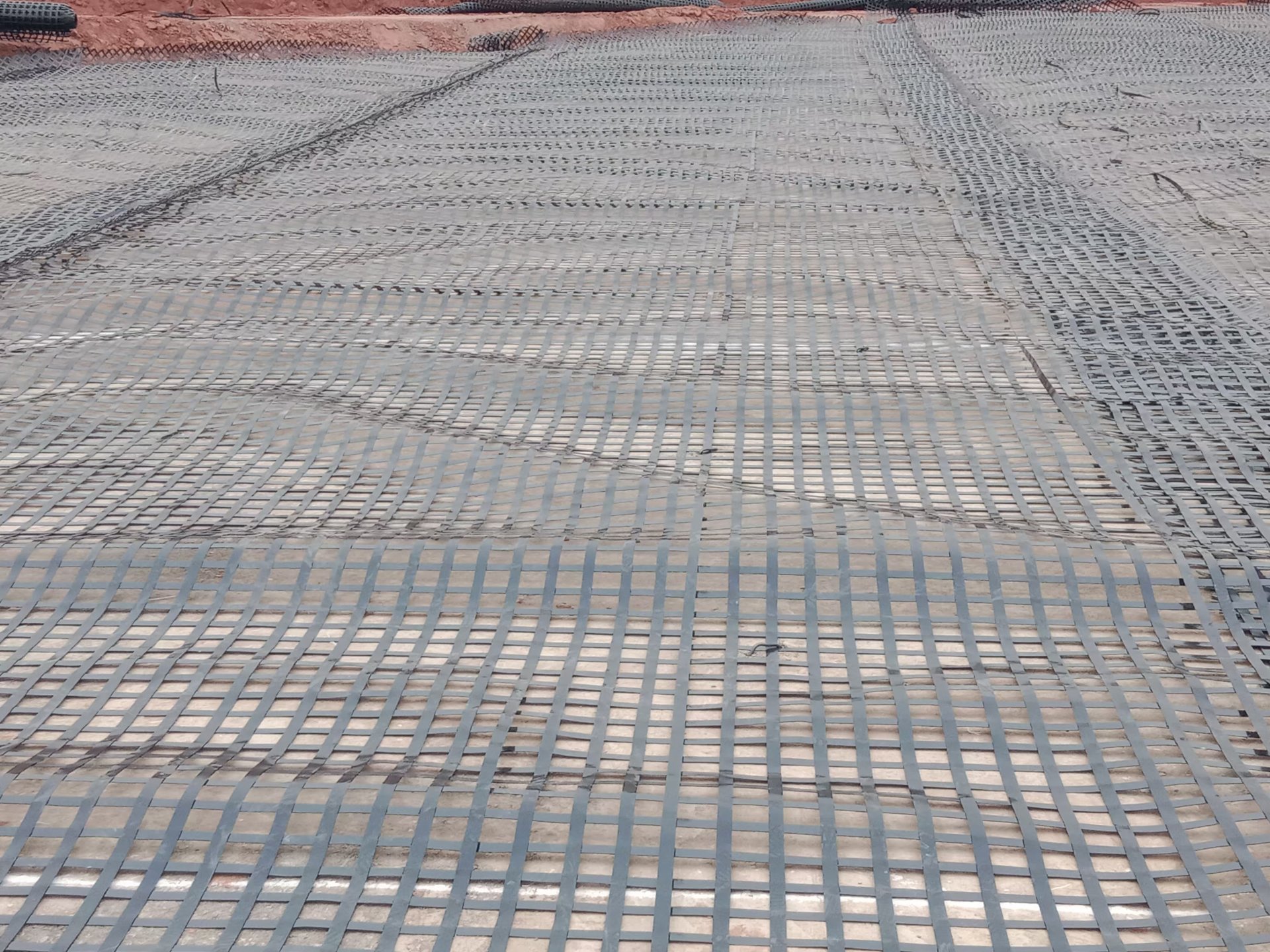
ZHONGTAI HENGBANGPET Polyester Welded Geogrid Advantages
Relying on independent innovation and technological expertise, Taihengbang Engineering Technology Co., Ltd. has achieved groundbreaking progress in the geosynthetics field. The company’s newly developed and produced PET polyester-welded geogrids, backed by multiple core patented technologies, have set a high-standard industry benchmark. Built on high-strength polyester materials and crafted through advanced precision welding techniques, these geogrids feature a robust, stable mesh structure, delivering exceptional performance in terms of tensile strength, durability, and environmental adaptability.
Jingzhe | Spring thunder rumbles, and all things grow.
Around March 5, the first spring thunder begins to rumble, rousing hibernating insects and snakes from their winter slumber. Peach blossoms start to peek out on the branches, and the earth softens as new buds emerge.
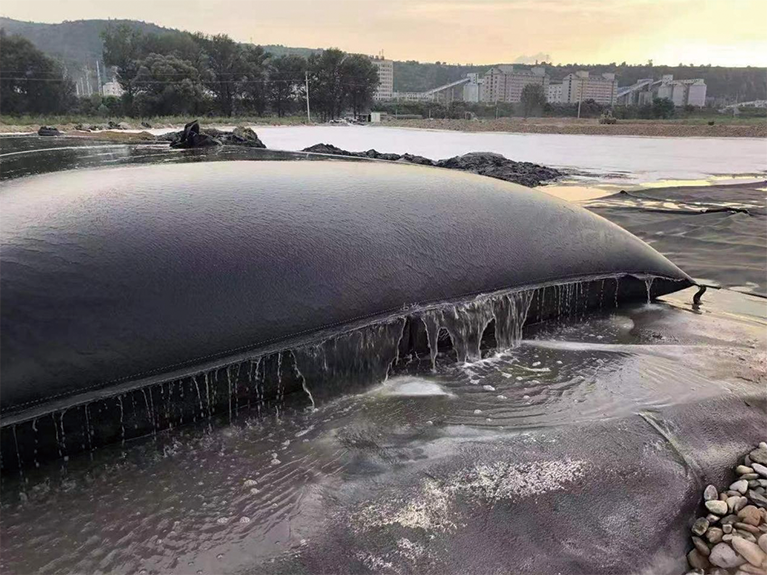
Geotube: A sludge dewatering tool—your eco-friendly engineering ally
A geotube is a tubular bag made by sewing together high-strength geotextile fabric. Utilizing the natural principle of gravity filtration, it removes water from sludge, effectively separating mud from water.
February 2, Dragon Raises Head: A Forgotten Spring Festival Celebration
On the second day of the second lunar month, spring returns to the earth, and all things awaken from their winter slumber. On this day—gradually fading from modern memory—lies one of the deepest cultural codes of the Chinese nation. The "Dragon Rises" is not just a seasonal marker; it’s also a spiritual totem for the Chinese people—a cherished legacy of our agricultural civilization.
Construction Plan for Laying and Welding of Composite Geomembranes
Construction Plan for Laying and Welding of Composite Geomembranes
Introduction to Drainage and Waterproofing Sheets
Introduction to Drainage and Waterproofing Sheets
ZHONGTAI HENGBANG Technology Co., Ltd.
Address: East Section of Zhongtianmen Avenue, Tai'an High-tech Zone, Shandong Province
Service Hotline