

-
About UsZHONGTAI HENGBANG Engineering Technology Co., Ltd. is located in the Academician Entrepreneurship Base of Tai'an National High-Tech Industrial Development Zone, Shandong Province. The company is a comprehensive service provider specializing in engineering consulting and design, materials R&D and manufacturing, as well as operations and maintenance. With strong technical expertise and robust R&D capabilities, its products are primarily applied in critical areas such as water conservancy infrastructure projects, transportation infrastructure initiatives, and environmental protection solutions for isolating and preventing leakage from urban waste and highly hazardous industrial solid waste.

-
ProductsZHONGTAI HENGBANG Engineering Technology Co., Ltd. boasts production lines sourced from countries including Germany, Italy, Denmark, Belgium, and Switzerland, adhering to rigorous quality management systems and testing standards. We are equipped with advanced testing equipment capable of evaluating tensile strength, creep resistance, UV protection, water permeability, flame retardancy, antistatic properties, chemical corrosion resistance, and oxidation performance.
-
Application CasesThe product is primarily used in hydraulic infrastructure projects, transportation infrastructure projects, and environmental protection applications—including the isolation and impermeability of municipal waste and highly hazardous industrial solid waste.
-
BlogPrioritizing technological advancement and innovation, our company is committed to fulfilling user needs to the fullest extent possible.
Jiangxi HDPE Geomembrane Lining Construction Plan
Release date:
2020-09-19
I. Site Foundation Treatment
1. Laying out Jiangxi Ji'an HDPE Geomembrane First, coordinate with relevant departments to conduct a comprehensive inspection of the laying base. The laying base must be firm and level, with no tree roots, rubble, pebbles, concrete particles, rebar ends, glass fragments, or any other debris within a vertical tolerance of 25 mm—any such materials could potentially damage the geomembrane. Use a roller compactor to firmly compact the surface, eliminating tire tracks, footprints, and uneven ground features. Additionally, any ground protrusions larger than 12 mm must be either crushed or thoroughly compacted.
2, Jiangxi Ji'an HDPE Geomembrane When laid on compacted backfill, the compaction degree of the backfill material should not be less than 95 percent.
3. The site foundation must be free of seepage, silt, standing water, organic debris, and any hazardous substances that could potentially harm the environment. Additionally, the corners of the foundation base should be smoothly rounded—typically, the radius of these curves should not be less than 500 millimeters.

2. Jiangxi Ji'an HDPE Geomembrane Construction Technical Requirements
1. Jiangxi Ji'an HDPE Geomembrane Laying and han joint construction should be carried out when the temperature is above 5°C, wind speeds are below level 4, and there is no rain or snow.
2, Jiangxi Ji'an HDPE Geomembrane The construction process follows this sequence: geotextile membrane installation → lapping and joint alignment → joint sealing → on-site inspection → repairs → re-inspection → backfilling with soil.
3. The overlap width between membrane joints shall be no less than 80 millimeters, and the seams should generally be arranged parallel to the direction of the steepest slope—specifically, aligned along the slope.
4. Jiangxi Ji'an HDPE Geomembrane During installation, care should be taken to avoid creating artificial wrinkles as much as possible. Installation Jiangxi Jifa Waterproof Geomembrane At that time, it should be based on the local temperature fluctuation range and Jiangxi Ji'an HDPE Geomembrane Performance requirements include accounting for expansion and contraction caused by temperature changes, as well as considering the site's topography. Jiangxi Jifa Waterproof Geomembrane The installation should account for the expansion and contraction of the geotextile membrane to accommodate uneven settlement of the foundation.
5, Jiangxi Ji'an HDPE Geomembrane After laying, minimize walking on the membrane surface or moving tools across it. Any objects that could potentially damage the Jiangxi Ji'an HDPE geomembrane should never be placed directly on the membrane—or carried while walking on it—to prevent accidental damage to the HDPE film.
6, Jiangxi Jifa Waterproof Geomembrane No personnel on the construction site are permitted to smoke, wear shoes with metal nails, or walk on the membrane surface in high-heeled or hard-soled footwear. Additionally, any activities that could potentially damage the impermeable membrane are strictly prohibited.
7, Jiangxi Ji'an HDPE Geomembrane After laying is complete but before covering with a protective layer, place one sandbag weighing 20–40 kg every 2–5 meters along the edges and corners of the membrane to prevent it from being lifted by the wind.
8, Jiangxi Ji'an HDPE Geomembrane It should conform naturally and lie flat against the supporting layer, without any creases or lifting.
9, Jiangxi Ji'an HDPE Geomembrane When constructing in sections, the upper layer should be completed promptly after laying; exposure to air should not exceed 30 days.
10, Jiangxi Ji'an HDPE Geomembrane Anchoring must be carried out according to the design. In areas with complex terrain during construction, if the contractor proposes alternative anchoring methods, they must first obtain approval from both the design and supervisory teams before proceeding.
3. Jiangxi Jifa Waterproof Geomembrane Han accepts the request:
1. Jiangxi Jifa Waterproof Geomembrane The weld overlap surfaces must be free of contaminants such as dirt, sand, and standing water (including dew) that could compromise the quality of the weld. These impurities should be thoroughly cleaned before welding begins.
2. At the start of each daily welding session (early morning and after the lunch break), BI must first perform a trial weld on-site. Only after confirming it meets the required standards should the official welding proceed.
3, Jiangxi Jifa Waterproof Geomembrane The han joints should ideally be made using a double-track hot-melt welding machine; extrusion welding or hot-air gun bonding is only recommended for repairs, coverings, or areas where the hot-melt welder cannot reach.
4. During construction, the welding machine's working temperature and speed should be adjusted and controlled in real time based on ambient temperature and material properties.
5. At the weld seams, the HDPE membrane should be fused into a single, continuous layer, with no instances of incomplete welding, leaks, or excessive welding. The two layers being joined Jiangxi Jifa Waterproof Geomembrane The fabric must be laid flat and smoothly.
4. Weld Seam Quality Control
As construction progresses, it is essential to promptly inspect the quality of HDPE membrane welds. Any areas with missed or incomplete welds should be immediately repaired using a hot air gun or plastic welding torch. The specific procedure is as follows:
The inspection is carried out in three steps: visual inspection, inflation test, and destructive testing.
2. Visual inspection: Check whether the two welds are smooth, clear, free of wrinkles, transparent with no slag inclusions, bubbles, pinholes, melt-through defects, or improper weld bead formation.
Visual inspection primarily involves carefully examining the appearance of the laid geomembrane, weld quality, T-joint connections, and any debris on the substrate. All construction personnel should integrate this task into every stage of the entire construction process.
3. In addition to visual inspection, vacuum testing should be used to verify the tightness of all welds. For areas where vacuum testing is not feasible, self-inspection should be particularly strengthened.
4. The inflation pressure for the air-tightness test is set at 0.25 MPa, with no air leakage detected over 2 minutes. Considering the roll material is relatively soft and prone to deformation, a pressure drop of up to 20% is permitted.
5. When tensile tests are conducted on the sample taken from the double-rail weld seam, the standard is that during peel and shear tests, the weld seam itself should remain intact without tearing, while the base material is pulled apart instead. If this condition is met, the weld passes inspection. However, if the sample fails to meet the criteria, a second sample must be taken from the same weld seam. If all three consecutive samples fail, the entire weld seam must be reworked.
6. The sample blocks that have passed testing will be submitted to the owner, general contractor, and relevant parties for archiving.
7. Defects identified during visual inspection, inflation testing, and destructive testing should be repaired promptly. If immediate repair is not possible, proper markings must be made to ensure nothing is overlooked during the repair process.
8. During visual inspection, if pinholes or other defects are found on the membrane surface, as well as issues such as weld leakage, cold solder joints, or damage occurring during the welding process, promptly repair these areas using fresh base material. Ensure that the repair extends 10–20 cm beyond the damaged area on each side, and maintain detailed records of the repairs.
9. For repaired welds, a detailed visual inspection is typically conducted to ensure the repair is reliable before allowing the product to proceed.
ZHONGTAI HENGBANG Engineering Technology Co., Ltd. is a comprehensive service provider integrating engineering consulting and design, material R&D, production, manufacturing, as well as operation and maintenance. With robust technical expertise and strong R&D capabilities, our products are prominently applied in environmental protection fields such as hydraulic infrastructure projects, transportation infrastructure initiatives, and the isolation and anti-seepage solutions for urban waste and hazardous industrial solid wastes. The company boasts advanced production lines sourced from Germany, Italy, Denmark, Belgium, Switzerland, and other countries, adhering to stringent quality management systems and rigorous testing standards. We are equipped with state-of-the-art equipment capable of evaluating critical properties—including tensile strength, creep resistance, UV resistance, permeability, flame retardancy, antistatic performance, chemical corrosion resistance, and oxidation stability—ensuring top-tier product quality. Furthermore, our enterprise has successfully obtained certifications such as CRCC, ISO 9001, ISO 14001, OHSAS 18000, and MA certificates, along with inspection reports issued by China’s Ministry of Railways and Ministry of Water Resources, the EU CE certification, and approvals from specialized laboratories in Russia, Australia, the United States, and other regions. We are dedicated to delivering premium geosynthetic materials and unparalleled services tailored to a wide range of projects, including reinforced earth retaining walls, soft ground stabilization, land reclamation and dike construction/maintenance, hydraulic engineering, slope remediation and landscaping, road construction, and mining projects.
Consultation Phone: 13953856388
Contact: Mr. Zhang
Latest Updates
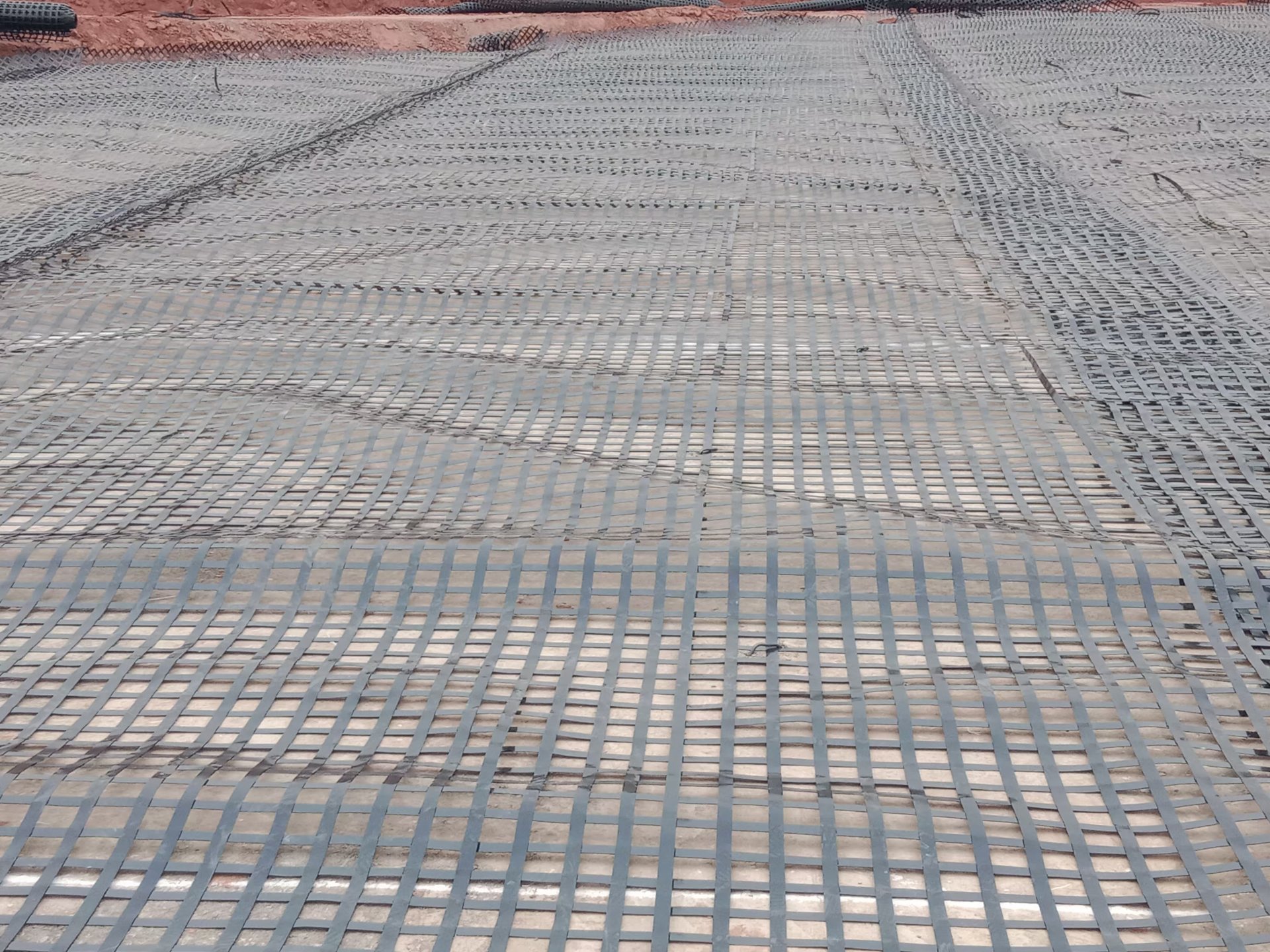
ZHONGTAI HENGBANGPET Polyester Welded Geogrid Advantages
Relying on independent innovation and technological expertise, Taihengbang Engineering Technology Co., Ltd. has achieved groundbreaking progress in the geosynthetics field. The company’s newly developed and produced PET polyester-welded geogrids, backed by multiple core patented technologies, have set a high-standard industry benchmark. Built on high-strength polyester materials and crafted through advanced precision welding techniques, these geogrids feature a robust, stable mesh structure, delivering exceptional performance in terms of tensile strength, durability, and environmental adaptability.
Jingzhe | Spring thunder rumbles, and all things grow.
Around March 5, the first spring thunder begins to rumble, rousing hibernating insects and snakes from their winter slumber. Peach blossoms start to peek out on the branches, and the earth softens as new buds emerge.
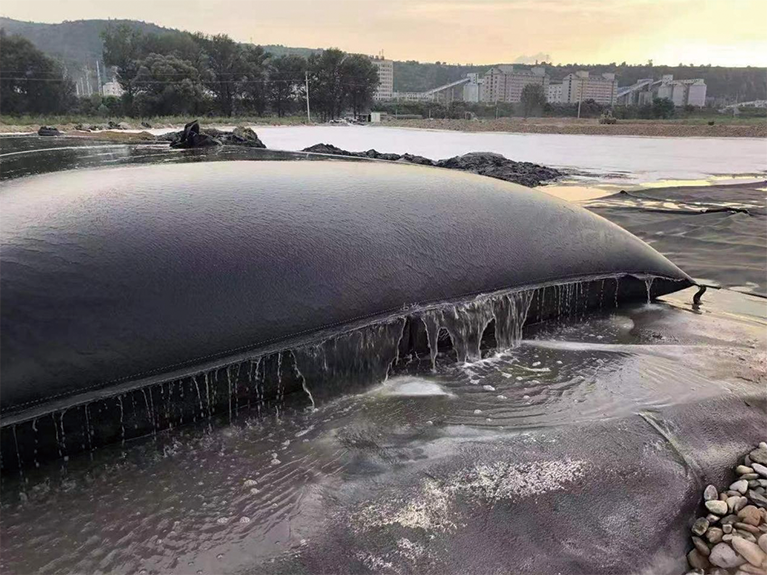
Geotube: A sludge dewatering tool—your eco-friendly engineering ally
A geotube is a tubular bag made by sewing together high-strength geotextile fabric. Utilizing the natural principle of gravity filtration, it removes water from sludge, effectively separating mud from water.
February 2, Dragon Raises Head: A Forgotten Spring Festival Celebration
On the second day of the second lunar month, spring returns to the earth, and all things awaken from their winter slumber. On this day—gradually fading from modern memory—lies one of the deepest cultural codes of the Chinese nation. The "Dragon Rises" is not just a seasonal marker; it’s also a spiritual totem for the Chinese people—a cherished legacy of our agricultural civilization.
Construction Plan for Laying and Welding of Composite Geomembranes
Construction Plan for Laying and Welding of Composite Geomembranes
Introduction to Drainage and Waterproofing Sheets
Introduction to Drainage and Waterproofing Sheets
ZHONGTAI HENGBANG Technology Co., Ltd.
Address: East Section of Zhongtianmen Avenue, Tai'an High-tech Zone, Shandong Province
Service Hotline