

-
About UsZHONGTAI HENGBANG Engineering Technology Co., Ltd. is located in the Academician Entrepreneurship Base of Tai'an National High-Tech Industrial Development Zone, Shandong Province. The company is a comprehensive service provider specializing in engineering consulting and design, materials R&D and manufacturing, as well as operations and maintenance. With strong technical expertise and robust R&D capabilities, its products are primarily applied in critical areas such as water conservancy infrastructure projects, transportation infrastructure initiatives, and environmental protection solutions for isolating and preventing leakage from urban waste and highly hazardous industrial solid waste.

-
ProductsZHONGTAI HENGBANG Engineering Technology Co., Ltd. boasts production lines sourced from countries including Germany, Italy, Denmark, Belgium, and Switzerland, adhering to rigorous quality management systems and testing standards. We are equipped with advanced testing equipment capable of evaluating tensile strength, creep resistance, UV protection, water permeability, flame retardancy, antistatic properties, chemical corrosion resistance, and oxidation performance.
-
Application CasesThe product is primarily used in hydraulic infrastructure projects, transportation infrastructure projects, and environmental protection applications—including the isolation and impermeability of municipal waste and highly hazardous industrial solid waste.
-
BlogPrioritizing technological advancement and innovation, our company is committed to fulfilling user needs to the fullest extent possible.
The Laying Method for Short-Filament Geotextiles in Zhejiang
Release date:
2020-12-15
Let's start with the introduction. Zhejiang Jiaxing Short-Filament Geotextile Function:
Application Zhejiang Jiaxing Short-Filament Geotextile Excellent air permeability and water absorption allow water to flow freely, effectively preventing the outflow of gravel and soil. Zhejiang Jiaxing Short-Filament Geotextile Featuring excellent water-conducting properties, it can create drainage channels within the sand soil, effectively removing excess liquids and gases from the soil structure. Geotextiles are used to enhance the sand soil's compressive strength and resistance to deformation, thereby improving the stability of construction structures. By distributing concentrated stresses evenly across the sand soil, these materials help prevent damage caused by external forces. Additionally, geotextiles act as a barrier, preventing mixing between different layers such as gravel, sand, and concrete. The porous structure—characterized by interconnected voids—is highly resilient and capable of self-movement, ensuring that clogging is unlikely to occur due to mud or other debris. Furthermore, thanks to their high water absorption capacity, these materials maintain consistent performance even under soil-water pressure. Finally, being made from durable synthetic fibers like polypropylene or polyester, they exhibit exceptional resistance to corrosion, chemical attack, and pest infestation.

Zhejiang Jiaxing Short-Filament Geotextile The paving method:
1. Apply manually using a rolling method; ensure the nylon fabric is evenly smoothed out, leaving adequate room for any potential deformation.
2. Equipment for polyester filament or waterproof Zhejiang Jiaxing short-fiber geotextiles typically uses methods such as rebar lapping and stitching. The width of the stitching is usually around 0.1 meters, while the rebar-lapped sections are generally about 0.2 meters wide. For geotextiles that may be temporarily exposed, stitching should be used instead.
3. Zhejiang Jiaxing Short-Filament Geotextile The stitching—whether it’s any type of seam or stitch—typically has a needle spacing of 25mm along the selvage (the exposed edge of the fabric). The seams are neatly finished. Zhejiang Jiaxing Short-Filament Geotextile Use a single-row, lockstitch chain-seam method at the joints. The thread tension for sewing exceeds 60 N, and the epoxy resin material exhibits chemical resistance comparable to, or even surpassing, that of short-fiber geotextiles from Jiaxing, Zhejiang.
Everything is sewn up. Zhejiang Jiaxing Short-Filament Geotextile "On the needle, re-sewing after it has been damaged. Implement appropriate measures to prevent equipment-related soil layers, particulate chemicals, or foreign chemical substances from entering." Zhejiang Jiaxing Short-Filament Geotextile Layers. Fabric-reinforced splices can be categorized into natural splices and seam splices, depending on the terrain and application requirements.
4. At the construction site, the geotextile beneath the geomembrane uses natural reinforcing bar overlaps, while the next layer of geotextile below the geomembrane is joined by sewing or hot-air welding. Hot-air welding provides waterproofing. Zhejiang Jiaxing Short-Filament Geotextile The joining method involves using a hot air gun to rapidly apply ultra-low-temperature heat to the edges of the two fabric pieces, causing them to partially melt. The materials are then immediately pressed together firmly under external pressure, ensuring a strong bond. However, in damp conditions—such as rainy or snowy weather—when ambient temperatures prevent effective thermal bonding from taking place, Zhejiang Jiaxing Short-Filament Geotextile Another method—thread-to-thread joining—should be used, involving the termination of multi-strand stitching with a standard sewing machine, and selecting sutures that are resistant to chemical and UV light exposure.
ZHONGTAI HENGBANG Engineering Technology Co., Ltd. is a comprehensive service provider integrating engineering consulting and design, material R&D and manufacturing, as well as operations and maintenance. With robust technical expertise and strong R&D capabilities, our products are prominently applied in environmental protection fields such as hydraulic infrastructure projects, transportation infrastructure initiatives, and the isolation and anti-seepage solutions for urban waste and hazardous industrial solid waste. The company boasts advanced production lines sourced from Germany, Italy, Denmark, Belgium, Switzerland, and other countries, adhering to stringent quality management systems and rigorous testing standards. We are equipped with state-of-the-art equipment capable of evaluating critical properties—including tensile strength, creep resistance, UV resistance, permeability, flame retardancy, antistatic performance, chemical corrosion resistance, and oxidation stability—ensuring top-tier product quality. Furthermore, our enterprise has successfully obtained certifications such as CRCC, ISO 9001, ISO 14001, OHSAS 18000, and MA certificates, along with inspection reports from China’s Ministry of Railways and Ministry of Water Resources, as well as the prestigious EU CE certification. Additionally, we have undergone specialized laboratory testing in Russia, Australia, the United States, and other relevant regions. We are dedicated to delivering premium geosynthetic materials and unparalleled services for projects including reinforced soil retaining walls, soft ground stabilization, land reclamation and dike maintenance, hydraulic engineering, slope remediation and greening, road construction, and mining projects.
Latest Updates
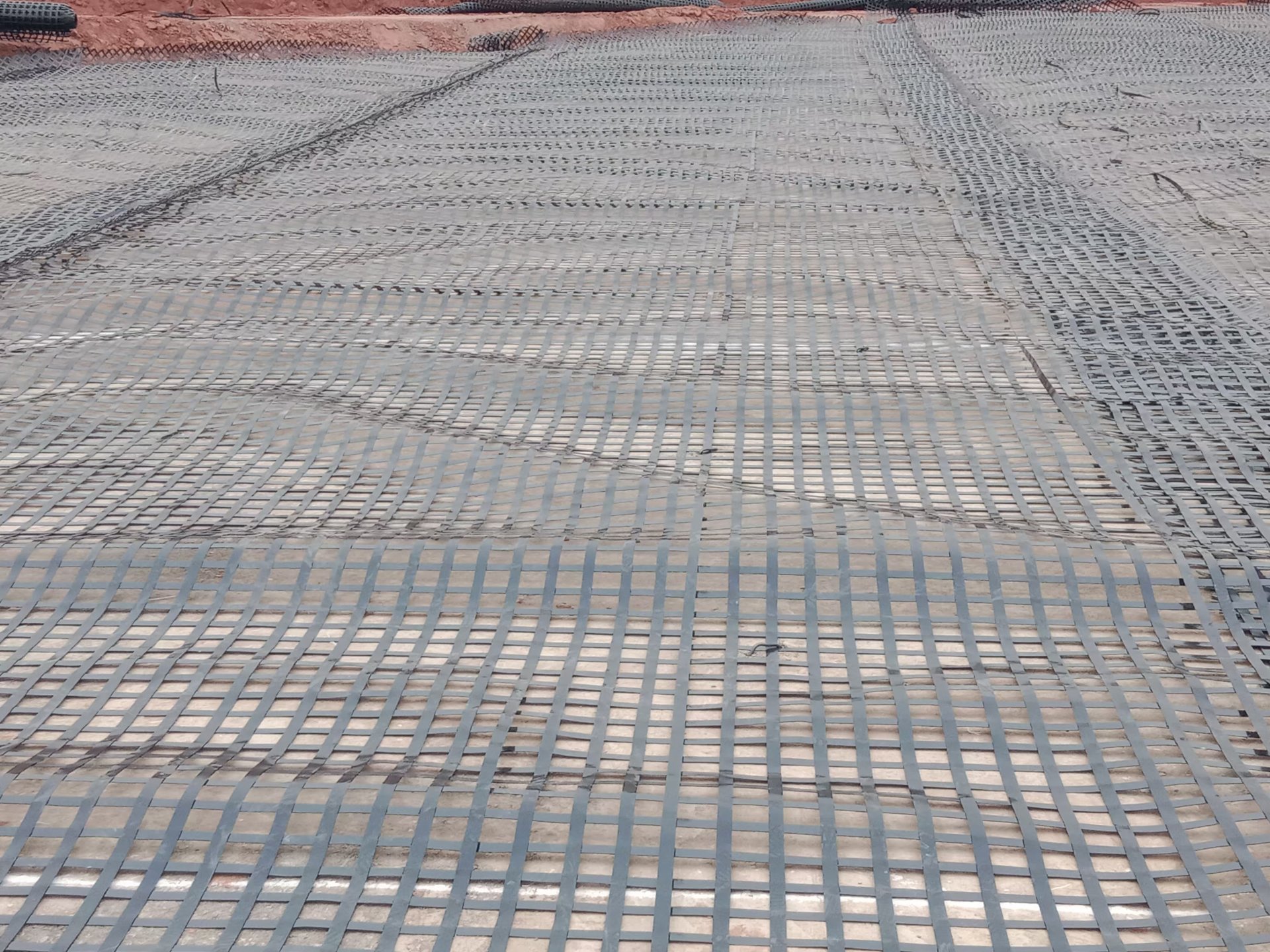
ZHONGTAI HENGBANGPET Polyester Welded Geogrid Advantages
Relying on independent innovation and technological expertise, Taihengbang Engineering Technology Co., Ltd. has achieved groundbreaking progress in the geosynthetics field. The company’s newly developed and produced PET polyester-welded geogrids, backed by multiple core patented technologies, have set a high-standard industry benchmark. Built on high-strength polyester materials and crafted through advanced precision welding techniques, these geogrids feature a robust, stable mesh structure, delivering exceptional performance in terms of tensile strength, durability, and environmental adaptability.
Jingzhe | Spring thunder rumbles, and all things grow.
Around March 5, the first spring thunder begins to rumble, rousing hibernating insects and snakes from their winter slumber. Peach blossoms start to peek out on the branches, and the earth softens as new buds emerge.
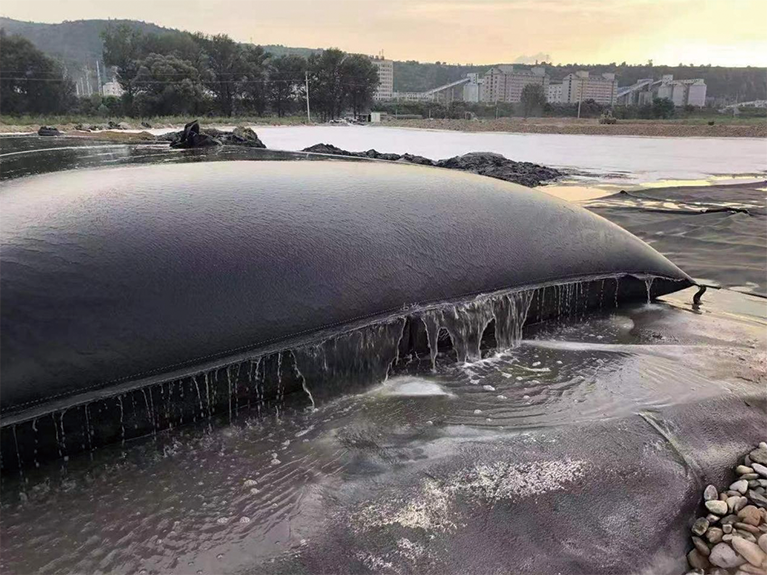
Geotube: A sludge dewatering tool—your eco-friendly engineering ally
A geotube is a tubular bag made by sewing together high-strength geotextile fabric. Utilizing the natural principle of gravity filtration, it removes water from sludge, effectively separating mud from water.
February 2, Dragon Raises Head: A Forgotten Spring Festival Celebration
On the second day of the second lunar month, spring returns to the earth, and all things awaken from their winter slumber. On this day—gradually fading from modern memory—lies one of the deepest cultural codes of the Chinese nation. The "Dragon Rises" is not just a seasonal marker; it’s also a spiritual totem for the Chinese people—a cherished legacy of our agricultural civilization.

Construction Plan for Laying and Welding of Composite Geomembranes
Construction Plan for Laying and Welding of Composite Geomembranes
Introduction to Drainage and Waterproofing Sheets
Introduction to Drainage and Waterproofing Sheets
ZHONGTAI HENGBANG Technology Co., Ltd.
Address: East Section of Zhongtianmen Avenue, Tai'an High-tech Zone, Shandong Province
Service Hotline