

-
About UsZHONGTAI HENGBANG Engineering Technology Co., Ltd. is located in the Academician Entrepreneurship Base of Tai'an National High-Tech Industrial Development Zone, Shandong Province. The company is a comprehensive service provider specializing in engineering consulting and design, materials R&D and manufacturing, as well as operations and maintenance. With strong technical expertise and robust R&D capabilities, its products are primarily applied in critical areas such as water conservancy infrastructure projects, transportation infrastructure initiatives, and environmental protection solutions for isolating and preventing leakage from urban waste and highly hazardous industrial solid waste.

-
ProductsZHONGTAI HENGBANG Engineering Technology Co., Ltd. boasts production lines sourced from countries including Germany, Italy, Denmark, Belgium, and Switzerland, adhering to rigorous quality management systems and testing standards. We are equipped with advanced testing equipment capable of evaluating tensile strength, creep resistance, UV protection, water permeability, flame retardancy, antistatic properties, chemical corrosion resistance, and oxidation performance.
-
Application CasesThe product is primarily used in hydraulic infrastructure projects, transportation infrastructure projects, and environmental protection applications—including the isolation and impermeability of municipal waste and highly hazardous industrial solid waste.
-
BlogPrioritizing technological advancement and innovation, our company is committed to fulfilling user needs to the fullest extent possible.
What is the difference between composite geomembranes and regular geomembranes? What are the key distinctions?
Release date:
2024-01-16
Geosynthetic materials are indispensable and critical engineering components in numerous projects—especially in water conservancy projects and landfill sites where impermeability is essential, making geomembranes an integral part of these applications. However, when it comes to selecting a geomembrane, you’ll notice there’s a wide variety available on the market. Moreover, it’s often claimed that composite geomembranes outperform traditional ones. So, what exactly sets composite geomembranes apart from regular geomembranes? And how should we decide which one is best suited for our specific needs?
Geosynthetic materials are indispensable and critical engineering components in many project applications—especially in waterproofing projects like hydraulic engineering and landfill sites, where geomembranes play a vital role. However, when it comes to selecting geomembranes, you’ll notice there’s a wide variety available. Moreover, it’s often claimed that composite geomembranes outperform traditional ones. So, what exactly is the difference between composite geomembranes and regular geomembranes? And how should we decide which one is the best fit for our specific needs?
I. Differences Between Composite Geomembranes and Geomembranes
1. Different production processes
(1) Geomembranes: A geomembrane is essentially a type of plastic film made from polyethylene material. The production process primarily involves melting polyethylene resin, which is then extruded using specialized equipment. As the molten resin exits the die, it’s squeezed and stretched between two opposing rollers, forming a flexible, continuous membrane. Geomembranes are classified into two main types based on their raw material density: high-density polyethylene (HDPE) geomembranes and low-density polyethylene (LDPE) geomembranes.
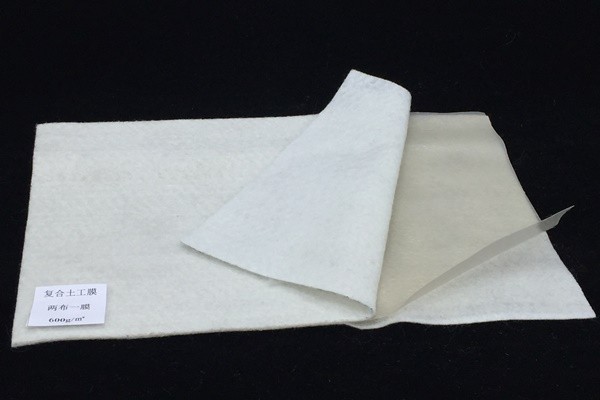
(2) Composite Geomembrane: A composite geomembrane is an earthwork seepage-control material created by combining geotextile on one or both sides of a base geomembrane. The production process primarily involves two methods: the calendering process and the thermal bonding process. Although these two techniques operate on different principles, both begin with the initial production of the geotextile. In the calendering process, the geotextile is fed into a pair of rollers simultaneously with the geomembrane during its manufacturing, allowing them to be pressed and formed together. In contrast, the thermal bonding process involves producing both the geomembrane and geotextile separately first, followed by a heat-sealing step that joins the two materials into a single composite unit.
2. Different appearance
(1) Geomembranes: Geomembranes appear as a layer of uniformly thick plastic film, available in colors such as black, blue, and white. HDPE geomembranes are further categorized into smooth and textured types. Smooth HDPE geomembranes have two sides that are completely smooth and free of wrinkles, while textured HDPE membranes come in both single-textured and double-textured varieties. The textured surface features distinct patterns—such as dotted or columnar arrangements—that provide excellent anti-slip properties.
(2) Composite Geomembrane: Since the outer layer of a composite geomembrane consists of geotextile—typically one layer of fabric and one layer of membrane, or two layers of fabric with one layer of membrane—a one-layer version features geotextile on one side and the geomembrane on the other. In contrast, the two-layer version has geotextile on both sides, giving it a rough, fabric-like appearance. Additionally, based on the edge treatment, composite geomembranes are classified into "cut-edge" and "overlapped-edge" types: in the cut-edge type, the geotextile and geomembrane are permanently bonded together, whereas in the overlapped-edge type, they remain separate.
3. Different implementation standards
(1) Geomembrane: The applicable standard for geomembranes is GB/T 17643-2011.
(2) Composite Geomembrane: The standard for composite geomembranes is GB/T17642-2008.
For detailed implementation standards of both, refer to the "Current Compilation of Geosynthetic Material Standards (6th Edition)."
II. How to Select Composite Geomembranes and Geomembranes
When selecting between composite geomembranes and conventional geomembranes, it’s important to consider their respective characteristics and intended applications. Conventional geomembranes offer excellent sealing and anti-seepage performance, effectively preventing cross-contamination between adjacent environments—making them ideal for applications such as fish ponds, hydraulic engineering projects, and oilfield operations. On the other hand, composite geomembranes combine superior flexibility with the multifunctional benefits of geotextiles, including isolation, drainage, reinforcement, and protection, while still providing robust sealing and anti-seepage capabilities. As a result, they are well-suited for applications like lotus ponds and tunnel construction projects.
Generally, when choosing between the two, it’s not accurate to say that composite geomembranes are inherently superior to regular geomembranes—especially since their suitability depends on the specific project. For instance, in applications like aquaculture, where live aquatic species such as fish, shrimp, and crabs are raised, using composite geomembranes in fish ponds could easily lead to these creatures damaging the membrane structure, inadvertently compromising even the underlying geomembrane itself. In contrast, opting for a smooth-surface HDPE geomembrane and then covering it with protective backfill ensures that, no matter how aggressively shrimp or crabs might disturb the surrounding soil layers, the performance of the geomembrane remains fully intact.
On the contrary, there are also situations where geomembranes are not ideal for use in composite geomembrane applications—such as in lotus ponds and tunnel projects. In lotus ponds, using a composite impermeable membrane can reinforce and stabilize the underlying soil layer, strengthening the pond bottom and encouraging lotus roots to grow more horizontally, thereby preventing them from piercing the geomembrane. Similarly, in tunnel construction, incorporating a composite geomembrane provides effective reinforcement, helping it integrate seamlessly with the tunnel walls and significantly reducing the risk of structural collapse caused by potential water leakage through the waterproof barrier.
Overall, if the project requires both seepage and waterproofing as well as soil reinforcement to prevent separation, a composite geomembrane is the recommended choice. For purely seepage and waterproofing needs, however, an affordable yet effective geomembrane will suffice. These are essentially the key differences between composite geomembranes and regular geomembranes. We hope that, with this guide, you’ll be able to select the right geosynthetic material for your specific project.
Latest Updates
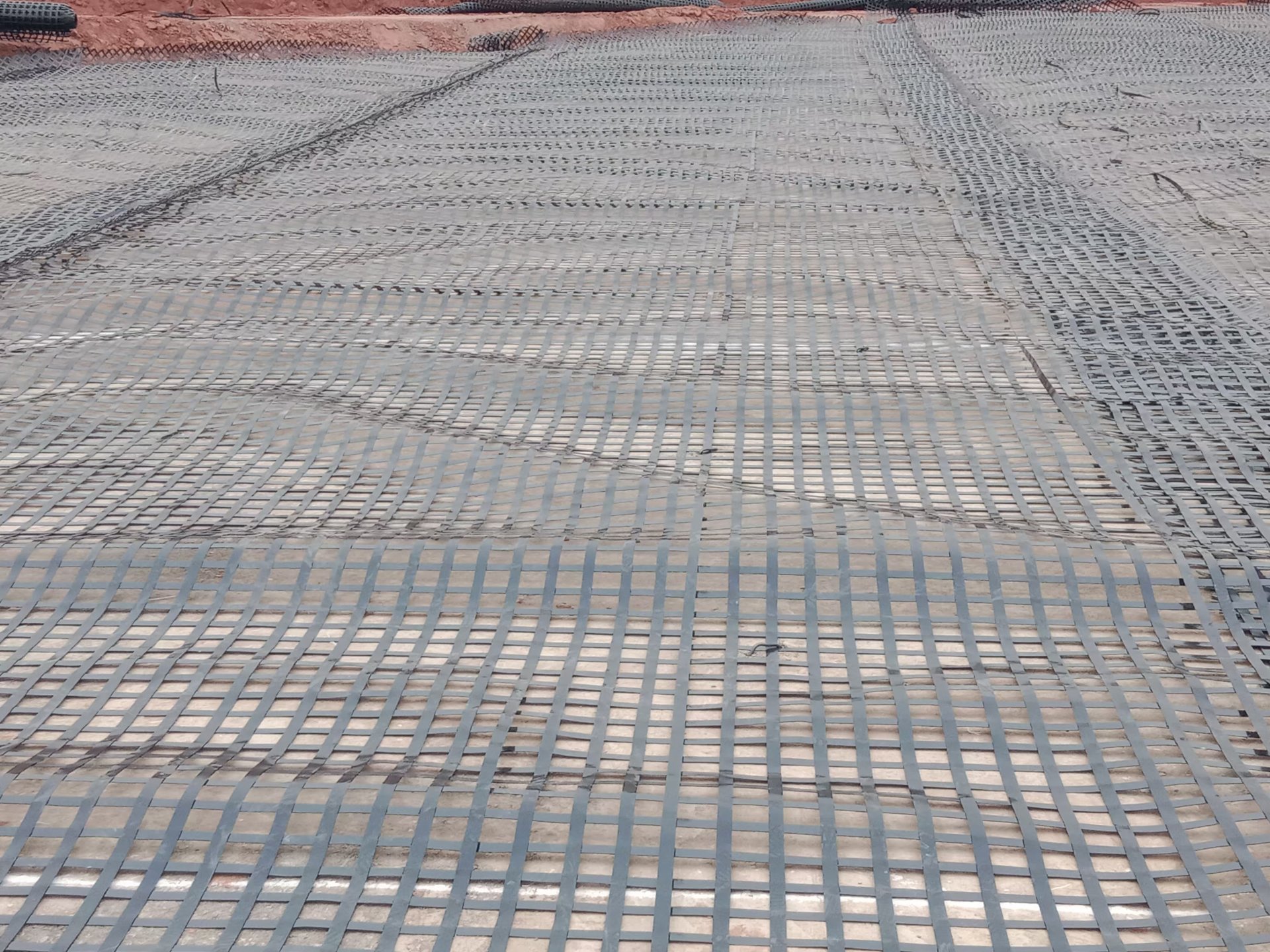
ZHONGTAI HENGBANGPET Polyester Welded Geogrid Advantages
Relying on independent innovation and technological expertise, Taihengbang Engineering Technology Co., Ltd. has achieved groundbreaking progress in the geosynthetics field. The company’s newly developed and produced PET polyester-welded geogrids, backed by multiple core patented technologies, have set a high-standard industry benchmark. Built on high-strength polyester materials and crafted through advanced precision welding techniques, these geogrids feature a robust, stable mesh structure, delivering exceptional performance in terms of tensile strength, durability, and environmental adaptability.
Jingzhe | Spring thunder rumbles, and all things grow.
Around March 5, the first spring thunder begins to rumble, rousing hibernating insects and snakes from their winter slumber. Peach blossoms start to peek out on the branches, and the earth softens as new buds emerge.
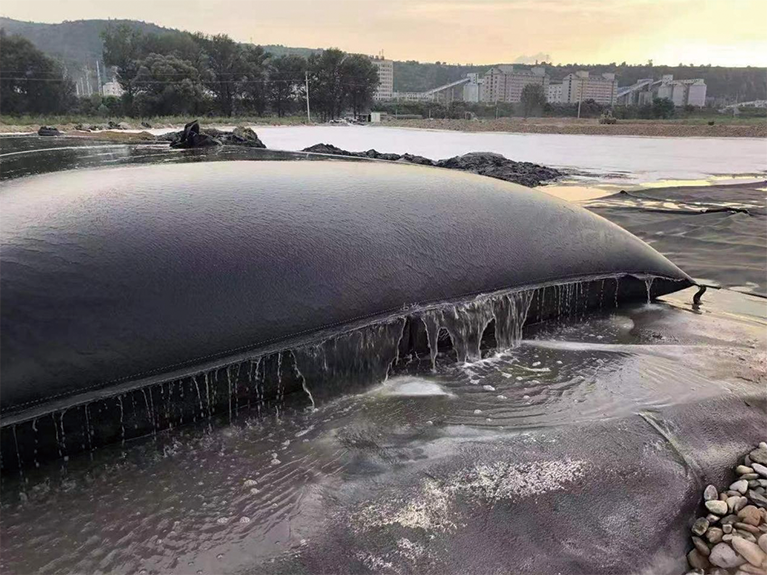
Geotube: A sludge dewatering tool—your eco-friendly engineering ally
A geotube is a tubular bag made by sewing together high-strength geotextile fabric. Utilizing the natural principle of gravity filtration, it removes water from sludge, effectively separating mud from water.

February 2, Dragon Raises Head: A Forgotten Spring Festival Celebration
On the second day of the second lunar month, spring returns to the earth, and all things awaken from their winter slumber. On this day—gradually fading from modern memory—lies one of the deepest cultural codes of the Chinese nation. The "Dragon Rises" is not just a seasonal marker; it’s also a spiritual totem for the Chinese people—a cherished legacy of our agricultural civilization.

Construction Plan for Laying and Welding of Composite Geomembranes
Construction Plan for Laying and Welding of Composite Geomembranes
Introduction to Drainage and Waterproofing Sheets
Introduction to Drainage and Waterproofing Sheets
ZHONGTAI HENGBANG Technology Co., Ltd.
Address: East Section of Zhongtianmen Avenue, Tai'an High-tech Zone, Shandong Province
Service Hotline