

-
About UsZHONGTAI HENGBANG Engineering Technology Co., Ltd. is located in the Academician Entrepreneurship Base of Tai'an National High-Tech Industrial Development Zone, Shandong Province. The company is a comprehensive service provider specializing in engineering consulting and design, materials R&D and manufacturing, as well as operations and maintenance. With strong technical expertise and robust R&D capabilities, its products are primarily applied in critical areas such as water conservancy infrastructure projects, transportation infrastructure initiatives, and environmental protection solutions for isolating and preventing leakage from urban waste and highly hazardous industrial solid waste.

-
ProductsZHONGTAI HENGBANG Engineering Technology Co., Ltd. boasts production lines sourced from countries including Germany, Italy, Denmark, Belgium, and Switzerland, adhering to rigorous quality management systems and testing standards. We are equipped with advanced testing equipment capable of evaluating tensile strength, creep resistance, UV protection, water permeability, flame retardancy, antistatic properties, chemical corrosion resistance, and oxidation performance.
-
Application CasesThe product is primarily used in hydraulic infrastructure projects, transportation infrastructure projects, and environmental protection applications—including the isolation and impermeability of municipal waste and highly hazardous industrial solid waste.
-
BlogPrioritizing technological advancement and innovation, our company is committed to fulfilling user needs to the fullest extent possible.
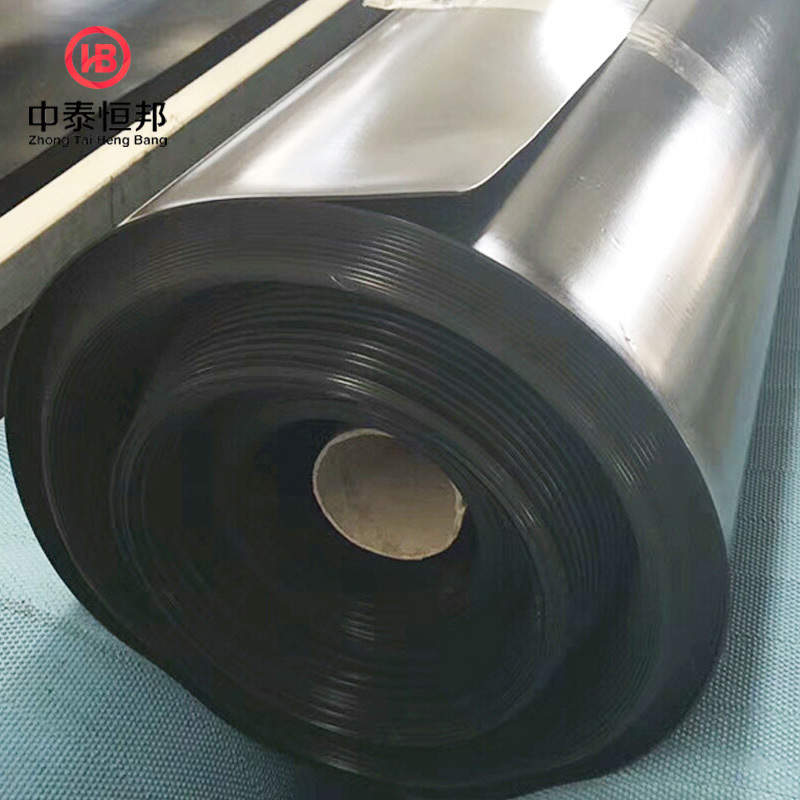
Analysis of the Construction Process for Fujian HDPE Liner Membranes
Release date:
2021-01-22
; At the top of the anchoring trench,预留 should be provided according to design requirements.
1. Flatness: ± 5cm/m2 , with a smooth and straight base surface;
2. Compaction degree: 90% Above, the material can be covered with an impermeable membrane only after being compacted.
3. Longitudinal and transverse slopes: The longitudinal and transverse slopes should ideally be within 2% Above;
4. Base surface cleaning: Vertical depth 2.5cm There shall be no sharp-edged objects inside.
2. Fujian Quanzhou HDPE Geomembrane Laying and cutting
1. Fujian Quanzhou HDPE Geomembrane Before laying, first inspect and measure the designated area. Based on these measurements, transport the appropriately sized impermeable membranes from the warehouse to the anchoring trench platform. During installation, adopt the convenient "push-lay" method—starting from the top and working downward—taking into account the actual site conditions.
2. Fujian Quanzhou HDPE Geomembrane Efforts should be made to achieve seamless welds. most Minimize, while ensuring quality, to conserve raw materials as much as possible;
3. When laying, extend from the bottom upward to higher areas—don’t pull it too tightly, but leave some slack. 1.50% The remaining fabric, in case of localized shrinkage or stretching;
4. The longitudinal joints of two adjacent panels should not align horizontally; instead, they should be staggered. 1m Above;
5. The longitudinal joint should be positioned away from the slope toe and bend points. 1.50m Above, it should be placed on a flat surface;
6. First the slope, then the base of the site;
7. When laying the slope, the direction of the membrane should be aligned mostly parallel to most High-gradient line;
8. Fujian Quanzhou HDPE Geomembrane After installation is complete, minimize walking on the membrane surface or moving tools across it. Any actions that could potentially affect Fujian Quanzhou HDPE Geomembrane Objects that could cause damage should never be placed on or carried across the membrane to avoid accidental harm to it.
3. Fujian Quanzhou HDPE Geomembrane Alignment and alignment properly
1. Fujian Quanzhou HDPE Geomembrane Whether laid on a slope or at the base of the site, the surface should be smooth and straight, ensuring no wrinkles or ripples occur—this will help align and properly overlap the two sheets of geomembrane.
2. Lap width shall be as per design requirements, typically left and right. 10cm。
4. Fujian Quanzhou HDPE Geomembrane Film-pressing shaping
1. Use sandbags to promptly align and neatly stack the Fujian Quanzhou structures. HDPE The impermeable membrane is weighted down to prevent it from being blown or moved by the wind;
2. There are three methods for anchoring the geomembrane: trench anchoring, nail anchoring, and expansion bolt anchoring. In field construction, trench anchoring is typically used.
1 ) When using groove anchoring, consider Quanzhou, Fujian HDPE The usage conditions and stress conditions of the geomembrane typically require that the width of its anchoring trench be no less than 0.5m–1.0m, Its depth must not be less than 0.5m-1.0m ; At the top of the anchoring trench,预留 should be provided as per design requirements. one Quantitative seepage-proof membranes, prepared for localized settlement and stretching;
2 When using nail anchoring, the width of the batten shall not be less than 2cm , the thickness must not be less than 2mm , the spacing between nails should not exceed 400mm Exposed pressure strips should have anti-corrosion measures applied.
3 When using expansion bolts for anchoring, the bolt diameter must not be less than 4mm , with a spacing no greater than 0.5mm During construction, first use the prepared sandbags to temporarily secure the positioned membrane, preventing it from being blown away by strong winds. HDPE The membrane is moved by blowing, and then expansion bolts are used for anchoring.
5. Wipe away the dust
Wipe the weld overlap area with a clean gauze, ensuring it is free of water, dust, and contaminants.
6. Experimental welding
1. Experimental welding conducted in Quanzhou, Fujian HDPE Conducted on the geomembrane samples to inspect and adjust the welding equipment;
2. The trial weld was conducted under the same surface and environmental conditions as the production welds.
7. Productive Welding
1. Production welding can only be carried out after trial welding has been successfully completed.
2. At the weld seam Fujian Quanzhou HDPE Geomembrane It should be welded into a single, unified whole, with no instances of false welding, incomplete welds, or over-welding.
3. Whether it's productive welding or experimental welding, bi It is necessary to maintain the welding temperature and speed to ensure the weld achieves most Excellent results;
4. Only use a welding torch for repairs in areas where patching and dual-slit welding machines cannot be operated.
5. To properly maintain welding machinery on a regular schedule, frequently clean out any residual materials from the welding equipment.
6. Fujian Quanzhou HDPE Geomembrane Welding te Specialized area treatment.
1 ) Slope intersection: Both laying and welding are involved te Under special circumstances, it depends on the actual situation. te Proper trimming is essential to ensure the geomembrane adheres tightly to the dam slope base; otherwise, it may lead to "hanging" or "bulging" phenomena.
2 ) The intersection of the reservoir area’s slope and the reservoir bed: First, lay the impermeable membrane along the dam face, positioning it slightly away from the blind drain. 1.5 Beyond the immediate vicinity, it connects again to the base membrane; for welding adjacent sections: first complete the welds, then press them into the blind ditch.
8. Testing
Fujian Quanzhou HDPE Geomembrane After welding, the following areas should be inspected: all welds, weld joints, areas repaired for damage, instances of incomplete or false welding requiring re-welding, and any areas that were previously re-welded due to previous inspection failures.
9. Repair
When repairing areas that fail inspection, use base material larger than twice the area of the damaged spot. Welding can only be performed on areas where a welding machine cannot operate; otherwise, a welding torch must be used for repairs.
10. Protective Layer Construction
Fujian Quanzhou HDPE Geomembrane After welding, the protective layer should be applied promptly to prevent direct sunlight from causing material degradation. When the slope is steep and unstable, making it difficult to lay down soil or a gravel-sand protective layer, an alternative construction method—sprayed concrete protection—can be used. Sprayed concrete must include expansion joints as specified by the design, and water should be sprayed regularly to maintain proper curing. yang To prevent cracking of the concrete layer, which could compromise its protective function. If a plain soil and sand cushion is used, it should be compacted or mixed with other consolidating materials to ensure the covering becomes firm and stable, safeguarding against rainwater erosion that might expose the impermeable membrane.
11. The following requirements must be met during sheath installation:
1. Fujian Quanzhou HDPE Geomembrane After the laying and welding have been approved, the protective layer should be promptly backfilled. The speed of backfilling the protective layer should match the pace of laying in Quanzhou, Fujian. HDPE Adapting to the speed of the geomembrane;
2. The thickness of the protective layer should be within 10cm Above;
3. The material for the protective layer must meet the design requirements and must not contain anything sharp or puncture-prone. Fujian Quanzhou HDPE Geomembrane Sharp objects or debris.
Latest Updates
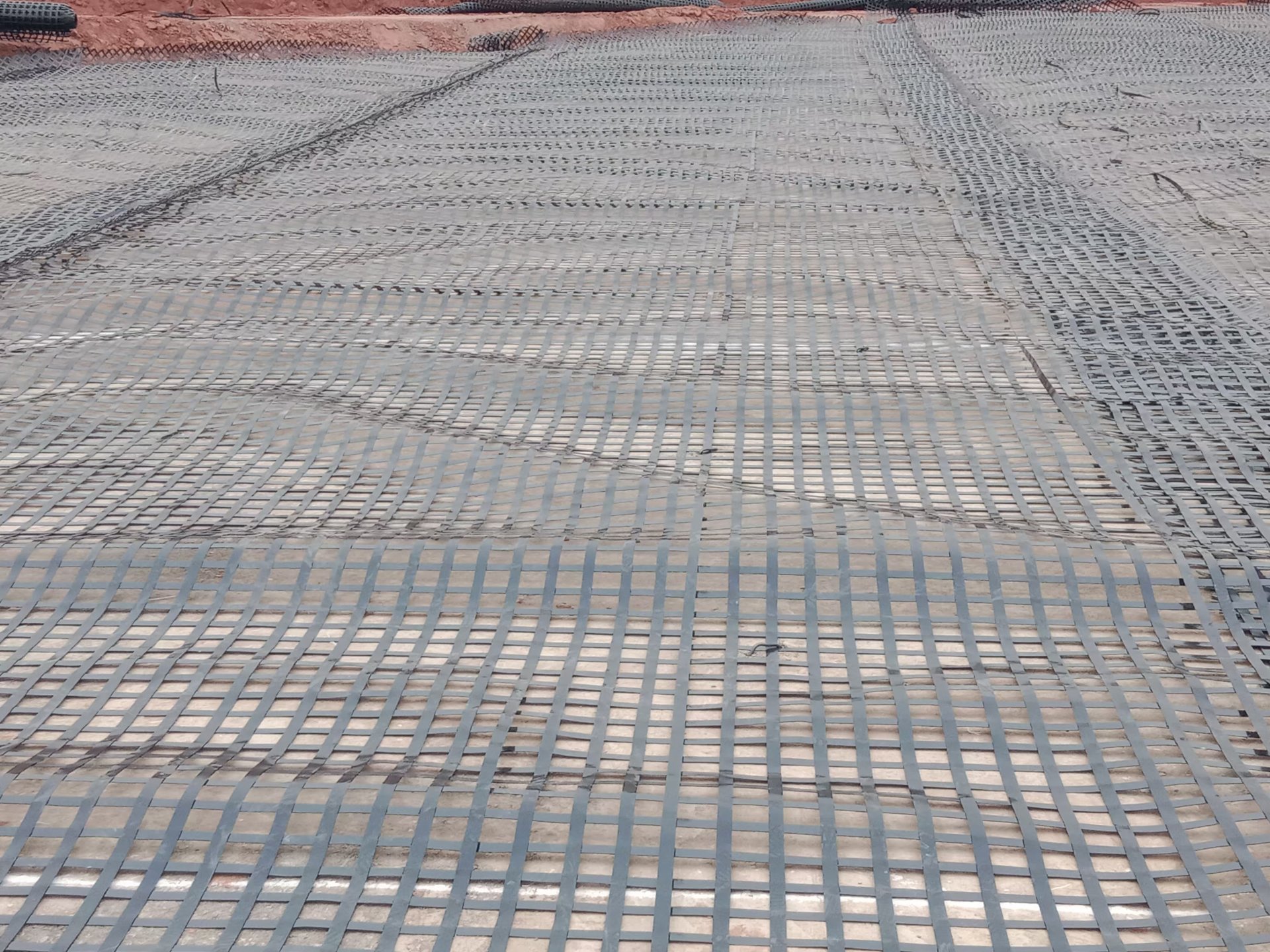
ZHONGTAI HENGBANGPET Polyester Welded Geogrid Advantages
Relying on independent innovation and technological expertise, Taihengbang Engineering Technology Co., Ltd. has achieved groundbreaking progress in the geosynthetics field. The company’s newly developed and produced PET polyester-welded geogrids, backed by multiple core patented technologies, have set a high-standard industry benchmark. Built on high-strength polyester materials and crafted through advanced precision welding techniques, these geogrids feature a robust, stable mesh structure, delivering exceptional performance in terms of tensile strength, durability, and environmental adaptability.
Jingzhe | Spring thunder rumbles, and all things grow.
Around March 5, the first spring thunder begins to rumble, rousing hibernating insects and snakes from their winter slumber. Peach blossoms start to peek out on the branches, and the earth softens as new buds emerge.
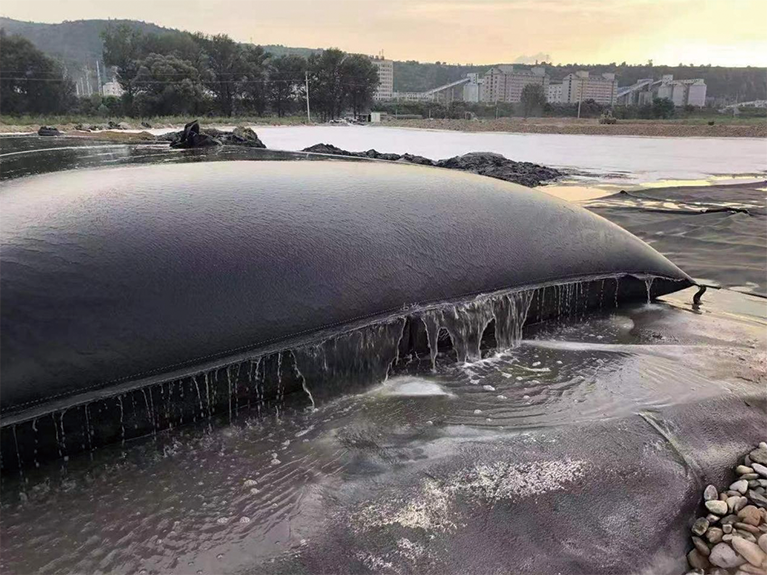
Geotube: A sludge dewatering tool—your eco-friendly engineering ally
A geotube is a tubular bag made by sewing together high-strength geotextile fabric. Utilizing the natural principle of gravity filtration, it removes water from sludge, effectively separating mud from water.

February 2, Dragon Raises Head: A Forgotten Spring Festival Celebration
On the second day of the second lunar month, spring returns to the earth, and all things awaken from their winter slumber. On this day—gradually fading from modern memory—lies one of the deepest cultural codes of the Chinese nation. The "Dragon Rises" is not just a seasonal marker; it’s also a spiritual totem for the Chinese people—a cherished legacy of our agricultural civilization.

Construction Plan for Laying and Welding of Composite Geomembranes
Construction Plan for Laying and Welding of Composite Geomembranes
Introduction to Drainage and Waterproofing Sheets
Introduction to Drainage and Waterproofing Sheets
ZHONGTAI HENGBANG Technology Co., Ltd.
Address: East Section of Zhongtianmen Avenue, Tai'an High-tech Zone, Shandong Province
Service Hotline