

-
About UsZHONGTAI HENGBANG Engineering Technology Co., Ltd. is located in the Academician Entrepreneurship Base of Tai'an National High-Tech Industrial Development Zone, Shandong Province. The company is a comprehensive service provider specializing in engineering consulting and design, materials R&D and manufacturing, as well as operations and maintenance. With strong technical expertise and robust R&D capabilities, its products are primarily applied in critical areas such as water conservancy infrastructure projects, transportation infrastructure initiatives, and environmental protection solutions for isolating and preventing leakage from urban waste and highly hazardous industrial solid waste.

-
ProductsZHONGTAI HENGBANG Engineering Technology Co., Ltd. boasts production lines sourced from countries including Germany, Italy, Denmark, Belgium, and Switzerland, adhering to rigorous quality management systems and testing standards. We are equipped with advanced testing equipment capable of evaluating tensile strength, creep resistance, UV protection, water permeability, flame retardancy, antistatic properties, chemical corrosion resistance, and oxidation performance.
-
Application CasesThe product is primarily used in hydraulic infrastructure projects, transportation infrastructure projects, and environmental protection applications—including the isolation and impermeability of municipal waste and highly hazardous industrial solid waste.
-
BlogPrioritizing technological advancement and innovation, our company is committed to fulfilling user needs to the fullest extent possible.
Specific steps for the ultrasonic welding process of waterproof membranes in Yunnan tunnels
Release date:
2021-01-15
7. Install the waterproof membrane: Start laying the membrane from the lower section of one sidewall, working upward toward the arch, and then continue from the arch to the opposite sidewall. Ensure proper alignment of each sheet, confirming that the overlap between consecutive sheets is at least 15 cm wide. The membrane should be laid smoothly, allowing for slight flexibility to accommodate minor adjustments (the design perimeter and installation length are pre-determined according to a 4:5 ratio). Yunnan Wenshan Tunnel Waterproof Board Caused by damage during construction or improper welding of the waterproofing sheets. According to relevant code requirements: Yunnan Wenshan Tunnel Waterproof Board A separate approach should be adopted: first, lay a 350 g/m nonwoven fabric acting as a cushioning layer, followed by a 1.2 mm thick EVA waterproof membrane. The two waterproof membranes must overlap by at least 10 cm and be welded together using a double-seam hot-melt welding machine. Meanwhile, the geotextile will be securely fixed to the initial support surface by anchoring it with cement nails driven through heat-melt washers using a nail gun. Finally, the waterproof membrane itself will be welded and anchored firmly to the washers.
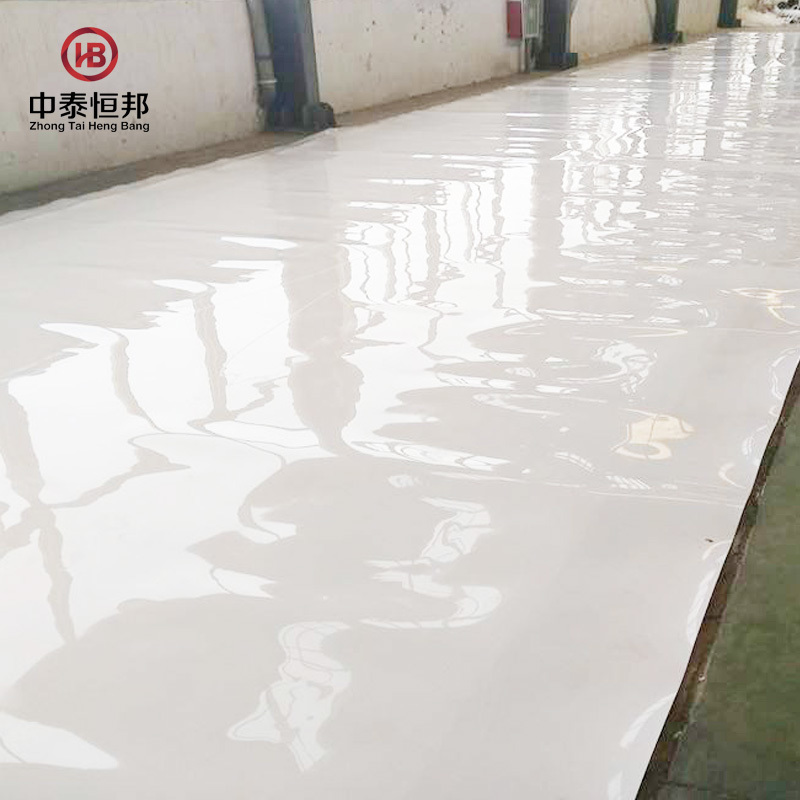
1) Yunnan Wenshan Tunnel Waterproof Board Welding thickness
Welded using a thermoforming welding process Yunnan Wenshan Tunnel Waterproof Board The greater the thickness deviation, the longer the heating time will be. Yunnan Wenshan Tunnel Waterproof Board When the thickness changes, you must adjust the heating time for thermoforming accordingly—either extending or shortening it. Only by ensuring uniform heating and consistent temperature can you achieve high-quality welds. If Yunnan Wenshan Tunnel Waterproof Board Uneven temperatures can cause Yunnan Wenshan Tunnel Waterproof Board If the weld seam has uneven thickness, it could potentially cause issues during construction. Yunnan Wenshan Tunnel Waterproof Board Breaking at its thinnest point.
2) Yunnan Wenshan Tunnel Waterproof Board The welding density
Yunnan Wenshan Tunnel Waterproof Board As the material's density increases, its corresponding shrinkage rate, tensile strength, hardness, and toughness all rise as well.
3) Yunnan Wenshan Tunnel Waterproof Board The welding temperature
Yunnan Wenshan Tunnel Waterproof Board The thermoforming welding process has a very wide temperature range. To shorten the forming cycle, you can Yunnan Wenshan Tunnel Waterproof Board The temperature should be set closer to the lower end of this range, as this will help reduce heating time. Yunnan Wenshan Tunnel Waterproof Board The time required.
Yunnan Wenshan Tunnel Waterproof Board Ultrasonic welding process, specifically including the following steps:
1. Construction Preparation: Before starting the work, properly coordinate all necessary resources—including materials, personnel, and equipment. Specifically, opt for the new, improved red thermal-melt gasket, and only begin welding after confirming the exact locations of the fixing points. Additionally, whenever structural conditions permit, minimize the gasket area as much as possible to conserve EVA raw materials and reduce overall material costs.
2. Base surface inspection; Yunnan Wenshan Tunnel Waterproof Board Before laying, inspect the tunnel cross-section and treat the surface of the initial support shotcrete.
The work tasks include cutting off protruding parts of reinforcing steel mesh and pipes, riveting them flush, and then smoothing the surface with mortar. Additionally, the threaded ends of anchor rods should be cut flush, leaving a few millimeters exposed, before being capped with plastic sleeves. Deep pits with a depth-to-width ratio exceeding 1/10 will be filled with fine aggregate concrete, followed by a final inspection of the filled area’s smoothness using a leveling ruler and feeler gauges. Once the sprayed concrete surface is confirmed to be smooth and evenly rounded, geotextile sheets will be laid, and circumferential drainage blind pipes will be installed.
3. Lay the geotextile fabric: Use a work platform to unfold the geotextile along the tunnel wall, then secure it smoothly and evenly to the sprayed concrete surface by driving nails equipped with PVC hot-melt washers at their tips, thereby creating the base layer for waterproofing membrane installation.
When laying the geotextile, ensure an overlap width of 20–30 mm between adjacent rolls, and that the material is laid smoothly without any uplift or wrinkles. PVC hot-melt gaskets are used as fixing points for the waterproof membrane, spaced at 3–4 points per meter along the arch and 2–3 points per meter along the sidewalls, arranged in a plum-blossom pattern.
4. Ultrasonic welding machine debugging: Before laying and welding the waterproof panels, debug the ultrasonic welding machine.
5. Connect the power supply—specifically, a 220V, 50Hz single-phase power source. After connecting, verify that the indicator light illuminates. If it doesn’t light up, check the fuse.
6. Instrument debugging: After powering on, press and hold the red "Debug Button" on the panel, then observe the dial of the "Tuning Indicator Meter." While holding the "Debug Button," slowly turn the "Tuning" knob until the no-load relative voltage reaches its minimum value. Once this minimum is achieved, the welding machine will be operating at its optimal condition.
7. Install the waterproof membrane: Begin laying the membrane from the lower section of one sidewall, moving upward toward the arch, and then continue from the arch to the opposite sidewall. Ensure proper alignment of each sheet, verifying that the overlap between consecutive sheets is at least 15 cm wide. The membrane should be laid smoothly, with slight flexibility allowed for adjustments (the design perimeter and installation length are预留ed according to a 4:5 ratio).
8. Mark the weld points: Position the weld points carefully and mark them with red paint. On each shim along the sidewall, weld 3 points; on each shim at the arch, weld 4 points. Ensure the weld points are evenly distributed across the shims to guarantee a strong and secure bond.
9. Ultrasonic welding: Hold the ultrasonic welder in one hand while gently pressing the waterproof board with the other. Ensure the welder remains perfectly perpendicular to the surface of the waterproof board as you initiate spot welding. Once the waterproof material begins to melt, pause welding when the weld tip has penetrated approximately 0.5 mm into the board. Maintain this single-spot weld for 1 to 1.5 seconds. During welding, make sure the waterproof board is tightly pressed against the gasket—failure to do so will severely compromise weld quality. After completing each weld point, keep the welder firmly applied with consistent pressure for about 3 seconds. This prevents premature release, which could cause the weld area to tear before the waterproof material has fully cooled, thereby safeguarding the integrity of the weld. Additionally, when welding the arch section, first use temporary reinforcing bars to support the waterproof board against the sprayed concrete surface, then proceed with spot welding using a pressing technique.
ZHONGTAI HENGBANG Engineering Technology Co., Ltd. is a comprehensive service provider integrating engineering consulting and design, material R&D and manufacturing, as well as operations and maintenance. With robust technical expertise and strong R&D capabilities, our products are prominently applied in environmental protection fields such as hydraulic infrastructure projects, transportation infrastructure initiatives, and the isolation and impermeability solutions for urban waste and hazardous industrial solid waste management. The company boasts advanced production lines sourced from Germany, Italy, Denmark, Belgium, Switzerland, and other countries, adhering to stringent quality management systems and rigorous testing standards. We are equipped with state-of-the-art testing equipment capable of evaluating critical properties—including tensile strength, creep resistance, UV resistance, water permeability, flame retardancy, anti-static performance, chemical corrosion resistance, and oxidation stability—ensuring superior product quality. Furthermore, our enterprise has successfully obtained certifications such as CRCC, ISO 9001, ISO 14001, OHSAS 18000, and MA certificates, along with inspection reports from China’s Ministry of Railways and Ministry of Water Resources, as well as the prestigious EU CE certification. Additionally, we have undergone specialized laboratory testing in Russia, Australia, the United States, and other relevant regions. We are dedicated to delivering top-quality geosynthetic materials and unparalleled services for projects spanning areas like reinforced soil retaining walls, soft ground stabilization, land reclamation and dike construction/maintenance, hydraulic engineering, slope remediation and greening, road construction, and mining projects.
Latest Updates
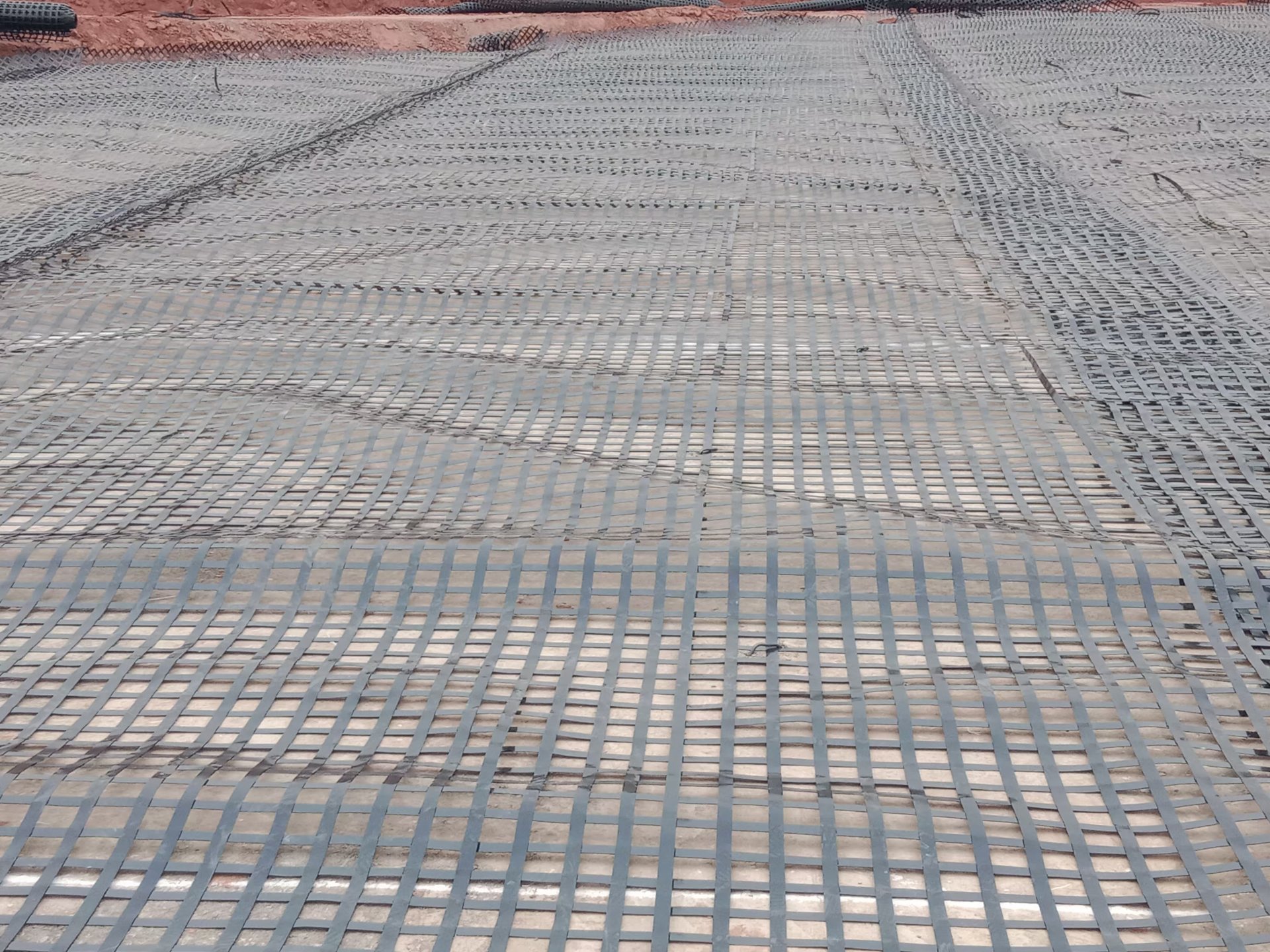
ZHONGTAI HENGBANGPET Polyester Welded Geogrid Advantages
Relying on independent innovation and technological expertise, Taihengbang Engineering Technology Co., Ltd. has achieved groundbreaking progress in the geosynthetics field. The company’s newly developed and produced PET polyester-welded geogrids, backed by multiple core patented technologies, have set a high-standard industry benchmark. Built on high-strength polyester materials and crafted through advanced precision welding techniques, these geogrids feature a robust, stable mesh structure, delivering exceptional performance in terms of tensile strength, durability, and environmental adaptability.
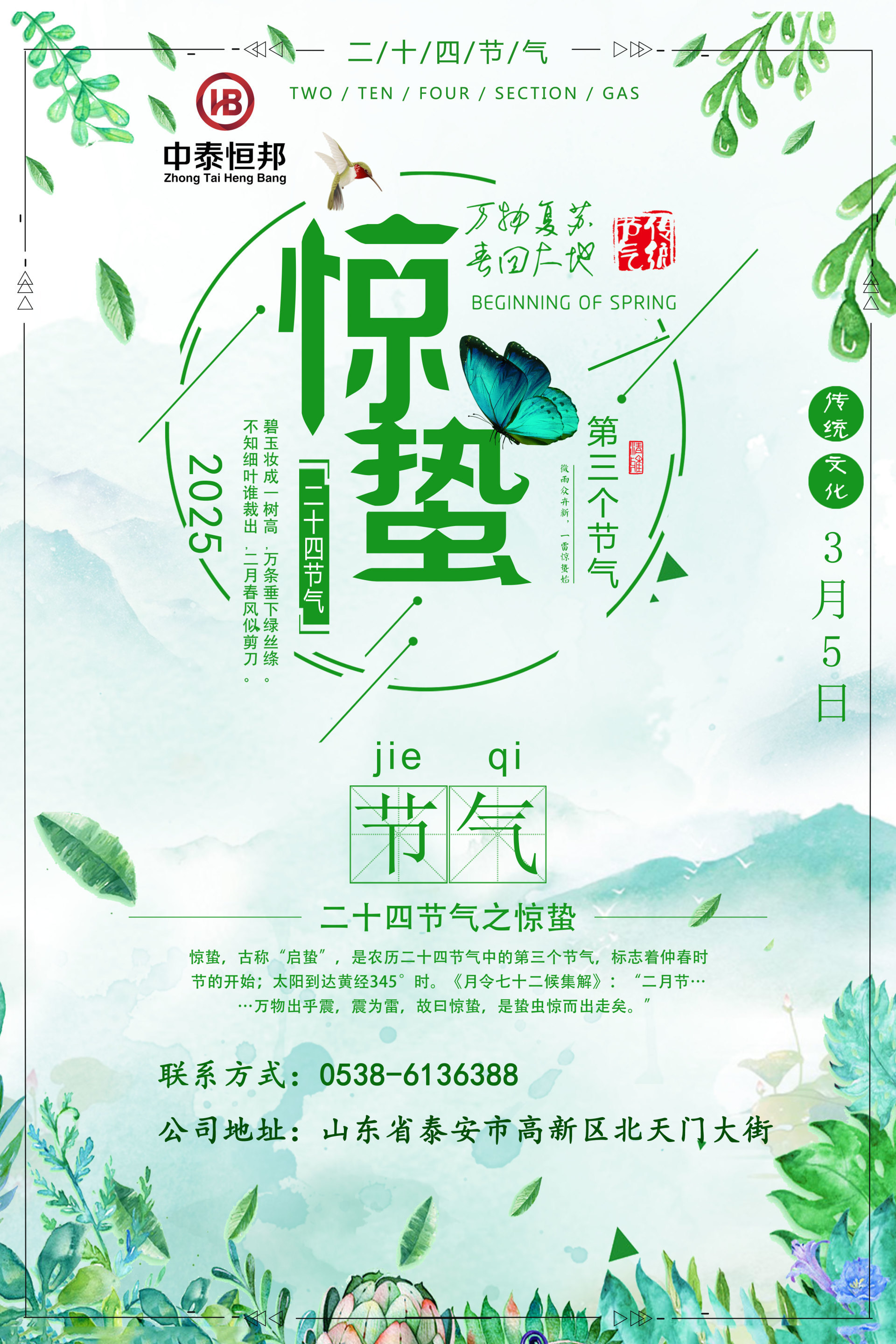
Jingzhe | Spring thunder rumbles, and all things grow.
Around March 5, the first spring thunder begins to rumble, rousing hibernating insects and snakes from their winter slumber. Peach blossoms start to peek out on the branches, and the earth softens as new buds emerge.
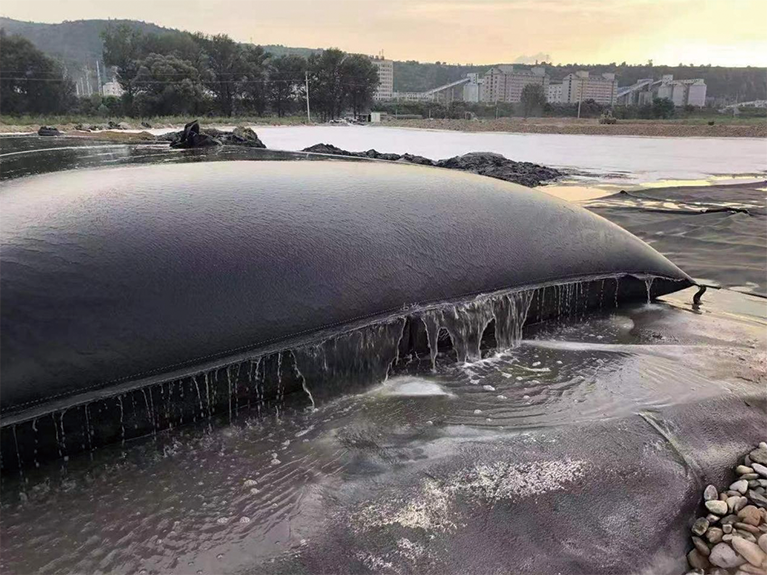
Geotube: A sludge dewatering tool—your eco-friendly engineering ally
A geotube is a tubular bag made by sewing together high-strength geotextile fabric. Utilizing the natural principle of gravity filtration, it removes water from sludge, effectively separating mud from water.
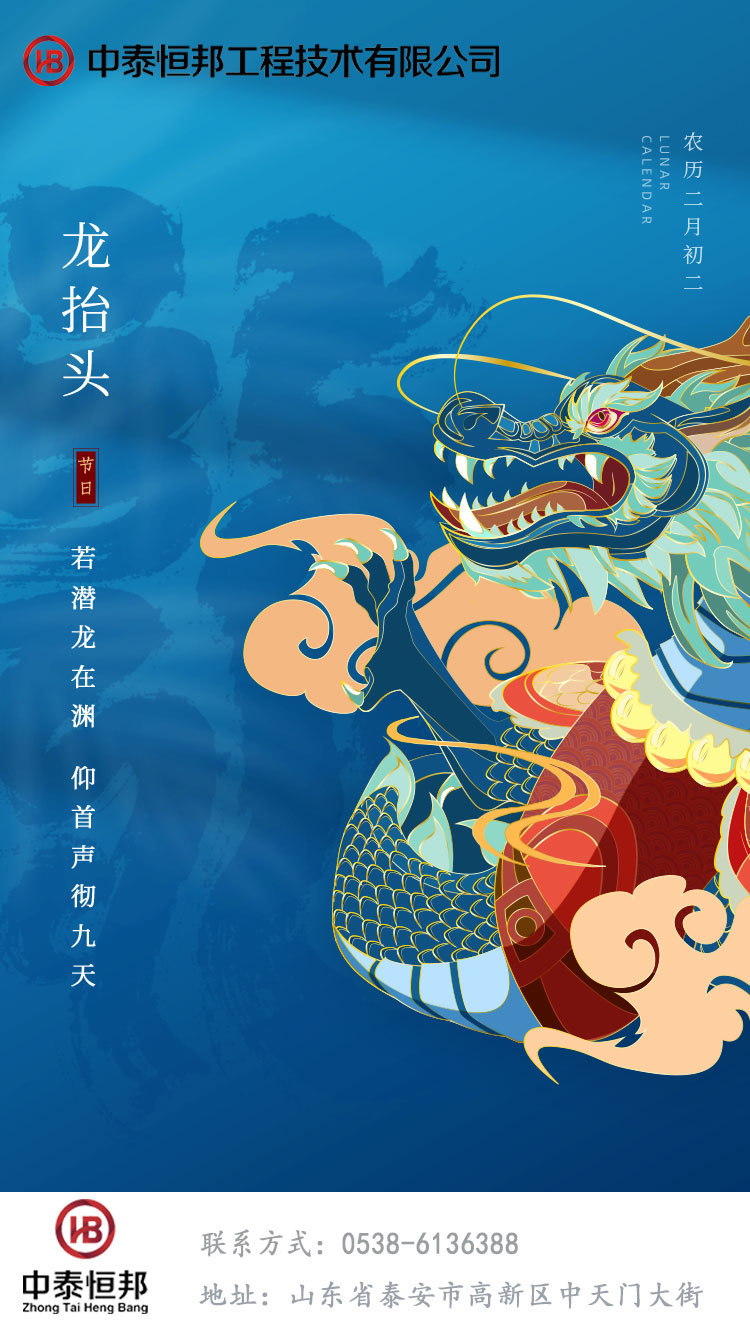
February 2, Dragon Raises Head: A Forgotten Spring Festival Celebration
On the second day of the second lunar month, spring returns to the earth, and all things awaken from their winter slumber. On this day—gradually fading from modern memory—lies one of the deepest cultural codes of the Chinese nation. The "Dragon Rises" is not just a seasonal marker; it’s also a spiritual totem for the Chinese people—a cherished legacy of our agricultural civilization.
Construction Plan for Laying and Welding of Composite Geomembranes
Construction Plan for Laying and Welding of Composite Geomembranes
Introduction to Drainage and Waterproofing Sheets
Introduction to Drainage and Waterproofing Sheets
ZHONGTAI HENGBANG Technology Co., Ltd.
Address: East Section of Zhongtianmen Avenue, Tai'an High-tech Zone, Shandong Province
Service Hotline