

-
About UsZHONGTAI HENGBANG Engineering Technology Co., Ltd. is located in the Academician Entrepreneurship Base of Tai'an National High-Tech Industrial Development Zone, Shandong Province. The company is a comprehensive service provider specializing in engineering consulting and design, materials R&D and manufacturing, as well as operations and maintenance. With strong technical expertise and robust R&D capabilities, its products are primarily applied in critical areas such as water conservancy infrastructure projects, transportation infrastructure initiatives, and environmental protection solutions for isolating and preventing leakage from urban waste and highly hazardous industrial solid waste.

-
ProductsZHONGTAI HENGBANG Engineering Technology Co., Ltd. boasts production lines sourced from countries including Germany, Italy, Denmark, Belgium, and Switzerland, adhering to rigorous quality management systems and testing standards. We are equipped with advanced testing equipment capable of evaluating tensile strength, creep resistance, UV protection, water permeability, flame retardancy, antistatic properties, chemical corrosion resistance, and oxidation performance.
-
Application CasesThe product is primarily used in hydraulic infrastructure projects, transportation infrastructure projects, and environmental protection applications—including the isolation and impermeability of municipal waste and highly hazardous industrial solid waste.
-
BlogPrioritizing technological advancement and innovation, our company is committed to fulfilling user needs to the fullest extent possible.
Analysis of Causes for Non-Compliance in Guizhou Tunnel Waterproofing Board Construction and Effective Prevention Measures
Release date:
2020-09-25
The main reasons for substandard construction of geotextiles and waterproofing boards in the Zunyi Tunnel, Guizhou, include inadequate contact with the initial support surface, uneven placement, insufficient overlap length at the ends, and poor weld quality.
Introduction: Geotextiles and Guizhou Zunyi Tunnel Waterproof Membrane The main reasons for construction defects include inadequate contact with the initial support surface, uneven placement, insufficient overlap length at the ends, and substandard weld quality.
I. Cause Analysis
1. Geotextile and Guizhou Zunyi Tunnel Waterproof Membrane Analysis of Causes for Substandard Construction
(1) Cannot be tightly fitted against the initial support surface. Unevenly laid.
Due to the relatively fast pace of initial support construction, the sprayed concrete surface often ends up rough, uneven, and irregular. Additionally, improper installation of arch supports further contributes to the unevenness of the concrete, ultimately affecting the smooth placement of the geotextile and Guizhou Zunyi Tunnel Waterproof Membrane It cannot be tightly adhered to the initial support surface. During lining construction, the weight of the concrete itself will press down on the geotextile and Guizhou Zunyi Tunnel Waterproof Membrane Tearing.
(2) End lap length does not meet requirements
During construction, it is often observed that workers fail to pre-plan the length, width, verticality, and centerline of the waterproofing materials before laying them, resulting in issues with the geotextile and Guizhou Zunyi Tunnel Waterproof Membrane Overlap is insufficient, especially Guizhou Zunyi Tunnel Waterproof Membrane Insufficient overlap led to issues during welding, such as blistering, exposed welds, and false soldering.
(3) Weld quality does not meet requirements
Due to the inability to properly control the speed and temperature of the climbing welding machine, during the inflation test inspection… Guizhou Zunyi Tunnel Waterproof Membrane When assessing weld quality, it is common to encounter situations where the pressure fails to meet specification requirements within the allotted time, or issues such as cracking, bursting, or air leakage occur.
(4) Construction operations and worker coordination lack standardization
During the construction process, workers failed to coordinate closely and followed improper operating procedures, leading to numerous unnecessary issues. For example, they would blindly proceed with welding before the machine reached the proper temperature, resulting in false solder joints. Additionally, poor communication among workers caused uneven welds and exposed weld seams.
(5) Damage during rebar installation Guizhou Zunyi Tunnel Waterproof Membrane
When positioning lining reinforcement, weld spatter and open flames can easily cause damage. Guizhou Zunyi Tunnel Waterproof Membrane , and during rebar installation, the rebar ends punctured Guizhou Zunyi Tunnel Waterproof Membrane 。
2. Analysis of Causes for Non-Compliance in Longitudinal and Transverse Drainage Pipe Construction
(1) The location does not meet the design requirements
Due to improper on-site construction practices, the elevations and positions of the longitudinal and transverse drainage pipes have deviated, resulting in water being unable to drain smoothly and quickly from within the tunnel.
(2) Improper handling at the junctions of vertical and horizontal drainage pipes
Although the on-site construction followed the design drawings by using reduced-diameter tees to connect the longitudinal and transverse drainage pipes, a certain gap between the transverse drain pipe and the tee joint resulted in significant water leaking out from the bottom of the transverse pipe, rendering the drainage system unable to achieve its intended performance.

II. Waterproofing and Drainage Construction Techniques
1. Rock Surface Treatment
(1) All surfaces requiring waterproofing materials must be smooth, clean, and free of any harmful or projecting substances. Specifically: Protruding elements such as reinforcing mesh should first be cut off, then flattened using a hammer before applying mortar for leveling. For protrusions like conduits, cut them down first and then flatten them with a hammer until they align flush with the sprayed concrete surface; afterward, fill the hollow sections of the conduits tightly with mortar. As for small metal objects—such as reinforcing mesh or wire—flatten them initially, followed by an additional layer of shotcrete to fully cover and protect them.
(2) If the initial support surface is uneven and not smoothly aligned overall, use mortar to level the entire area, ensuring the laying surface remains (smoothly) curved without any protrusions. Additionally, if local rock surfaces have a d/h ratio ≤ 5:1, reapply mortar to achieve proper leveling.
2. Laying geotextile and Guizhou Zunyi Tunnel Waterproof Membrane
After the rock surface has been properly treated, proceed with laying the circumferential drainage blind pipes at intervals no greater than 10 meters. In areas with abundant water, increase the spacing of the pipes based on visible seepage patterns, and only then can the geotextile be laid.
(1) Laying geotextile
Plan the geotextile and materials before laying them down. Guizhou Zunyi Tunnel Waterproof Membrane Length, laying width, and tunnel centerline positioning. The geotextile is fixed to the shotcrete surface using heat-melt pads, with an average of 3–4 pads per square meter at the arch crown and 2–3 pads per square meter along the sidewalls. Laying should proceed from one side to the other, ensuring the material is spread loosely enough to prevent any excessive stress during the placement of the lining concrete. Overlaps between adjacent sections must be at least 10 cm long.
(2) Laying the Waterproof Membrane for the Zunyi Tunnel in Guizhou
In the design Guizhou Zunyi Tunnel Waterproof Membrane Using nail-free installation. To facilitate Guizhou Zunyi Tunnel Waterproof Membrane The laying and fixing should be done along the tunnel's longitudinal direction, using strips approximately 5 cm wide. Guizhou Zunyi Tunnel Waterproof Membrane The strips are fixed to the geotextile using hot-melt pads at 1-meter longitudinal intervals, marking the layout. Guizhou Zunyi Tunnel Waterproof Membrane The laying width and position within the tunnel; lay the material from one side toward both sides, ensuring proper tension and smoothness; for secure fixing, use a manual, specialized fusion tool to hot-melt it onto the pre-defined areas. Guizhou Zunyi Tunnel Waterproof Membrane On the strips and hot-melt pads, the adhesion peel strength shall be no less than Guizhou Zunyi Tunnel Waterproof Membrane The tensile strength should ensure that the overlap width between adjacent sections is ideally 10–20 cm, but must not be less than 10 cm. Guizhou Zunyi Tunnel Waterproof Membrane The adjacent sections are bonded using a specialized climbing welding machine. Before starting the climbing weld, thoroughly clean the bonding areas to ensure no dust or other contaminants compromise the bond quality. During the welding process, maintain a temperature of 400°C and proceed at a speed of approximately 1.5 to 2 meters per 10 seconds. Construction personnel should work closely together: as the welding machine moves through each area, someone must manually smooth out the material to help the machine glide smoothly and steadily. This technique prevents issues like bulging or exposed welds, while also minimizing potential welding discontinuities. Guizhou Zunyi Tunnel Waterproof Membrane Due to insufficient length requiring additional sections, the principle should be to minimize the number of lap joints, avoid cross-shaped connections, and ensure ease of manual welding. It is recommended to use full-width panels. Guizhou Zunyi Tunnel Waterproof Membrane Longitudinal lap joints typically create a T-shaped interface, significantly reducing the number of joints required. For areas where crawler welders cannot be used—such as at T-joints—manual fusion tools should be employed for welding, followed by shaping the joint into a circular form with a radius 1.5 times the length of the T-joint. Guizhou Zunyi Tunnel Waterproof Membrane Perform coverage and thoroughly weld it using a manual welder. Geotextile and Guizhou Zunyi Tunnel Waterproof Membrane Lay the longitudinal advance at least 1 meter, but no more than twice the length of the formwork trolley.
3. Inflation Test
(1) Test principle: High-pressure gas is injected into the PVC. Guizhou Zunyi Tunnel Waterproof Membrane Within the hot-melt weld, a specified pressure can still be maintained over the designated time period—this serves as verification. Guizhou Zunyi Tunnel Waterproof Membrane The seam welds are tightly sealed, and the welding quality meets the waterproofing requirements.
(2) Procedure: First, use a small knife to make a small, approximately 5 cm-long cut symmetrically at both ends of the circumferential joint to be inspected. Then, carefully insert the clamp through the slit, align it with the pre-reserved inflation seam, and securely tighten the screws. Next, gently insert the inflation needle into the seam, positioning it about 20–50 cm above the two clamps to prevent it from loosening during inflation. Finally, firmly connect the pressure gauge to the inflation needle and the air pump’s air hose, and begin inflating. Ensure that compressed air is introduced evenly and smoothly into the PVC-prepared inflation seam throughout the process.
(3) Inspection
Stop inflating when the pressure gauge reading exceeds 2 bar, close the gate valve on the pressure gauge, and check whether the reserved weld seam between the two clamps is fully filled with gas.
If the seam Guizhou Zunyi Tunnel Waterproof Membrane If the balloon doesn't inflate fully, it means it hasn't been completely filled—continue inflating, but do not proceed with the inflation test.
If the weld seam bulges, you can proceed with the test—time starts now.
(4) Verification of Technical Specifications
① The initial pressure should be 2 bar during the 5-minute test phase, or 1.5 bar during the 10-minute test phase.
② If the air pressure loss in either of the two scenarios does not exceed 20%, the joint is considered to be sealed.
4. Install PVC panels
To prevent damage to the waterproofing sheets in the Zunyi Tunnel in Guizhou during the installation of lining reinforcement, PVC sheets should be laid down as a protective layer. Typically, these PVC sheets are safeguarded on-site using geotextiles, which are secured by pre-welding strips onto the waterproofing sheets of the Zunyi Tunnel in Guizhou. Guizhou Zunyi Tunnel Waterproof Membrane The strips are approximately 5 cm wide and are manually fused along the tunnel's length, spaced 1 meter apart. Guizhou Zunyi Tunnel Waterproof Membrane On top; when securing, pierce the geotextile and tie it with twine and Guizhou Zunyi tunnel waterproof strips. Absolutely no wire ties should be used to prevent punctures. Guizhou Zunyi Tunnel Waterproof Membrane 。
5. Install longitudinal and transverse drainage pipes
When installing the longitudinal and transverse drainage pipes, perform surveying and layout to precisely control their position and elevation. The geotextile should wrap around the longitudinal drainage pipe, starting from the initial support side and extending toward the lining reinforcement. Guizhou Zunyi Tunnel Waterproof Membrane Wrap the longitudinal drainage pipe from the lining reinforcement side toward the initial support structure. At the connection points between the longitudinal and transverse drainage pipes, use reducing tee fittings for transition. Seal the gaps between the tee fittings and the transverse drainage pipes with waterproof sealant to prevent water from leaking out from the bottom of the transverse pipes.
Tunnel waterproofing and drainage construction is critically important, though the actual construction process isn’t overly complex. The key lies in fully recognizing its significance and implications. Construction teams must approach the task with diligence, precision, and expertise—only then can they ensure that the tunnel’s waterproofing and drainage systems meet both design specifications and industry standards.
ZHONGTAI HENGBANG Engineering Technology Co., Ltd. is a comprehensive service provider integrating engineering consulting and design, material R&D and manufacturing, as well as operations and maintenance. With robust technical expertise and strong R&D capabilities, our products are prominently applied in critical areas such as water conservancy infrastructure projects, transportation infrastructure initiatives, and environmental protection fields like urban waste management and the safe isolation and impermeability of high-risk industrial solid wastes. The company boasts advanced production lines sourced from Germany, Italy, Denmark, Belgium, Switzerland, and other countries, all operating under stringent quality management systems and rigorous testing standards. We are equipped with state-of-the-art equipment capable of evaluating key properties—including tensile strength, creep resistance, UV durability, water permeability, flame retardancy, antistatic performance, chemical corrosion resistance, and oxidation stability—ensuring top-tier product quality. Furthermore, our enterprise has successfully obtained certifications such as CRCC, ISO 9001, ISO 14001, OHSAS 18000, and MA approvals. We also hold track-and-waterway department and Ministry of Water Resources test reports, along with the prestigious EU CE certification, and have undergone thorough evaluations by specialized laboratories in Russia, Australia, the United States, and other regions. Committed to delivering cutting-edge geosynthetic materials and unparalleled service, we proudly support a wide range of projects, including reinforced earth retaining walls, soft ground stabilization, land reclamation cofferdams and their maintenance, hydraulic engineering works, slope remediation and ecological restoration, road construction, and mining-related infrastructure projects.
Consultation Phone: 13953856388
Contact: Mr. Zhang
Latest Updates
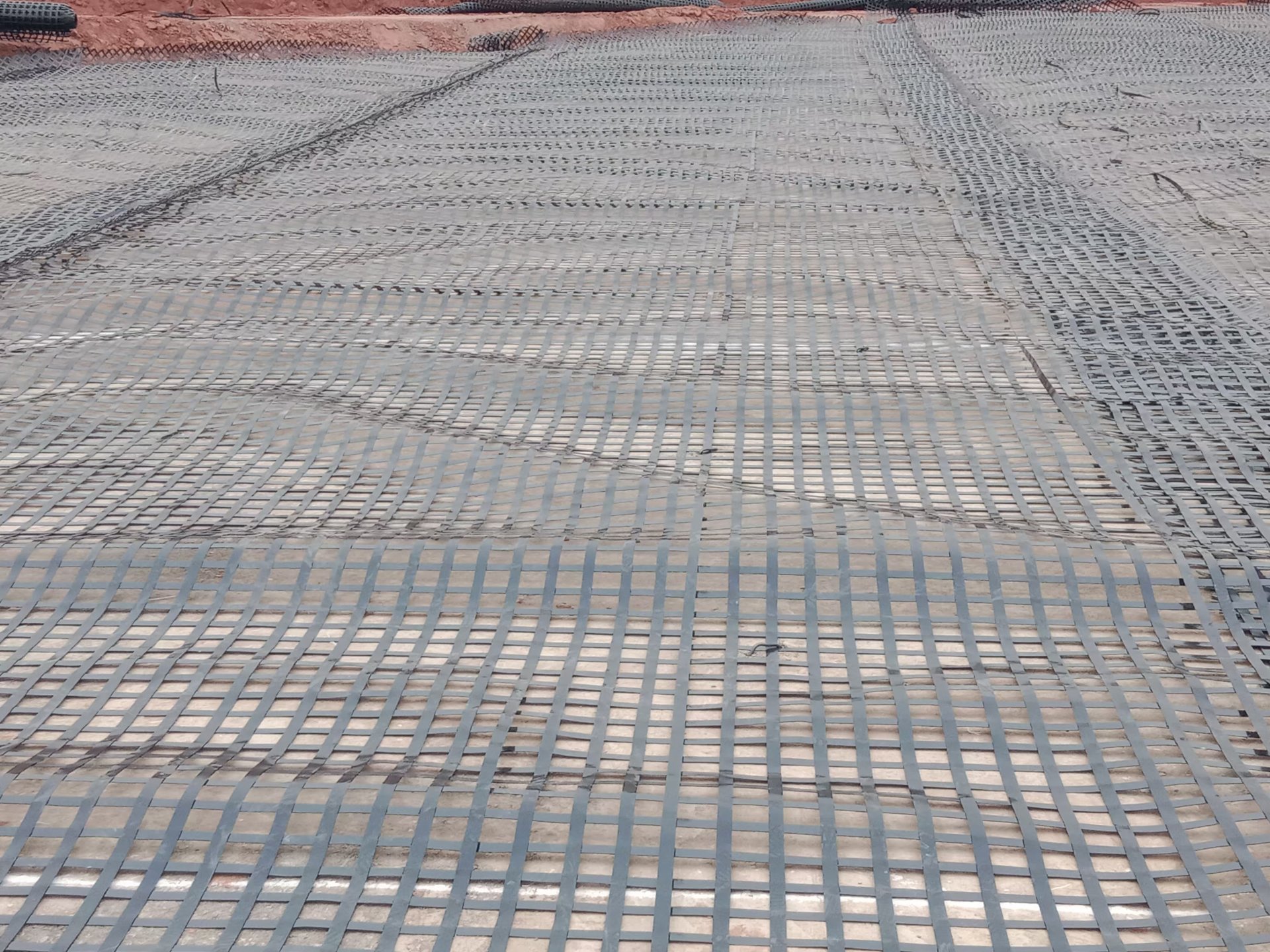
ZHONGTAI HENGBANGPET Polyester Welded Geogrid Advantages
Relying on independent innovation and technological expertise, Taihengbang Engineering Technology Co., Ltd. has achieved groundbreaking progress in the geosynthetics field. The company’s newly developed and produced PET polyester-welded geogrids, backed by multiple core patented technologies, have set a high-standard industry benchmark. Built on high-strength polyester materials and crafted through advanced precision welding techniques, these geogrids feature a robust, stable mesh structure, delivering exceptional performance in terms of tensile strength, durability, and environmental adaptability.
Jingzhe | Spring thunder rumbles, and all things grow.
Around March 5, the first spring thunder begins to rumble, rousing hibernating insects and snakes from their winter slumber. Peach blossoms start to peek out on the branches, and the earth softens as new buds emerge.
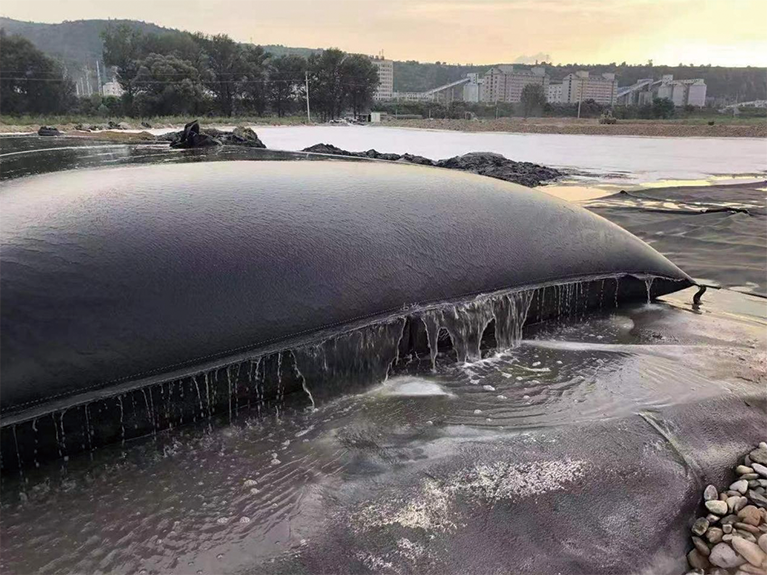
Geotube: A sludge dewatering tool—your eco-friendly engineering ally
A geotube is a tubular bag made by sewing together high-strength geotextile fabric. Utilizing the natural principle of gravity filtration, it removes water from sludge, effectively separating mud from water.
February 2, Dragon Raises Head: A Forgotten Spring Festival Celebration
On the second day of the second lunar month, spring returns to the earth, and all things awaken from their winter slumber. On this day—gradually fading from modern memory—lies one of the deepest cultural codes of the Chinese nation. The "Dragon Rises" is not just a seasonal marker; it’s also a spiritual totem for the Chinese people—a cherished legacy of our agricultural civilization.
Construction Plan for Laying and Welding of Composite Geomembranes
Construction Plan for Laying and Welding of Composite Geomembranes
Introduction to Drainage and Waterproofing Sheets
Introduction to Drainage and Waterproofing Sheets
ZHONGTAI HENGBANG Technology Co., Ltd.
Address: East Section of Zhongtianmen Avenue, Tai'an High-tech Zone, Shandong Province
Service Hotline