

-
About UsZHONGTAI HENGBANG Engineering Technology Co., Ltd. is located in the Academician Entrepreneurship Base of Tai'an National High-Tech Industrial Development Zone, Shandong Province. The company is a comprehensive service provider specializing in engineering consulting and design, materials R&D and manufacturing, as well as operations and maintenance. With strong technical expertise and robust R&D capabilities, its products are primarily applied in critical areas such as water conservancy infrastructure projects, transportation infrastructure initiatives, and environmental protection solutions for isolating and preventing leakage from urban waste and highly hazardous industrial solid waste.

-
ProductsZHONGTAI HENGBANG Engineering Technology Co., Ltd. boasts production lines sourced from countries including Germany, Italy, Denmark, Belgium, and Switzerland, adhering to rigorous quality management systems and testing standards. We are equipped with advanced testing equipment capable of evaluating tensile strength, creep resistance, UV protection, water permeability, flame retardancy, antistatic properties, chemical corrosion resistance, and oxidation performance.
-
Application CasesThe product is primarily used in hydraulic infrastructure projects, transportation infrastructure projects, and environmental protection applications—including the isolation and impermeability of municipal waste and highly hazardous industrial solid waste.
-
BlogPrioritizing technological advancement and innovation, our company is committed to fulfilling user needs to the fullest extent possible.
How can we enhance the waterproof performance of Guizhou's geomembrane for seepage control?
Release date:
2020-09-14
The transition layer. Likewise, a filtration layer should also be laid on the membrane, followed by the installation of a protective layer. The edges of the membrane must be tightly integrated with the impermeable layers along both banks and slopes. As for the connection between the impermeable membrane and the anchoring槽, it depends on whether the membrane is compatible with concrete in terms of contact. It boasts superior waterproofing performance unmatched by conventional materials, along with exceptional tensile strength and durability. Its remarkable elasticity and ability to adapt to deformation make it ideally suited for use on substrates that expand or contract. You Effectively addresses uneven settlement of the base impermeable membrane. Thanks to its excellent tensile strength, high impact resistance, and durability— shen With features such as permeability, acid and alkali resistance, heat resistance, weather resistance, and abrasion resistance, the Gezhou Dam geomembrane from Guiyang, Guizhou, has found extensive applications in the construction industry across coastal regions. It is also widely used in projects like river and stream embankments, reservoirs, water diversion tunnels, highways, railways, airports, underground structures, and underwater engineering works.

So, how can construction be carried out to better maximize its potential? The transition layer. Likewise, a filtration layer should also be laid on the membrane, followed by the installation of a protective layer. The edges of the membrane must be tightly integrated with the impermeable layers along both banks and slopes. As for the connection between the impermeable membrane and the anchoring槽, it depends on whether the membrane is compatible with concrete in terms of contact. What about the waterproof feature?
1、 The transition layer. Likewise, a filtration layer should also be laid on the membrane, followed by the installation of a protective layer. The edges of the membrane must be tightly integrated with the impermeable layers along both banks and slopes. As for the connection between the impermeable membrane and the anchoring槽, it depends on whether the membrane is compatible with concrete in terms of contact. The contact surface with the supporting material should be as smooth as possible to prevent the membrane from being punctured and losing its impermeability. If this cannot be achieved, a fine-grained bedding layer should be provided to protect the membrane from damage.
2、 The transition layer. Likewise, a filtration layer should also be laid on the membrane, followed by the installation of a protective layer. The edges of the membrane must be tightly integrated with the impermeable layers along both banks and slopes. As for the connection between the impermeable membrane and the anchoring槽, it depends on whether the membrane is compatible with concrete in terms of contact. After installation is complete, minimize walking on the membrane surface or moving tools across it. Any objects that could potentially damage the impermeable geomembrane should never be placed directly on the membrane—or carried while walking on it—to avoid accidental harm to the material.
3、 The transition layer. Likewise, a filtration layer should also be laid on the membrane, followed by the installation of a protective layer. The edges of the membrane must be tightly integrated with the impermeable layers along both banks and slopes. As for the connection between the impermeable membrane and the anchoring槽, it depends on whether the membrane is compatible with concrete in terms of contact. The connection of the liner itself. The methods for joining impermeable membranes can be categorized into three types: bonding, welding, and vulcanization—chosen based on the specific material used for the membrane. All connection seams must undergo testing to ensure their impermeability, as poor seam integrity could lead to leakage.
4、 The transition layer. Likewise, a filtration layer should also be laid on the membrane, followed by the installation of a protective layer. The edges of the membrane must be tightly integrated with the impermeable layers along both banks and slopes. As for the connection between the impermeable membrane and the anchoring槽, it depends on whether the membrane is compatible with concrete in terms of contact. Connection to surrounding boundaries: Geomembrane for seepage control and its connection to peripheral edges bi Close coordination is essential. During construction, anchoring slots can be excavated in the foundation and bank slopes for seamless connection. If the foundation consists of a shallow, permeable layer of sand and gravel, this material should be removed down to the bedrock, after which a concrete base should be poured to securely anchor the impermeable geomembrane within the concrete. ; If the foundation is an impermeable clay layer, excavation can be carried out to a depth of 2 meters, Width is 4m Anchor slots on both sides, place the impermeable geomembrane inside the slots, and then tightly backfill with clay. ; If the foundation consists of a deep, permeable layer of gravel and sand, an impermeable barrier can be created using geotextile membranes, with the length determined by calculation. The area where the membrane is laid out bi Must be leveled and covered with a layer approximately 30cm, maximum Large particle size is 20mm The transition layer. Similarly, a filtration layer should also be laid on the membrane, followed by the installation of a protective layer. The edges of the membrane must be tightly integrated with the impermeable layers along both banks and slopes. As for the connection between the impermeable membrane and the anchoring槽, it depends on whether the membrane is compatible with concrete in terms of contact. shen Slope penetration is determined. Polyvinyl chloride and butyl rubber films adhere well to concrete surfaces—either with adhesive or solvent—and can therefore be embedded at a shorter, appropriately chosen length. However, since polyethylene film does not stick to concrete, the embedment length into the concrete must be at least 0.8m。
5、 The transition layer. Likewise, a filtration layer should also be laid on the membrane, followed by the installation of a protective layer. The edges of the membrane must be tightly integrated with the impermeable layers along both banks and slopes. As for the connection between the impermeable membrane and the anchoring槽, it depends on whether the membrane is compatible with concrete in terms of contact. Typically, at corners and irregular sections, the joint lengths should be minimized as much as possible. Unless otherwise specified, for slopes steeper than 1:6 On the slope, away from the top slope or stress concentration areas 1.5 Within a 1-meter range, avoid welding seams as much as possible.
ZHONGTAI HENGBANG Engineering Technology Co., Ltd. is a comprehensive service provider integrating engineering consulting and design, material R&D and manufacturing, as well as operations and maintenance. With robust technical expertise and strong R&D capabilities, our products are prominently applied in critical areas such as hydraulic infrastructure projects, transportation infrastructure initiatives, and environmental protection fields like urban waste management and the isolation/anti-seepage of hazardous industrial solid wastes. The company boasts advanced production lines sourced from Germany, Italy, Denmark, Belgium, Switzerland, and other countries, adhering to stringent quality management systems and rigorous testing standards. We are equipped with state-of-the-art equipment capable of evaluating key properties—including tensile strength, creep resistance, UV resistance, permeability, flame retardancy, antistatic performance, chemical corrosion resistance, and oxidation stability—ensuring superior product quality. Furthermore, ZHONGTAI HENGBANG has earned prestigious certifications such as CRCC, ISO 9001, ISO 14001, OHSAS 18000, and MA approval. We also hold track and hydraulic department test reports, the EU CE certification, and have undergone specialized laboratory testing by accredited facilities in Russia, Australia, the United States, and other regions. We are dedicated to delivering top-quality geosynthetic materials and unparalleled services for a wide range of projects, including reinforced soil retaining walls, soft ground stabilization, land reclamation and seawall construction/maintenance, hydraulic engineering, slope remediation and ecological restoration, road construction, and mining projects.
Consultation Phone: 13953856388
Contact: Mr. Zhang
Latest Updates
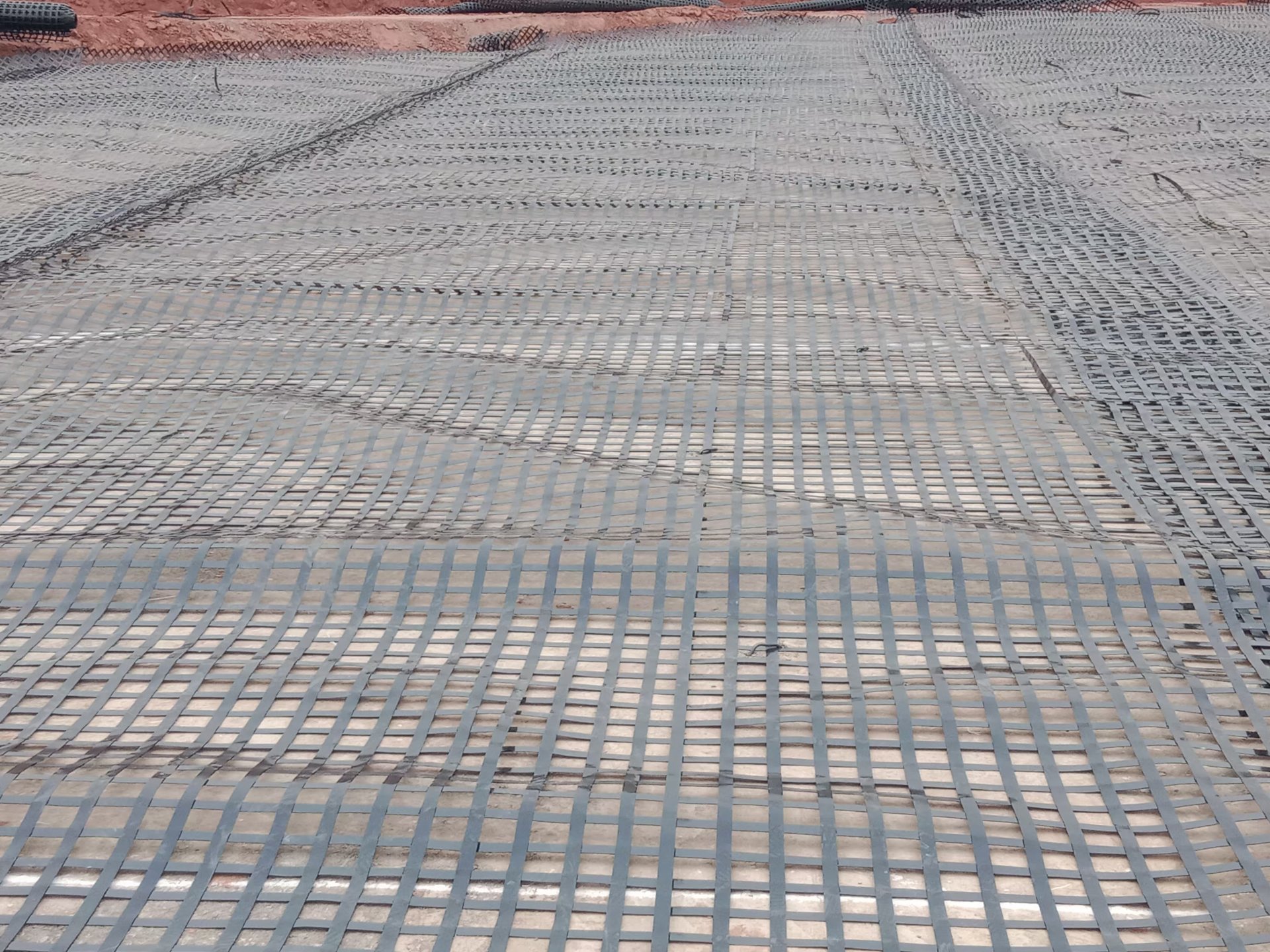
ZHONGTAI HENGBANGPET Polyester Welded Geogrid Advantages
Relying on independent innovation and technological expertise, Taihengbang Engineering Technology Co., Ltd. has achieved groundbreaking progress in the geosynthetics field. The company’s newly developed and produced PET polyester-welded geogrids, backed by multiple core patented technologies, have set a high-standard industry benchmark. Built on high-strength polyester materials and crafted through advanced precision welding techniques, these geogrids feature a robust, stable mesh structure, delivering exceptional performance in terms of tensile strength, durability, and environmental adaptability.
Jingzhe | Spring thunder rumbles, and all things grow.
Around March 5, the first spring thunder begins to rumble, rousing hibernating insects and snakes from their winter slumber. Peach blossoms start to peek out on the branches, and the earth softens as new buds emerge.
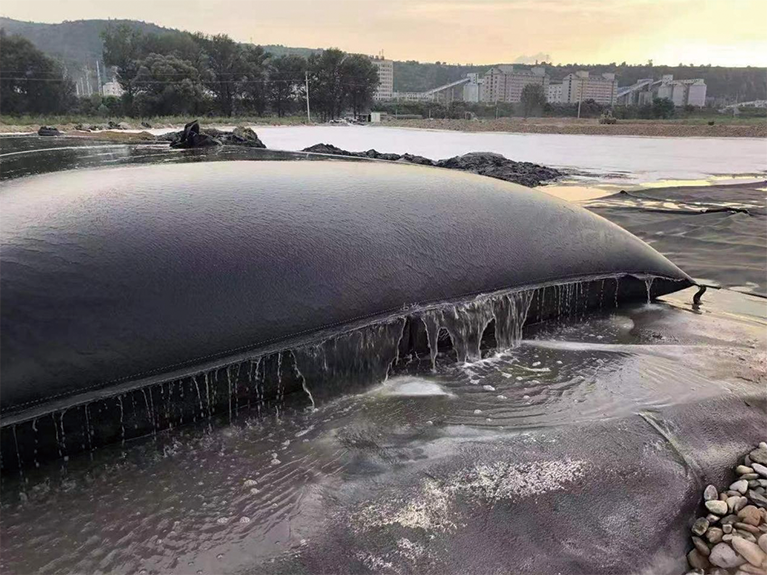
Geotube: A sludge dewatering tool—your eco-friendly engineering ally
A geotube is a tubular bag made by sewing together high-strength geotextile fabric. Utilizing the natural principle of gravity filtration, it removes water from sludge, effectively separating mud from water.
February 2, Dragon Raises Head: A Forgotten Spring Festival Celebration
On the second day of the second lunar month, spring returns to the earth, and all things awaken from their winter slumber. On this day—gradually fading from modern memory—lies one of the deepest cultural codes of the Chinese nation. The "Dragon Rises" is not just a seasonal marker; it’s also a spiritual totem for the Chinese people—a cherished legacy of our agricultural civilization.
Construction Plan for Laying and Welding of Composite Geomembranes
Construction Plan for Laying and Welding of Composite Geomembranes
Introduction to Drainage and Waterproofing Sheets
Introduction to Drainage and Waterproofing Sheets
ZHONGTAI HENGBANG Technology Co., Ltd.
Address: East Section of Zhongtianmen Avenue, Tai'an High-tech Zone, Shandong Province
Service Hotline