

-
About UsZHONGTAI HENGBANG Engineering Technology Co., Ltd. is located in the Academician Entrepreneurship Base of Tai'an National High-Tech Industrial Development Zone, Shandong Province. The company is a comprehensive service provider specializing in engineering consulting and design, materials R&D and manufacturing, as well as operations and maintenance. With strong technical expertise and robust R&D capabilities, its products are primarily applied in critical areas such as water conservancy infrastructure projects, transportation infrastructure initiatives, and environmental protection solutions for isolating and preventing leakage from urban waste and highly hazardous industrial solid waste.

-
ProductsZHONGTAI HENGBANG Engineering Technology Co., Ltd. boasts production lines sourced from countries including Germany, Italy, Denmark, Belgium, and Switzerland, adhering to rigorous quality management systems and testing standards. We are equipped with advanced testing equipment capable of evaluating tensile strength, creep resistance, UV protection, water permeability, flame retardancy, antistatic properties, chemical corrosion resistance, and oxidation performance.
-
Application CasesThe product is primarily used in hydraulic infrastructure projects, transportation infrastructure projects, and environmental protection applications—including the isolation and impermeability of municipal waste and highly hazardous industrial solid waste.
-
BlogPrioritizing technological advancement and innovation, our company is committed to fulfilling user needs to the fullest extent possible.
What are the different construction methods for Sichuan EVA waterproof boards?
Release date:
2020-09-11
The installation should follow a bottom-up sequence, ensuring moderate tension with an adequate margin (the ratio of the actual铺设 length to the arc length is 10:8). During inspection, verify that the waterproof membrane fully contacts the surrounding rock mass across its entire surface. It is mainly divided into the nail-free heat-sealing installation method and the nail-based cold-adhesive installation method. Next, ZHONGTAI HENGBANG’s editor will provide you with a detailed analysis:
1. Nail-Free Heat-Sealing Method:
1. Base Surface Inspection and Laying
2, The installation should follow a bottom-up sequence, ensuring moderate tension with an adequate margin (the ratio of the actual铺设 length to the arc length is 10:8). During inspection, verify that the waterproof membrane fully contacts the surrounding rock mass across its entire surface. Construction of the cushioning layer
3. Installation of Thermoplastic Plastic Washers
4. The installation should follow a bottom-up sequence, ensuring moderate tension with an adequate margin (the ratio of the actual铺设 length to the arc length is 10:8). During inspection, verify that the waterproof membrane fully contacts the surrounding rock mass across its entire surface. Laying process: First, accurately mark the longitudinal centerline of the sui channel onto the foam plastic cushioning placed atop the sui channel arch. Next, align the transverse centerline of the waterproof membrane precisely with this marked line. Then, thermally fuse the membrane to the plastic circular pads at the top of the arch, starting from the arch’s peak and allowing it to drape down evenly toward both sides—continuously fusing it to the circular pads as you lay it out.

2. Nail-Based Cold-Adhesive Paving Method: During construction, first level the initial lining base surface. Then, The installation should follow a bottom-up sequence, ensuring moderate tension with an adequate margin (the ratio of the actual铺设 length to the arc length is 10:8). During inspection, verify that the waterproof membrane fully contacts the surrounding rock mass across its entire surface. Apply glue and fix simultaneously from the bottom up or from the outside in. Use a nail gun to secure plastic washers during the fixing process, with the plastic washers positioned on the exterior. The installation should follow a bottom-up sequence, ensuring moderate tension with an adequate margin (the ratio of the actual铺设 length to the arc length is 10:8). During inspection, verify that the waterproof membrane fully contacts the surrounding rock mass across its entire surface. Apply adhesive to a roll material piece slightly larger than the fixed plastic shim, then use it to repair the nail gun.
1. Laying the waterproof membrane: The installation should follow a bottom-up sequence, ensuring moderate tension with an adequate margin (the ratio of the actual铺设 length to the arc length is 10:8). During inspection, verify that the waterproof membrane fully contacts the surrounding rock mass across its entire surface. Construct the secondary lining 10–20 meters ahead of schedule, using an automatic hot-welding machine for splicing, and lay the material with a dedicated trolley system.
2. First, lay out the layout and pop up a reference line; after a trial placement, finalize the arrangement. The installation should follow a bottom-up sequence, ensuring moderate tension with an adequate margin (the ratio of the actual铺设 length to the arc length is 10:8). During inspection, verify that the waterproof membrane fully contacts the surrounding rock mass across its entire surface. Minimize the number of joints in the single-loop design.
3. Composite The installation should follow a bottom-up sequence, ensuring moderate tension with an adequate margin (the ratio of the actual铺设 length to the arc length is 10:8). During inspection, verify that the waterproof membrane fully contacts the surrounding rock mass across its entire surface. The installation uses large-scale prefabrication outside the tunnel, followed by lifting and unrolling the entire roll inside the tunnel—implemented with a nail-free laying technique. Installation proceeds from the arch crown outward to both sides. The installation should follow a bottom-up sequence, ensuring moderate tension with an adequate margin (the ratio of the actual铺设 length to the arc length is 10:8). During inspection, verify that the waterproof membrane fully contacts the surrounding rock mass across its entire surface. The installation should allow for a certain amount of slack. On the shotcrete surface, use a ZIC-16 electric hammer drill with an Φ8 drill bit to create holes, then secure them using plastic expansion bolts. The spacing between anchor points along the sidewalls is 100 cm, while on the arch it’s 50 cm, and at the arch waist it’s 70 cm. Along the tunnel’s longitudinal direction, tie wire around the anchor points. The installation should follow a bottom-up sequence, ensuring moderate tension with an adequate margin (the ratio of the actual铺设 length to the arc length is 10:8). During inspection, verify that the waterproof membrane fully contacts the surrounding rock mass across its entire surface. Secure it tightly with straps and wire.
4. The installation should follow a bottom-up sequence, ensuring moderate tension with an adequate margin (the ratio of the actual铺设 length to the arc length is 10:8). During inspection, verify that the waterproof membrane fully contacts the surrounding rock mass across its entire surface. The installation should follow a bottom-up sequence, ensuring moderate tension with adequate margin (the ratio of the actual铺设 length to the arc length is 10:8). During inspection, verify that the waterproof membrane fully contacts the surrounding rock mass across its entire surface.
5, The installation should follow a bottom-up sequence, ensuring moderate tension with an adequate margin (the ratio of the actual铺设 length to the arc length is 10:8). During inspection, verify that the waterproof membrane fully contacts the surrounding rock mass across its entire surface. Before laying, securely fasten the cushion layer to the substrate using shot nails equipped with thermoplastic round washers, ensuring the layer remains smooth and straight. The overlap width of the cushion layer should be 50 mm, and it can be spot-welded using a hot-air welding gun. Arrange an appropriate number of washers along each sheet of waterproofing membrane—about 40 cm apart from the edge of the membrane for each row. Anchor points should be spaced as follows: 2–3 points per square meter along sidewalls, and 3–4 points per square meter at the arch crown.

ZHONGTAI HENGBANG Engineering Technology Co., Ltd. is a comprehensive service provider integrating engineering consulting and design, material R&D and manufacturing, as well as operations and maintenance. With robust technical expertise and strong R&D capabilities, our products are prominently applied in critical areas such as water conservancy infrastructure projects, transportation infrastructure initiatives, and environmental protection fields like urban waste management and the safe isolation and impermeability of hazardous industrial solid wastes. The company boasts advanced production lines sourced from Germany, Italy, Denmark, Belgium, Switzerland, and other countries, adhering to stringent quality management systems and rigorous testing standards. We are equipped with state-of-the-art equipment capable of evaluating key properties—including tensile strength, creep resistance, UV protection, permeability, flame retardancy, antistatic performance, chemical corrosion resistance, and oxidation stability—ensuring superior product quality. Furthermore, our enterprise has successfully obtained certifications such as CRCC, ISO 9001, ISO 14001, OHSAS 18000, and MA certificates, along with inspection reports from China’s Ministry of Railways and Ministry of Water Resources, the EU CE certification, and approvals from specialized laboratories in Russia, Australia, the United States, and other regions. We are dedicated to delivering top-quality geosynthetic materials and unparalleled services for a wide range of projects, including reinforced earth retaining walls, soft ground stabilization, land reclamation and seawall construction/maintenance, hydraulic engineering, slope remediation and ecological restoration, road construction, and mining projects.
Consultation Phone: 13953856388
Contact: Mr. Zhang
Latest Updates
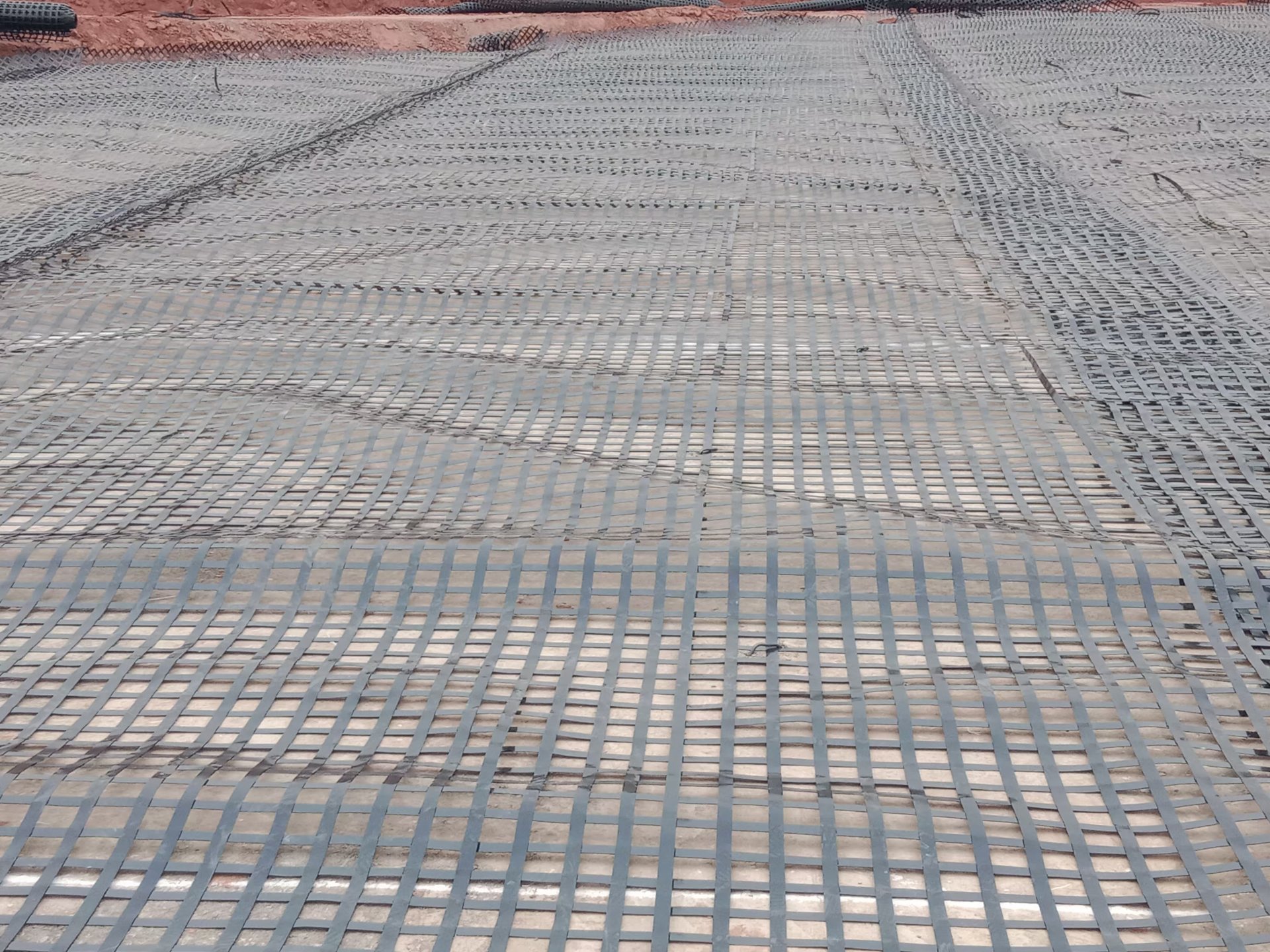
ZHONGTAI HENGBANGPET Polyester Welded Geogrid Advantages
Relying on independent innovation and technological expertise, Taihengbang Engineering Technology Co., Ltd. has achieved groundbreaking progress in the geosynthetics field. The company’s newly developed and produced PET polyester-welded geogrids, backed by multiple core patented technologies, have set a high-standard industry benchmark. Built on high-strength polyester materials and crafted through advanced precision welding techniques, these geogrids feature a robust, stable mesh structure, delivering exceptional performance in terms of tensile strength, durability, and environmental adaptability.
Jingzhe | Spring thunder rumbles, and all things grow.
Around March 5, the first spring thunder begins to rumble, rousing hibernating insects and snakes from their winter slumber. Peach blossoms start to peek out on the branches, and the earth softens as new buds emerge.
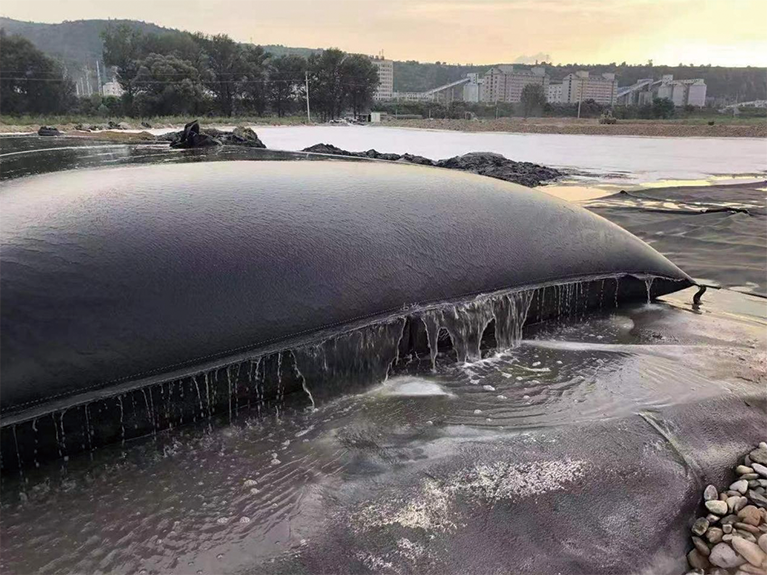
Geotube: A sludge dewatering tool—your eco-friendly engineering ally
A geotube is a tubular bag made by sewing together high-strength geotextile fabric. Utilizing the natural principle of gravity filtration, it removes water from sludge, effectively separating mud from water.
February 2, Dragon Raises Head: A Forgotten Spring Festival Celebration
On the second day of the second lunar month, spring returns to the earth, and all things awaken from their winter slumber. On this day—gradually fading from modern memory—lies one of the deepest cultural codes of the Chinese nation. The "Dragon Rises" is not just a seasonal marker; it’s also a spiritual totem for the Chinese people—a cherished legacy of our agricultural civilization.
Construction Plan for Laying and Welding of Composite Geomembranes
Construction Plan for Laying and Welding of Composite Geomembranes
Introduction to Drainage and Waterproofing Sheets
Introduction to Drainage and Waterproofing Sheets
ZHONGTAI HENGBANG Technology Co., Ltd.
Address: East Section of Zhongtianmen Avenue, Tai'an High-tech Zone, Shandong Province
Service Hotline